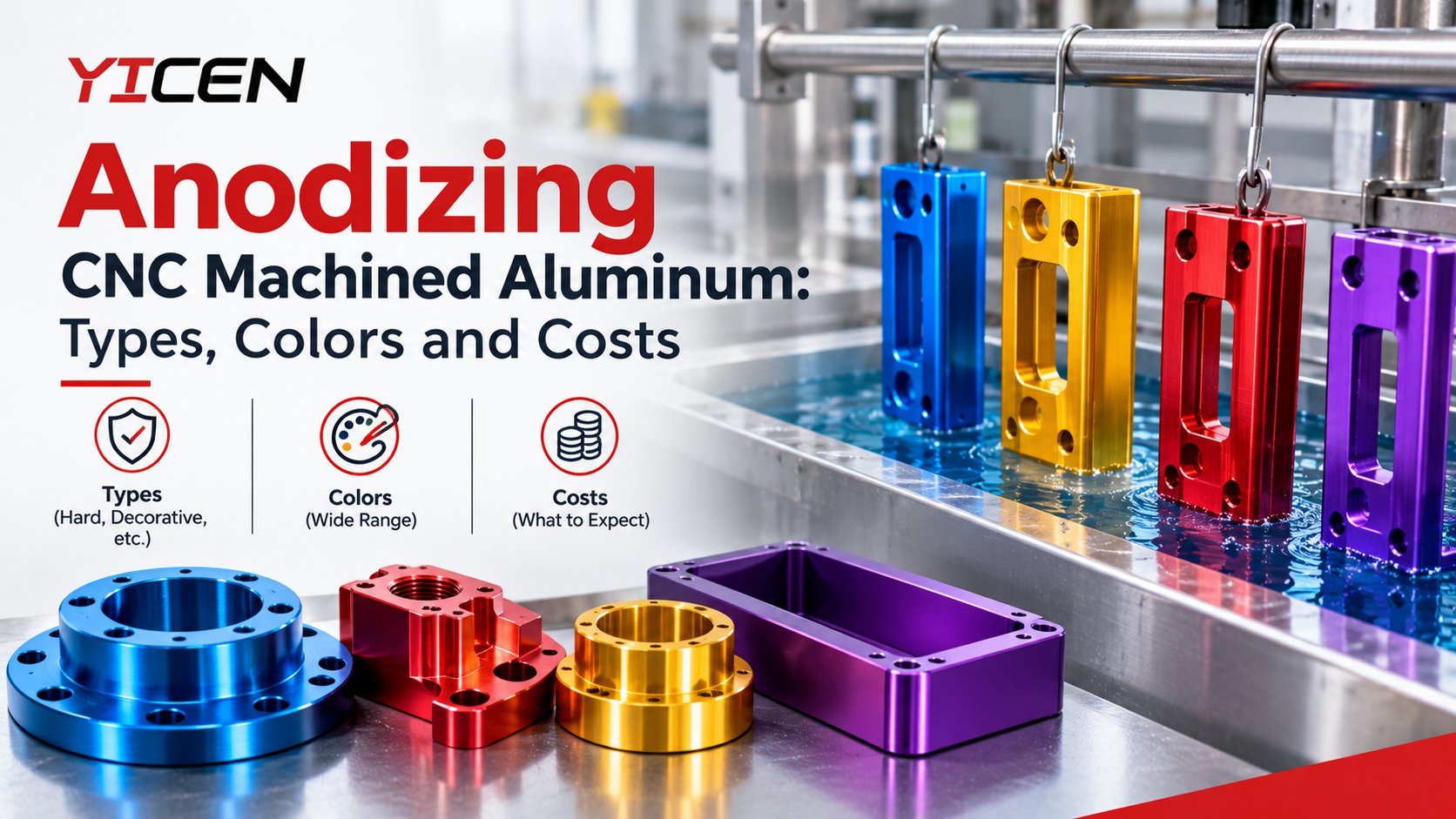
Fresh off the machine, an aluminum part looks great. Give it a week in a toolbox or a customer’s hands and it doesn’t. Fingerprints, scuffs, a dull haze. Most buyers reach for a finish at that point, and anodizing cnc machined aluminum parts is usually the first one on the list. It makes the surface itself harder instead of painting over it. The catch is that the process has several settings, and each one changes the look, the price and sometimes the size of the part. Better to sort that out before the drawing goes to the shop.
How the Process Works
Think of it as controlled rusting, done on purpose. The part sits in an acid bath and carries a current. Oxygen collects on the surface and grows a layer of aluminum oxide. That layer comes out of the metal, so it doesn’t peel the way paint does.
It’s also porous. Under a microscope it looks like a honeycomb, and the pores soak up dye. Once the color is in, the shop seals the pores with hot water or a nickel-based solution. Sealing matters more than people think. A badly sealed part looks fine on day one and chalky a year later.
Type II vs Type III Anodizing
Most quotes boil down to type 2 vs type 3 anodizing. Both use the same basic idea, but the bath conditions differ, and so does the result.
Type II runs in a sulfuric acid bath near room temperature and builds a layer around 5 to 25 microns thick. It takes dye well, looks clean and handles everyday corrosion. For enclosures, brackets, camera bodies and most consumer hardware, it’s the sensible pick.
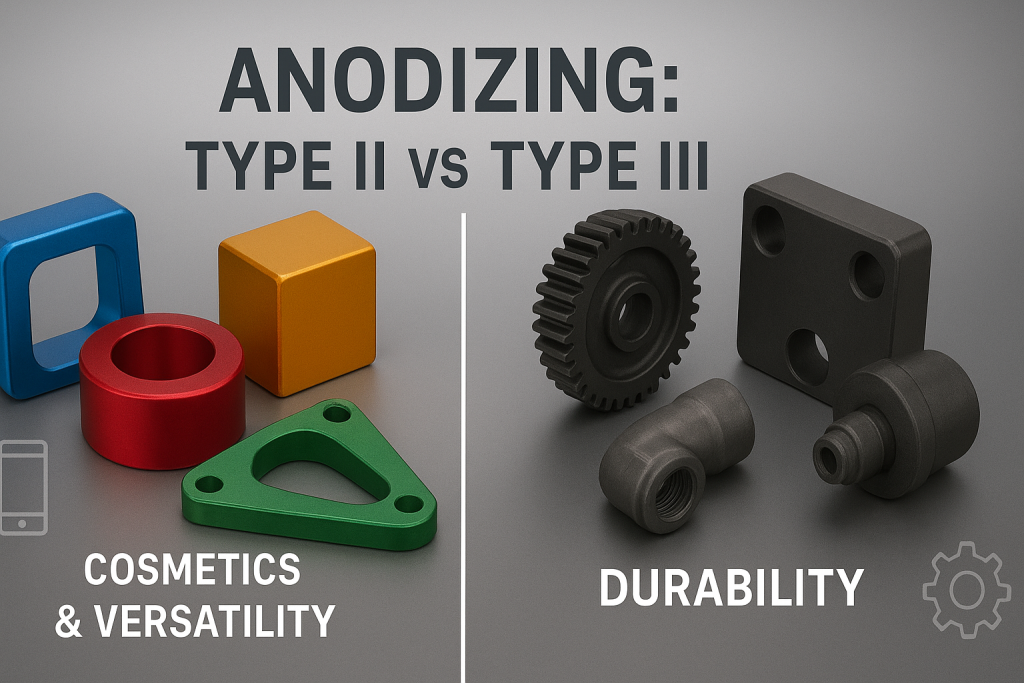
Type III, often called hardcoat, runs in a near-freezing bath with higher current. The layer grows to 25 to 100 microns. It’s much harder, much more wear resistant, and it costs more. You’ll see it on pistons, sliding rails, valve bodies and anything that rubs against something else all day.
Short version: Type II for looks and light duty, Type III when the part gets abused.
What Hard Anodizing Does Well, and Where It Bites
Hard anodizing earns its price on moving parts. The dense layer shrugs off abrasion that would wear through Type II in months. If a part slides, gets handled constantly or sits in a dusty machine, this is where you spend the money.
Some things surprise first-timers, though. The natural color is dark gray to near-black, and it shifts with the alloy, so bright colors are out. The surface can feel a bit rougher. And sharp outside corners can chip under that thick layer, so ask your machinist for a small radius where possible.
Anodizing CNC Machined Aluminum Colors and What Changes Them
Anodized aluminum colors come from dye absorbed before sealing. Black is by far the most requested. Clear, gray, red, blue, gold and green follow. Black and clear also tend to hold up best.
A few things move the final color more than buyers expect. The alloy is the big one. 6061 gives even, predictable color. High-silicon castings go dull or blotchy. 7075 can show slight tone shifts from the zinc.
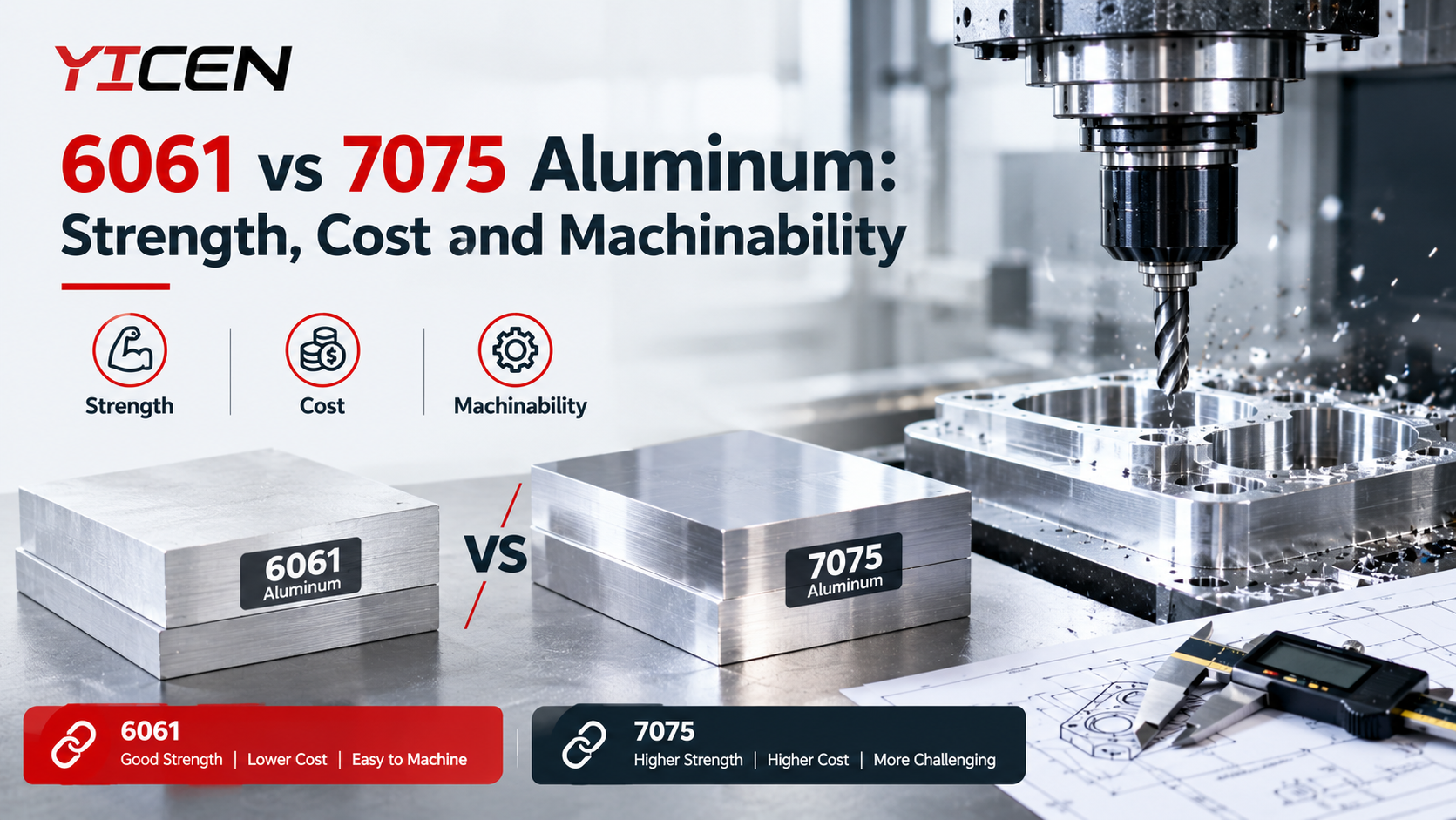
If you haven’t settled on the metal yet, our comparison of 6061 vs 7075 aluminum explains how that choice affects strength and finish together.
The starting surface matters too. Anodizing doesn’t hide marks, it often shows them. Tool lines stay. Scratches stay. If a face has to look perfect, say so before machining.
Sunlight is the third one. Reds, blues and purples fade outdoors faster than anyone likes. And color can drift slightly between batches, so if two parts must match, anodize them in the same run.
Does Anodizing Change the Size of a Part?
Yes, and this catches people who skip the step in design. The oxide layer grows both into the metal and outward from it, roughly half and half. A 0.002 in Type III layer adds about 0.001 in per surface. That’s enough to jam a press fit or close up a tight bore.
Tell the machinist about the finish before cutting. They can leave an allowance, or you can mask critical features so they stay bare. Masking costs money, but less than scrapping a part that won’t assemble.
What Anodizing Aluminum Parts Costs?
Nobody quotes this the same way, so treat the following as the logic behind the price, not a number.
Surface area and size set the baseline, because tank space is what the shop sells. Hardcoat costs more than Type II since the run takes longer and the baths have to stay cold and tightly controlled. Standard colors add a little. Two-tone work adds a lot, since every extra color means masking and handling by hand. Quantity changes everything: racking and setup get spread across the batch, so ten parts cost far more per piece than a thousand.
One more thing. Every part hangs from a rack, and the contact point stays bare. If that spot lands on a cosmetic face, you’ll see it. Mention it in the quote request and the shop can pick a better place.
How Long the Finish Lasts?
Indoors, a well-sealed layer can look good for decades. Outdoors the answer depends on climate, dye and thickness. Coastal air and road salt are harsher than a dry inland summer. Thicker layers last longer, and black or clear outlast bright dyes.
Scratches matter less than you’d expect, because the layer is hard. A deep gouge is different. It cuts through to bare aluminum, and that spot loses protection.
Other Finishes Worth Comparing
Anodizing isn’t always the right call. If you want a thick, colored, impact-resistant coat, 粉体塗装 deserves a look, though it builds more thickness than most anodized layers and isn’t ideal for tight-tolerance features. For a broader view, our page on 表面仕上げ covers what each option does best.
My rule of thumb: anodize when you want a thin, hard finish that still looks like metal. Powder coat when color depth and heavy coverage matter more than tolerance.
Send Us Your Drawing
If your project involves anodizing aluminum parts, send us the alloy, the finish type, the color and the features that must stay bare. We’ll check the drawing, flag tolerance risks and reply with a clear quote. For more guides on finishes and materials, read our blog, or contact our team to talk it through.
よくある質問
What is the difference between Type II and Type III anodizing?
Type II is thinner, takes color easily and suits appearance and general corrosion protection. Type III is thicker, much harder and built for wear. It costs more and comes mostly in dark shades.
Does anodizing change part dimensions?
Yes, a little. About half the coating thickness grows outward, so Type III adds more than Type II. Tell your machinist early so they can allow for it on tight features.
How long does anodized aluminum last?
Indoors, it can last for decades. Outdoors, life depends on thickness, dye and weather, and bright colors fade sooner than black or clear. Good sealing helps a lot when anodizing aluminum parts for harsh conditions.
Can you anodize any aluminum alloy?
Most wrought alloys anodize well, and 6061 gives the most even results. High-silicon castings tend to look dull or uneven. Ask for a test sample if color consistency matters.
Is anodized aluminum safe for outdoor use?
Yes, when it’s properly sealed. Thicker layers and darker colors handle sun and weather best. Near the coast, pick a thicker coat and clean it now and then.