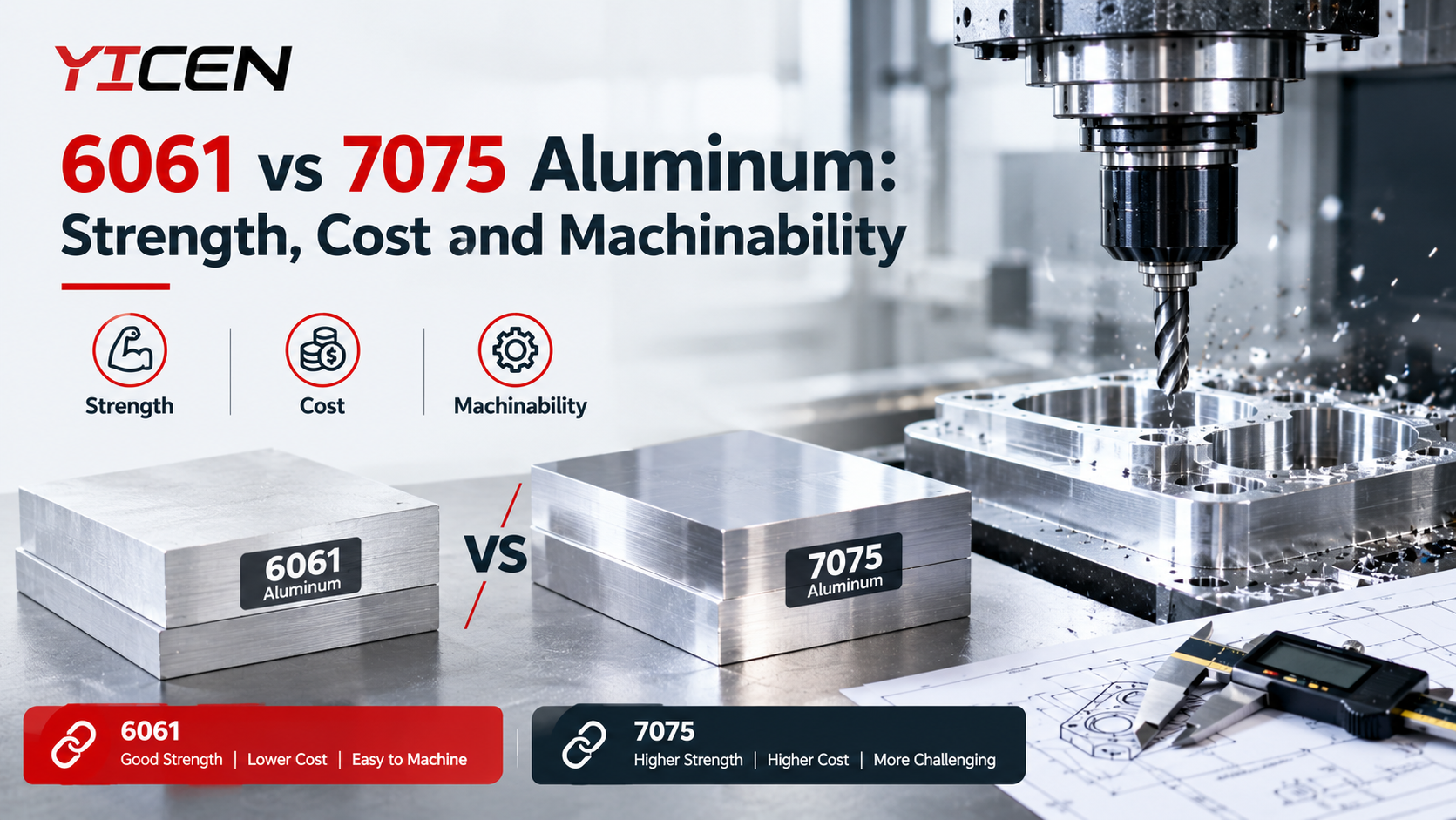
Most people ask us about alloys after the drawing is done. That’s a little late. The 6061 vs 7075 aluminum choice affects price, lead time, welding options and how the part holds up in the field. Get it wrong and you either overpay for strength you never use, or you get a bracket that bends on day one. We’ve seen both. In short, 6061 is the easygoing, affordable all-rounder, and 7075 is the strong one for parts under real stress. Here’s how they compare in practice.
The Basic Difference Between the Two Alloys
Weight isn’t the issue. Both sit around 2.7 g/cm³. Chemistry is what separates them. 6061 gets its properties from magnesium and silicon. 7075 leans on zinc, with magnesium and copper helping out. That zinc is the reason 7075 plays in a different strength class.
| Property (T6 temper, typical) | 6061-T6 | 7075-T6 |
|---|---|---|
| Resistência à tração | About 310 MPa (45 ksi) | About 570 MPa (83 ksi) |
| Limite de elasticidade | About 275 MPa (40 ksi) | About 500 MPa (73 ksi) |
| Soldabilidade | Bom | Pobres |
| Resistência à corrosão | Muito bom | Justo |
| Custo relativo | Inferior | Mais alto |
Treat these as ballpark figures. Suppliers differ, and so do bar, plate and extrusion forms. Always read the mill cert for the lot you actually receive.
Where 7075 T6 Aluminum Earns Its Price
On paper, 7075 T6 aluminum has nearly twice the yield strength of 6061-T6. It also handles fatigue well. That’s why you’ll find it in climbing hardware, bike components, tooling plates and structural brackets. If a part flexes, buzzes with vibration or gets slammed repeatedly, 7075 gives you headroom.
But it’s not a free upgrade. It’s more sensitive to stress corrosion in some environments, and it dislikes bending and forming. Sharp inside corners can start cracks too. So if you pick 7075, design the part with that in mind. Add radii. Don’t treat it like a stronger version of 6061, because it behaves differently.
What to Expect From 6061 T6 Machining
6061 T6 machining is about as friendly as aluminum gets. It cuts cleanly, anodizes well and rarely surprises you. For prototypes, enclosures, fixtures and everyday parts, it’s our default suggestion unless the load says otherwise.
It does have one habit that annoys machinists: long, stringy chips. They wrap the tool and scratch the finish. Sharp cutters, solid coolant flow and chip-breaking toolpaths mostly cure it.
7075 behaves a bit differently. The chips come off shorter, and the surface often looks better straight from the tool. The catch is hardness. Tools wear faster, and cutting forces climb. Neither alloy is hard to cut. They just want different habits from whoever’s running the machine.
Why the Price Gap Is Bigger Than the Material Bill
Sure, 7075 costs more per pound, and the gap moves with the market, bar size and supplier. But the stock price is only half of it. Faster tool wear and higher cutting forces can add machine time. Some 7075 parts also need extra care in fixturing so they don’t shift or distort.
Here’s how we look at it. If the part only needs to be stiff and look nice, 6061 wins on total cost almost every time. If 7075 lets you thin the walls and trim weight while still handling the load, it can pay for itself. The cheapest material doesn’t always make the cheapest part.
Picking an Aluminum Alloy for CNC Work
Choosing an aluminum alloy for CNC projects usually comes down to four questions. How much load will the part carry? Will anyone weld it? Will it sit near moisture, salt or chemicals? And what can the budget handle?
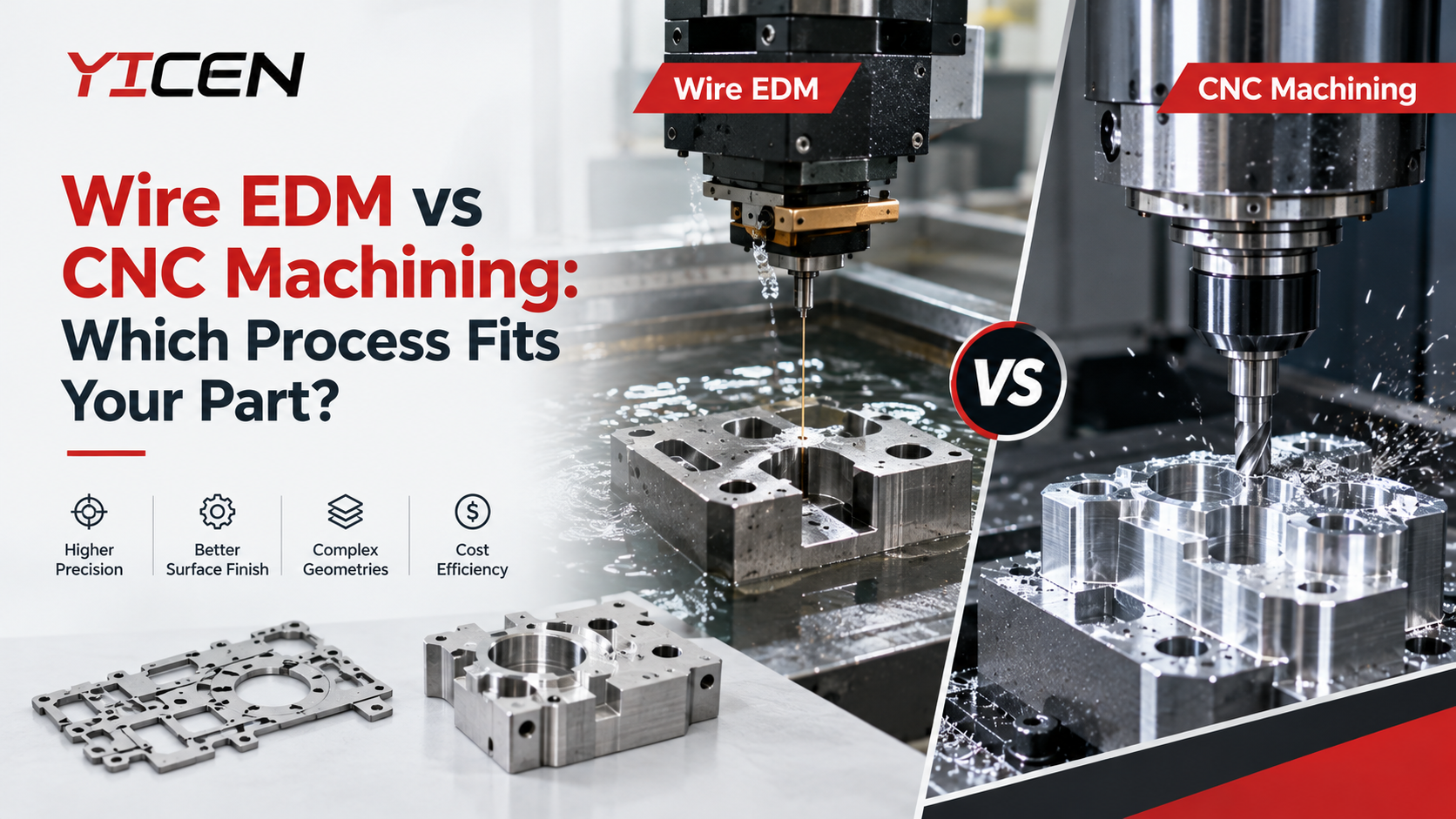
For most jobs, 6061 answers all four without drama. For high-load parts, 7075 is worth the extra money. If you’re also weighing other metals, a team with real maquinagem CNC de alumínio experience can match the grade to your geometry and finish. And if your part has tight internal features or awkward profiles, our breakdown of Wire EDM vs CNC Machining explains when each process makes more sense.
Welding, Corrosion and Finish Side by Side
Welding splits the two alloys hard. 6061 welds well with standard methods, though the zone beside the weld loses some strength. 7075 tends to crack when you fusion weld it. Designers usually bolt it, rivet it or machine the whole thing from one block.
Corrosion favors 6061. It holds up better outdoors and near the coast, especially anodized. You can anodize 7075 as well, and many shops do for wear and looks, but it needs more attention in harsh conditions. Type II anodizing covers most cosmetic parts. Type III hardcoat adds wear resistance to either alloy.
How Different Industries Lean
Sometimes the industry settles it before cost comes up. Teams building peças aeroespaciais often pick 7075 for fittings and brackets, because strength per pound matters so much. Medical equipment, electronics housings, automation frames and consumer products mostly go with 6061. It’s cheaper, easy to machine and finishes reliably.
6061 vs 7075 Aluminum: Which One Should You Order?
When you’re stuck, run through this:
- Pick 6061 for general parts, welded assemblies, enclosures, prototypes and budget-driven runs.
- Pick 7075 for high-stress parts, thin lightweight designs, tooling and anything that takes repeated heavy loads.
- Ask us first if the part is both welded and highly stressed, or if it’ll live somewhere corrosive.
Still on the fence? Send us your drawing, quantity and load needs, and we’ll tell you how the 6061 vs 7075 aluminum decision lands for your part. We check every file for manufacturability and reply with a clear quote and honest material advice.
Perguntas mais frequentes
Is 7075 aluminum stronger than 6061?
Yes, by a wide margin. In the T6 temper, 7075 has roughly twice the yield strength of 6061. That gap is the main reason people pay more for it.
Which aluminum is easier to CNC machine?
Both cut well. 7075 gives shorter chips and a cleaner finish, while 6061 is gentler on tools and cheaper to run. Most shops call 6061 the easier everyday choice.
Can you weld 7075 aluminum?
Not reliably. It tends to crack when fusion welded, so designers use fasteners, adhesives or one machined piece. If the part must be welded, go with 6061.
Does 7075 aluminum cost more than 6061?
Usually, yes. The material costs more, and harder cutting can add machine time. The final gap depends on part size, quantity and current pricing.
Is 6061 aluminum good enough for most CNC parts?
For most jobs, yes. You get solid strength, good corrosion resistance and easy machining at a lower price. Move to 7075 only when load or weight demands it.