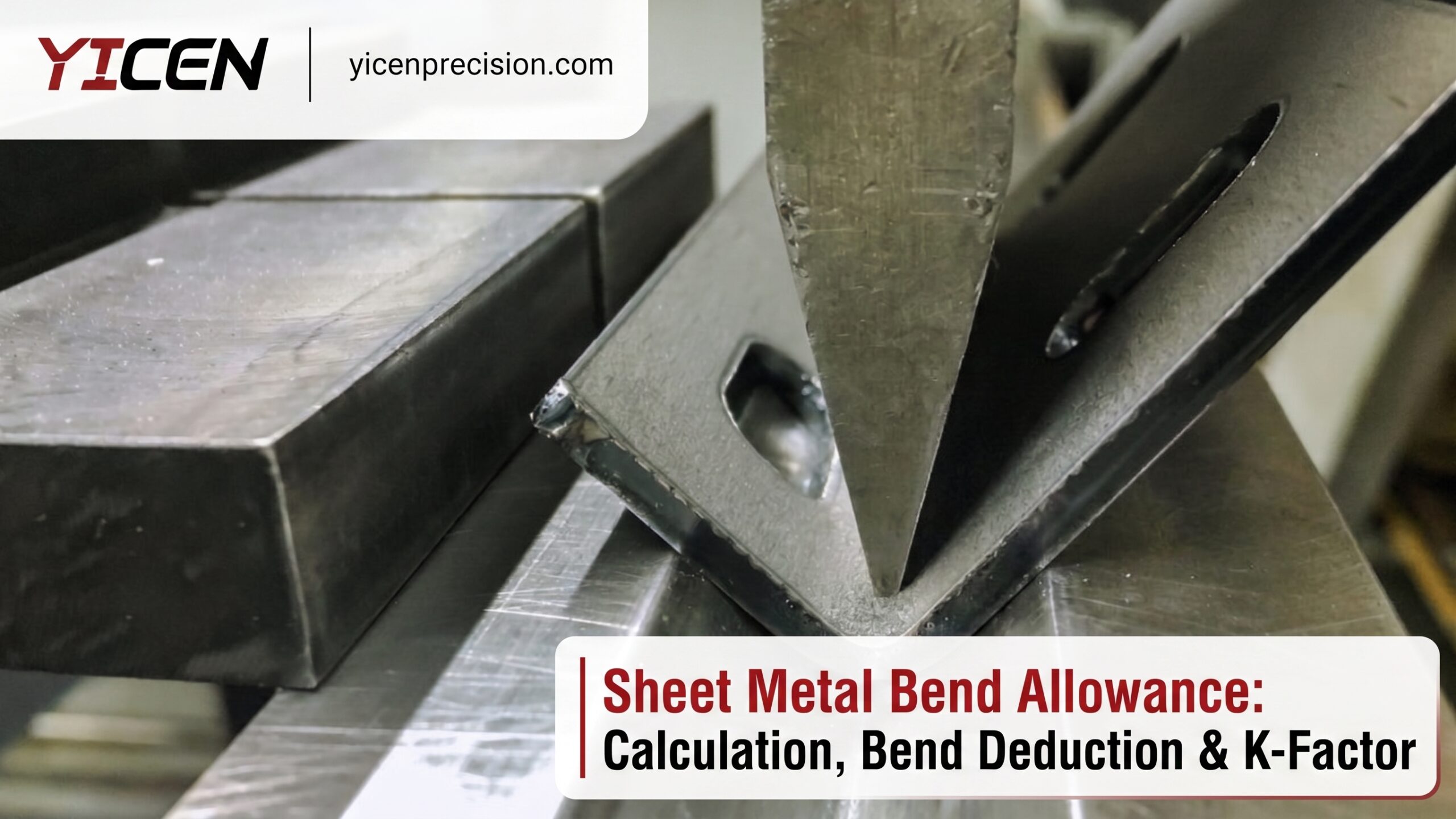
What is sheet metal bend allowance and why is it important in fabrication? How do manufacturers calculate bend allowance for sheet metal parts? What is the difference between bend allowance and sheet metal bend deduction? How does the K factor in sheet metal bending affect the final dimensions of a component?
Sheet metal bend allowance is the calculated amount of material that stretches during a bending operation. It determines the exact flat pattern size needed before forming a sheet metal component. By considering bend angle, material thickness, bend radius, and K factor, manufacturers can accurately predict the final dimensions of a bent part and avoid costly fabrication errors.
Accurate bend allowance calculation is essential because metal deformation changes the overall length of the finished component. Professional fabricators use precise formulas and engineering data to ensure that sheet metal parts meet design specifications after bending.
What Is Sheet Metal Bend Allowance?
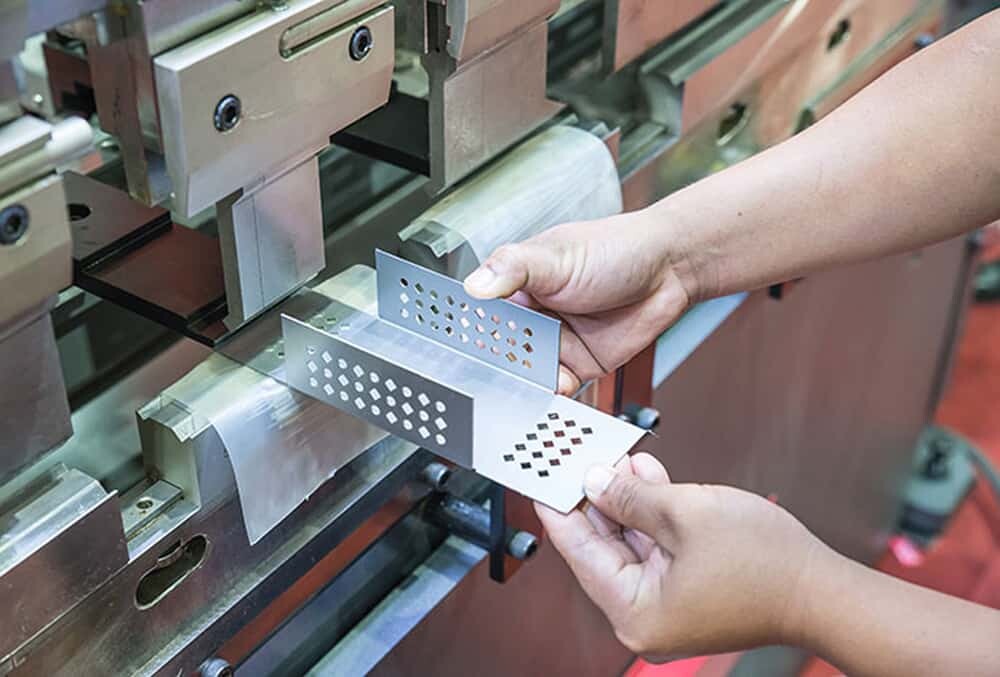
Sheet metal bend allowance refers to the additional material length required in the neutral axis area of a sheet metal bend. When a flat metal sheet is bent, the outer surface stretches while the inner surface compresses. The neutral axis remains relatively unchanged, and the length along this axis determines the actual bend allowance.
In simple terms, bend allowance helps engineers calculate how much flat sheet material is needed before bending so the final formed part matches the intended dimensions.
For manufacturers producing precision components, accurate calculations are a critical part of professional sheet metal fabrication services.
Why Bend Allowance Matters in Sheet Metal Fabrication
Incorrect bend allowance calculations can create major production problems. A small calculation mistake can cause incorrect part dimensions, poor fitting, material waste, and additional machining work.
Accurate bend allowance helps manufacturers:
- Improve dimensional accuracy
- Reduce material waste
- Produce consistent parts
- Minimize trial-and-error adjustments
- Improve production efficiency
In industries such as aerospace, automotive, electronics, and industrial equipment, precision bending is necessary because components often require tight tolerances.
Understanding the Bend Allowance Calculation
The bend allowance calculation determines the amount of material consumed by the bend. The commonly used formula is:
BA = (π / 180) × Bend Angle × (Inside Radius + K Factor × Material Thickness)
Where:
- BA = Bend Allowance
- Bend Angle = Angle of the bend in degrees
- Inside Radius = Radius inside the bend
- K Factor = Position of the neutral axis
- Material Thickness = Thickness of sheet metal
The accuracy of this calculation depends on selecting the correct K factor and understanding the material behavior during bending.
Key Factors Affecting Sheet Metal Bend Allowance
Several variables influence the final bend allowance value.
Material Grosor
Thicker materials usually require different calculations because they experience different levels of stretching during bending. Aluminum, stainless steel, and mild steel also behave differently due to their unique mechanical properties.
Bend Radius
The inside bend radius affects how much the material stretches. A larger radius generally creates a smoother bend and changes the location of the neutral axis.
Bend Angle
The degree of the bend directly impacts the amount of material involved. A 90-degree bend and a 45-degree bend will require different allowance calculations.
K Factor
The K factor represents the location of the neutral axis within the material thickness. It is one of the most important values used in sheet metal bending calculations.
What Is the K Factor in Sheet Metal Bending?
The K factor in sheet metal bending is the ratio between the neutral axis location and the material thickness.
The formula is:
K Factor = Neutral Axis Distance ÷ Material Thickness
The neutral axis is the area inside the sheet that neither stretches nor compresses during bending.
A lower K factor means the neutral axis is closer to the inside surface, while a higher K factor indicates it is positioned closer to the center or outside area of the material.
Typical K factor values vary depending on:
- Tipo de material
- Bending method
- Tooling
- Bend radius
- Manufacturing process
| Bending Method | Typical K Factor Range | Common Application |
| Air bending | 0.30 – 0.50 | General fabrication |
| Bottom bending | 0.35 – 0.45 | Higher accuracy parts |
| Coining | 0.40 – 0.50 | Precision forming |
| Custom tooling | Depends on testing | Specialized components |
Sheet Metal Bend Deduction Explained
Sheet metal bend deduction is another method used to calculate flat pattern dimensions. While bend allowance calculates the material added by the bend, bend deduction determines the amount removed from the total flange dimensions.
The relationship is:
Bend Deduction = Total Flange Lengths – Flat Pattern Length
Both bend allowance and bend deduction are used by engineers and fabricators depending on their preferred design workflow.
Many CAD programs automatically calculate these values, but understanding the principles helps engineers verify designs and avoid manufacturing issues.
Difference Between Bend Allowance and Bend Deduction
Although these terms are closely related, they serve different purposes.
| Característica | Bend Allowance | Bend Deduction |
| Objetivo | Calculates added bend material | Calculates material removed from flange dimensions |
| Used For | Flat pattern development | Final dimension adjustment |
| Formula Based On | Bend radius, angle, thickness, K factor | Outside dimensions and bend allowance |
| Common Users | Engineers and CAD designers | Fabricators and production teams |
Understanding both concepts allows manufacturers to create accurate flat patterns before cutting and forming sheet metal.
How CNC Technology Improves Sheet Metal Bending Accuracy
Modern manufacturing combines engineering calculations with advanced CNC equipment to achieve consistent results.
CNC press brakes use programmed parameters such as:
- Grosor del material
- Bend angle
- Selección de herramientas
- Back gauge position
- Bend sequence
This reduces manual errors and improves repeatability.
For companies requiring complex manufacturing solutions, combining accurate calculations with Servicios de mecanizado CNC can provide complete precision manufacturing support.
Common Bend Allowance Calculation Mistakes
Even experienced manufacturers can face problems if calculations are incorrect.
Common mistakes include:
Using Incorrect K Factor Values
Every material and bending method may require a different K factor. Using standard values without verification can create dimensional errors.
Ignoring Material Properties
Different metals respond differently during forming. Aluminum, stainless steel, and steel may require different adjustments.
Incorrect Bend Radius Selection
The wrong radius can change the neutral axis position and affect the final dimensions.
Not Testing Prototype Parts
Before large-scale production, prototype testing helps verify calculations and prevent costly mistakes.
Manufacturers often use Servicios de prototipado CNC to validate designs before moving into production.
Practical Example of Bend Allowance Calculation
Assume a sheet metal component has:
- Bend angle: 90 degrees
- Material thickness: 2 mm
- Inside radius: 3 mm
- K factor: 0.4
Using the formula:
BA = (π / 180) × 90 × (3 + 0.4 × 2)
BA = 1.5708 × (3 + 0.8)
BA = 1.5708 × 3.8
BA ≈ 5.97 mm
This means approximately 5.97 mm of material is required for the bend area.
The exact value may vary depending on the actual machine setup, tooling, and material behavior.
Improving Sheet Metal Design for Better Bending Results
Design considerations can significantly improve manufacturing efficiency.
Engineers should consider:
- Appropriate bend radius
- Correct material selection
- Proper bend spacing
- Realistic tolerances
- Manufacturing limitations
Early design optimization reduces production challenges and improves final part quality.
For projects requiring design assistance and manufacturing guidance, professional custom manufacturing services can help transform concepts into production-ready components.
Reflexiones finales
Sheet metal bend allowance is a fundamental concept in precision fabrication because it determines how accurately flat material transforms into a finished bent component.
Understanding bend allowance calculation, sheet metal bend deduction, and the K factor in sheet metal bending allows engineers and manufacturers to produce accurate parts while reducing waste and production errors.
With proper calculations, advanced CNC equipment, and experienced manufacturing processes, companies can achieve reliable sheet metal components for a wide range of industries.
Preguntas frecuentes
What is a sheet metal bend allowance?
Sheet metal bend allowance is the amount of material added to account for stretching during bending. It helps manufacturers calculate the correct flat pattern size before forming a sheet metal component.
How is bend allowance calculated?
Bend allowance is calculated using bend angle, inside radius, material thickness, and K factor. The formula estimates the material length along the neutral axis during bending.
What is the difference between bend allowance and bend deduction?
Bend allowance calculates the material added by a bend, while bend deduction calculates the amount removed from flange dimensions. Both methods help create accurate flat patterns.
Why is K factor important in sheet metal bending?
The K factor determines the position of the neutral axis inside the material. A correct K factor improves bend calculations and ensures accurate final dimensions.
Can CNC machines improve sheet metal bending accuracy?
Yes, CNC-controlled bending equipment improves repeatability by controlling angles, positioning, tooling, and production parameters. This helps manufacturers achieve consistent results.
Escrito por el equipo de ingeniería de precisión de Yicen. Entre todos, llevamos más de diez años dedicados al control de tolerancias y a la ingeniería de calidad, fabricando piezas de precisión para clientes de los sectores de la automoción, médico y de semiconductores. Yicen Precision cuenta con más de 300 máquinas en Shenzhen, posee las certificaciones ISO 9001:2015, ISO 13485, ISO 14001 e IATF 16949, y realiza inspecciones con CMM y XRF. Descubre nuestra Servicios de mecanizado CNC de alta precisión o ponte en contacto con nuestros ingenieros.