 Saltar para o conteúdo
Choosing a precision manufacturing supplier on price alone is how engineering teams end up with parts that don’t pass incoming inspection. A rigorous vetting framework evaluates process capability, quality systems, DFM competence, communication responsiveness, and financial stability before a single order is placed. This guide gives you a step-by-step supplier qualification process from RFQ structure through first-article approval that protects your program schedule and your budget.
The wrong supplier doesn’t fail you on the first order. They fail you on the third, when you’ve already integrated them into your supply chain and switching costs are real. The first order often goes fine they’re trying to win the business. By order three, you’re seeing their actual process capability, their real quality reject rate, and their genuine communication responsiveness when something goes wrong.
This is why supplier vetting can’t be a formality. It has to happen before the relationship starts, while you still have options.
Em Precisão Yicen, we put our capabilities, certifications, and process documentation in front of buyers upfront. This guide gives you the framework to evaluate any custom manufacturing supplier including us with the rigor the decision deserves.
Step 1: Define Your Technical Requirements Before You Evaluate Anyone
The most common mistake in supplier selection is starting with “who can make this part?” instead of “what does this part require?” Before you send a single RFQ, document the technical envelope your supplier must operate within.
This includes: materials you’ll be running (and whether they require certified stock with traceability), tolerance requirements (both standard and critical features), surface finish specifications (Ra values, not descriptions like “smooth”), secondary processes needed (anodizing, plating, heat treatment, passivation), quality documentation requirements (first article inspection reports, material certifications, certificates of conformance), and lead time requirements at production volumes.
A supplier who can’t meet any one of these requirements is not a viable candidate, regardless of price. Defining the technical envelope first means your evaluation is filtering for capability, not just availability.
Step 2: Evaluate Process Capability Not Just Process Availability
There’s a critical difference between a supplier who has a 5-axis machining center and a supplier who can reliably produce 5-axis parts to your tolerance requirements. Equipment ownership is not process capability. Documented capability is.
Ask for a process capability statement. Capable suppliers can tell you what tolerances they routinely hold, on what materials, and with what inspection frequency. If a supplier says “we can hold any tolerance you need” without qualification, that’s not a capability statement — that’s a sales statement.
Request Cpk data on critical processes. For high-volume production, a Cpk of 1.33 or higher on critical dimensions indicates a process that is running well within its control limits. Cpk below 1.0 means the process is producing out-of-tolerance parts. Any supplier serious about precision work should be able to provide this data for their core processes.
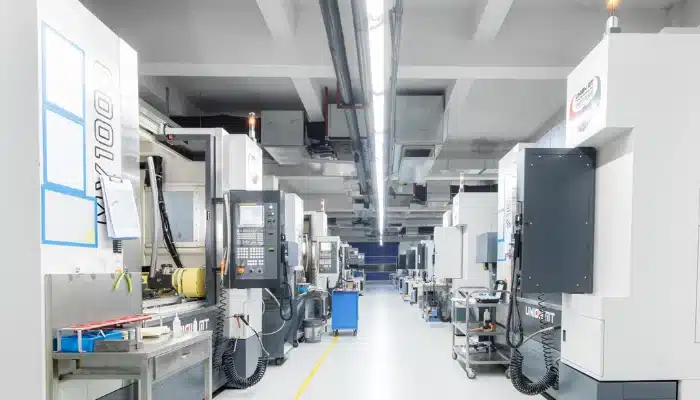
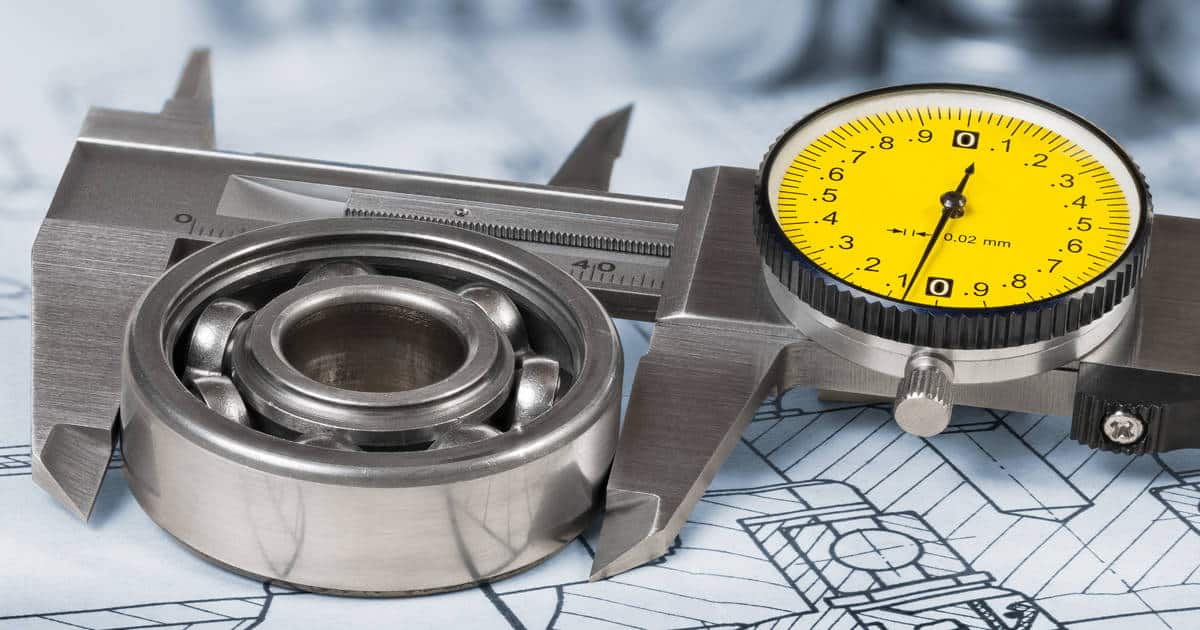
Ask what inspection equipment they use. CMMs (coordinate measuring machines) are the standard for dimensional verification of complex geometry. Optical comparators handle profiles. Surface profilometers measure Ra. A shop that inspects with hand tools and judgment is not equipped for precision work at controlled tolerances.
Precisão Yicen operates ISO-certified production with in-process CMM inspection. Equipment lists and facility documentation are available on request.
Step 3: Audit the Quality Management System
ISO 9001 certification is not a guarantee of quality. It’s a guarantee that a quality management system exists, has been documented, and was audited by a third party at the time of certification. What matters more than the certificate is how that system actually functions.
Request their quality policy and nonconformance rate. A supplier willing to share their incoming quality reject rate and their internal nonconformance data is a supplier whose quality system is generating useful information. A supplier who can’t produce these numbers either doesn’t track them or doesn’t want you to see them.
Ask about their corrective action process. When a quality issue occurs — and they will — how does the supplier respond? A supplier with a documented 8D or CAPA process will identify root cause, implement containment, and prevent recurrence. A supplier without a corrective action process will apologize and hope it doesn’t happen again.
Understand their incoming material inspection process. For machined parts, raw material quality directly affects finished part quality. A supplier who uses certified material with traceability, incoming hardness checks, and dimensional verification of stock is controlling a quality input that less rigorous suppliers ignore.
Step 4: Run a DFM Audit Before You Place an Order
One of the most revealing supplier qualification steps is submitting a design and asking for DFM feedback before requesting a quote. The quality of that feedback tells you more about a supplier’s engineering capability than any sales conversation.
A supplier with genuine DFM competence will identify features that will increase cost without functional benefit, tolerances that are tighter than the design requires, geometry that creates machining access problems, and material selections that are suboptimal for the application. They’ll flag these issues clearly, explain the implication, and suggest alternatives.
A supplier without DFM capability will quote the file as given — and you’ll discover the problems after the first article inspection.
Em Precisão Yicen, every order goes through a DFM review before machining begins. Problems caught at the DFM stage cost nothing to fix. Problems caught after machining cost full scrap plus lead time.
Step 5: Evaluate Communication Responsiveness
Communication quality predicts everything downstream. A supplier who takes 4 days to respond to a quote request will take 4 days to respond to a quality issue. A supplier who gives vague answers about lead times during the sales process will give vague answers about delivery status when your schedule depends on it.
Test communication before you commit. Send a technically detailed inquiry and evaluate: response time, technical quality of the response, whether they asked clarifying questions before answering, and whether they gave you a specific answer or a hedged non-answer.
The questions that reveal most about a supplier’s communication quality: “What is your on-time delivery rate over the trailing 12 months?” and “What is your process when a quality issue is discovered post-shipment?” A good supplier answers both specifically. A weak supplier deflects with generalities.
Time zone and language. For international suppliers, evaluate whether communication delays from time zone differences will create real operational problems for your program. For prototyping work where rapid iteration matters, same-day communication is often critical. For stable production programs with predictable schedules, a day of communication lag is usually manageable.
Step 6: Verify Financial Stability
A supplier who goes out of business mid-program leaves you with no parts, no tooling, and a schedule crisis. Financial stability vetting is especially important for sole-source components or parts with long tooling lead times.
Indicators of financial stability include: years in business (5+ years indicates a business that has navigated multiple market cycles), customer concentration (a supplier where 80% of revenue comes from one customer is highly vulnerable to that customer’s decisions), investment in equipment (recent capital investment indicates a supplier who sees a future in their business), and certifications (maintaining ISO certification requires ongoing investment and audit compliance).
For critical sole-source components, consider asking about business continuity planning and IP protection arrangements (where do tool files and programs live if the supplier closes?).
Step 7: Run a Controlled First-Article Trial
Before qualifying a supplier for production volume, run a controlled first-article trial. Submit a representative part — one that uses the same materials, tolerances, and processes you’ll need in production — and evaluate the outcome against a standard first-article inspection report (FAIR).
The FAIR documents dimensional compliance for every feature called out on the drawing, material certification against specification, surface finish measurements, and any processing certifications required. A supplier who can deliver a complete, accurate FAIR on a first-article order without prompting is a supplier whose quality systems are functioning.
Use the first-article trial to also evaluate: actual lead time versus quoted lead time, packaging and labeling quality, responsiveness to any issues found in the inspection, and quality of shipping documentation.
Conclusão
The right supplier isn’t the one with the lowest quote. It’s the one whose process capability, quality system, DFM competence, and communication responsiveness give you confidence that parts will be right, on time, and documented — every order, not just the first one.
Run the vetting framework before you commit. The cost of a thorough qualification is minor compared to the cost of a supplier relationship that fails after you’ve built it into your supply chain.
Request a quote from Yicen Precision and experience a supplier evaluation process that answers your technical questions before you place an order.
Perguntas mais frequentes
What certifications should a precision manufacturing supplier have?
ISO 9001 is the baseline quality management system certification for general precision manufacturing. ISO 13485 is required for medical device components. IATF 16949 indicates automotive-grade process control. AS9100 covers aerospace quality requirements. Beyond certifications, ask about third-party audit schedules, nonconformance rates, and corrective action documentation — these reveal how the quality system actually functions day-to-day.
How do I evaluate a supplier’s tolerance capability before placing an order?
Ask for a process capability statement and Cpk data on their critical processes. Specifically ask what tolerances they routinely hold on your target material with standard tooling, what inspection equipment they use (CMMs, optical comparators, profilometers), and whether they can provide a first-article inspection report with dimensional data. A supplier who can answer these questions specifically is demonstrating real capability. One who speaks only in generalities is not.
What is DFM review and why does it matter in supplier selection?
Design for Manufacturability (DFM) review is a supplier’s assessment of your design for features that add cost without functional benefit, tolerances that exceed what the process can hold economically, and geometry that creates machining or inspection challenges. A supplier who provides detailed DFM feedback before quoting is demonstrating engineering competence. A supplier who quotes any file as given without asking questions will discover the same problems later, at your expense.
How many suppliers should I qualify for a precision component?
For non-critical components with multiple potential sources, qualifying two suppliers provides redundancy without excessive qualification overhead. For critical components with sole-source geometry or material requirements, qualifying two suppliers is essential losing a sole-source supplier mid-program is a serious supply chain risk. For extremely high-value, low-volume components, a single qualified supplier with documented business continuity planning may be sufficient.
What should a first-article inspection report include?
A complete First Article Inspection Report (FAIR) documents: dimensional measurements for every feature called out on the drawing with actual vs. nominal values and tolerance compliance, material certification against the specification called on the drawing, surface finish measurement at specified locations, any processing certifications required (heat treatment, plating, anodizing), and the inspection equipment used with calibration status. A supplier who delivers a complete FAIR unprompted has a quality system that is functioning correctly.


 Portuguese
  English
  French
  Spanish
  Japanese
  German