 Saltar para o conteúdo
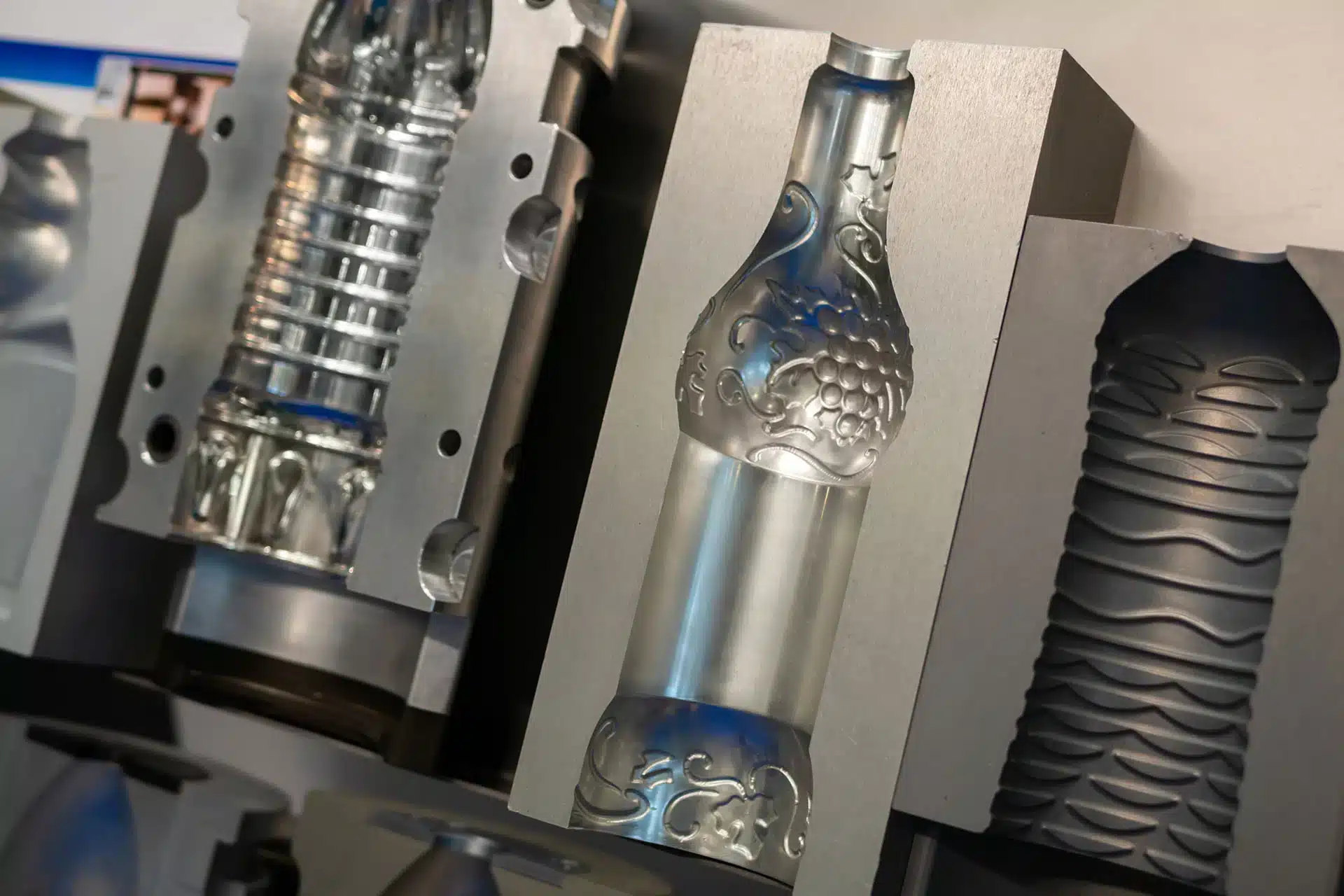
An injection molding quote has three major cost buckets: tooling (the mold), per-part material cost, and per-part processing cost (machine time, cycle time, labor). Tooling is a one-time fixed cost that typically runs $3,000–$80,000 depending on part complexity and number of cavities. Per-part cost drops as volume increases because the tooling is amortized across more units. This guide breaks down every line item in a typical injection molding quote, explains what drives each cost, and gives you the design decisions that reduce total program cost without compromising part quality.
The injection molding quote that comes back $40,000 higher than you expected usually contains a tooling cost that wasn’t in the budget. The one that comes back suspiciously low usually has a single-cavity tool where you needed four cavities, or a P20 steel mold where the annual volume requires H13 hardened steel.
Understanding what’s inside an injection molding quote before you send out the RFQ means you can structure the design and the program to get the right cost outcome. Not the cheapest quote. The right one for your volume, quality requirements, and program timeline.
Em Precisão Yicen, we work with product teams on precision CNC parts and 3D printed prototypes through the development cycle, including bridging parts for teams waiting on injection mold tooling. This guide gives you the cost framework so you know exactly what you’re buying when a molding quote lands on your desk.
Cost Bucket 1: Tooling
Tooling is the mold the precision-machined steel tool that defines the part geometry. It’s a capital cost, paid once, that enables every subsequent production run. Everything about tooling cost comes down to five variables: part complexity, part size, number of cavities, steel grade, and expected shot life.
Complexidade da peça
Simple geometry box shapes, uniform wall thickness, no undercuts, minimal surface finish requirements produces a simple tool. A tool for a flat housing cover with a few through-holes and no draft angle complications might be machined in 200 hours of combined milling, EDM, and polishing time.
Add a lifter to create an undercut feature, a side action for a lateral hole, or a core collapse for an internal undercut, and tooling complexity multiplies. Each additional mechanism adds 40–120 hours of machining and fitting time, plus mechanism-specific steel components. A part with three side actions in a single-cavity tool costs 2–3 times more to tool than the same part redesigned without undercuts.
This is the most powerful DFM lever available in injection molding: redesign out the undercuts before the tooling quote. Adding 1° of draft, relocating a feature to eliminate a side action, or splitting a complex part into two simpler parts can cut tooling cost by $8,000–$20,000 on a medium-complexity tool.
Number of Cavities
A single-cavity tool produces one part per shot. A four-cavity tool produces four parts per shot from the same press cycle. The per-part production cost drops proportionally with cavities.
The tradeoff: a four-cavity tool costs 2.5–3.5 times more than a single-cavity tool for the same part. The tooling premium pays back in per-part cost reduction at higher volumes.
The break-even calculation: if single-cavity tooling costs $8,000 and four-cavity tooling costs $22,000, the tooling premium is $14,000. If adding cavities reduces per-part cost from $0.80 to $0.25 (due to faster effective cycle time), the four-cavity tool breaks even at $14,000 ÷ ($0.80 − $0.25) = 25,455 parts. Above that volume, every additional part saves $0.55 versus the single-cavity tool.
Steel Grade and Expected Shot Life
| Grau de aço | Hardness | Expected Shot Life | Typical Use |
| Aluminum tooling | N/A | 1,000–10,000 shots | Prototype / bridge tooling |
| P20 pre-hardened steel | 28–34 HRC | 500,000 shots | Standard production |
| H13 hardened steel | 48–52 HRC | 1,000,000+ shots | High-volume production |
| S136 stainless | 50–54 HRC | 500,000+ shots | Corrosive materials (PVC, flame retardants) |
Aluminum prototype tooling cuts 4–6 weeks off the tooling timeline and costs 60–70% less than P20 steel. It’s appropriate for design validation, early customer samples, and bridge production while production tooling is built. It is not appropriate as a permanent production tool above 10,000 shots — the soft aluminum wears at gate locations and on shut-off surfaces, producing flash and dimensional drift.
For production programs expecting 500,000+ shots annually, H13 hardened steel is the correct specification. P20 at that volume produces progressive wear that causes dimensional drift before the tool amortizes. The additional tooling cost of H13 over P20 typically $4,000–$10,000 depending on tool size avoids a $25,000+ re-tool.
Cost Bucket 2: Material
Material cost is straightforward: resin price per kilogram times part weight in grams, plus a scrap factor for runner and sprue material that doesn’t become finished parts.
Resin price ranges by material class:
- Commodity resins (PP, PE, ABS, PS): $1.50–$4.00 per kg
- Engineering resins (PC, PA, POM, PBT): $4.00–$9.00 per kg
- High-performance resins (PEEK, PPS, LCP): $40–$120+ per kg
For a 50-gram ABS housing at $2.50 per kg, raw material cost is $0.125 per part before scrap factor. With a 15% runner/sprue scrap factor (assuming a cold runner system), effective material cost is approximately $0.145 per part.
Hot runner vs. cold runner impact on material cost. A hot runner system keeps the resin in the runner channels molten between shots, so the runner is not a separate piece of solidified plastic to be discarded or re-ground. For materials priced above $5/kg or parts with large runner-to-part weight ratios, a hot runner system pays back its $3,000–$8,000 tooling premium quickly. For commodity resins where runner material can be re-ground and reused at minimal quality impact, cold runners are usually more economical.
Filled and reinforced resins. Adding glass fiber (GF), carbon fiber (CF), or mineral fill changes both material cost and processing requirements. 30% GF-nylon costs roughly 60–80% more per kg than unfilled nylon. It also requires hardened tool steel (glass fiber is abrasive and wears aluminum or P20 tools rapidly), higher injection pressure, and faster fill speeds to prevent fiber orientation issues. These requirements increase both tooling cost and per-part processing cost. Specify filled resins only where the mechanical property improvement is structurally required.
Cost Bucket 3: Processing Cost (Machine Time and Cycle Time)
Processing cost is the cost of running the injection molding press for each shot cycle. It’s calculated as: press hourly rate × cycle time.
Press hourly rates vary by machine tonnage: 50–150 ton machines run $35–$65 per hour; 400–800 ton machines run $80–$150 per hour; above 1,000 tons, $150–$300 per hour. Larger parts require larger presses.
Cycle time is the total time from clamp close to part ejection. It has three components: fill time (0.5–5 seconds for most parts), pack and hold time (2–15 seconds), and cooling time (5–60+ seconds depending on wall thickness and material).
Cooling time is where DFM matters most in processing cost. Cooling time scales approximately with the square of wall thickness. Doubling wall thickness from 2 mm to 4 mm increases cooling time by roughly 4×. A part with 3 mm nominal wall thickness and a 2 mm rib has different cooling rates in those two regions — the thicker rib region cools slower, causing sink marks on the opposite surface unless the rib thickness is correctly designed.
The standard rule: rib thickness should not exceed 60% of the adjacent wall thickness. A 3 mm wall should have ribs no thicker than 1.8 mm. Following this rule keeps cooling time uniform and eliminates sink marks without adding any tooling cost.
Secondary operations cost is often missing from first-pass quotes. Heat staking inserts, ultrasonic welding, pad printing, assembly operations — these add to the per-part cost and must be specified in the RFQ for the quote to be accurate. A quote for the molded part alone is not a quote for the finished part.
How to Read a Complete Injection Molding Quote
A fully itemized injection molding quote should show: tooling cost (itemized by component where possible), steel grade and expected shot life, number of cavities, runner system type (hot or cold), gate type and location, per-part resin cost, per-part processing cost, per-part secondary operation costs if applicable, and expected lead time for tooling and first articles.
A lump-sum quote with a single line item labeled “tooling” and another labeled “parts” is not an auditable quote. It makes it impossible to evaluate whether the tool specification matches your volume requirements or whether the per-part cost reflects the correct resin grade.
Ask for itemization. A supplier confident in their pricing will provide it. A supplier who resists itemization is protecting a margin structure that doesn’t survive scrutiny.
When CNC Machining Beats Injection Molding on Total Cost
Injection molding’s economic advantage only materializes after tooling is amortized. Before that point, CNC machining produces the same plastic parts at lower total program cost.
The crossover volume depends on tooling cost, per-part cost differential, and whether the part is feasible in both processes. A general reference: for parts where injection molding per-part cost is $0.50 and tooling is $15,000, and CNC machined equivalent is $8.00 per part, the break-even is 15,000 ÷ ($8.00 − $0.50) = 2,000 parts. Below 2,000 parts, CNC wins. Above it, molding wins.
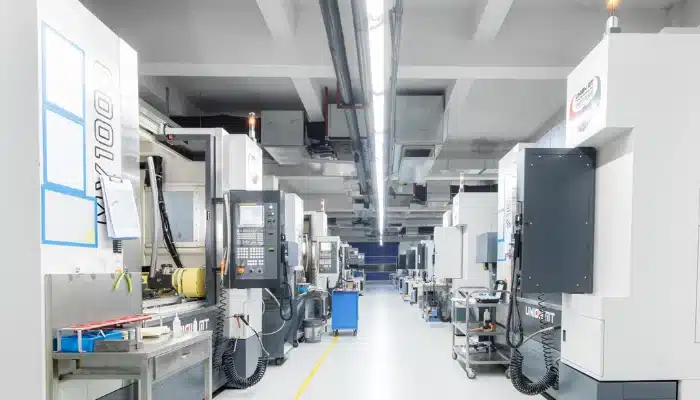
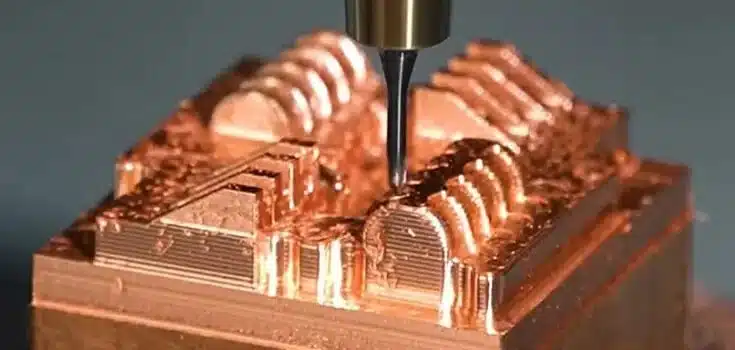
For structural prototypes, design validation parts, and bridge production before tools are ready, Yicen Precision’s CNC machining e 3D printing services provide full-property parts with no tooling cost and lead times of 1–7 days.
Conclusão
An injection molding quote has three cost buckets: tooling, material, and processing. Each is driven by design decisions you control. Undercuts add tooling cost. Wall thickness drives cooling time and processing cost. Resin selection affects both material cost and tool wear rate. Cavity count determines the volume at which total program cost is minimized.
Understand what’s inside the quote before the mold steel is ordered. DFM changes that cost nothing at design stage can eliminate $10,000–$30,000 in tooling and avoid processing problems that show up in first-article inspection.
Contact Yicen Precision for CNC machined prototypes and bridge parts while your injection mold tooling is in production. Fast lead times, ISO-certified quality, parts in as little as 24 hours.
Perguntas mais frequentes
What does injection mold tooling cost?
Tooling cost depends on part complexity, part size, number of cavities, and steel grade. Simple single-cavity tools in P20 steel run $3,000–$10,000. Medium-complexity tools with side actions or lifters in P20 run $10,000–$35,000. High-complexity multi-cavity tools in H13 hardened steel for high-volume production run $35,000–$80,000 or more. Aluminum prototype tooling runs 40–60% less than equivalent P20 steel tooling and is appropriate for validation quantities up to 10,000 shots.
How does wall thickness affect injection molding cost?
Cooling time scales approximately with the square of wall thickness — the primary driver of cycle time, which determines machine time cost per part. A part with 4 mm wall thickness takes roughly four times longer to cool than a 2 mm wall part, quadrupling the processing cost contribution from cooling. Uniform wall thickness also prevents differential shrinkage that causes warpage and sink marks. Aim for 2–3 mm nominal wall for most structural plastics; stay below 4 mm unless structural requirements explicitly require it.
What is a hot runner system and when is it worth the cost?
A hot runner system keeps resin in the runner channels molten between shots by heating the runner manifold electrically. The runner is not ejected as solid waste — it remains in the tool and feeds the next shot. Hot runners eliminate runner scrap and can reduce cycle time by 15–30% by enabling faster gate freeze. The tooling premium is $3,000–$8,000. Hot runners pay back quickly for materials priced above $5/kg, for large runner-to-part weight ratios, or for high-volume programs where cycle time reduction compounds across millions of shots.
How many cavities do I need in my injection mold?
The right number of cavities depends on your annual volume and the per-part cost reduction achievable by adding cavities. Calculate the tooling premium for additional cavities and divide by the per-part cost reduction to find the break-even volume. Below the break-even, fewer cavities are more economical. Above it, more cavities reduce total program cost. A single-cavity tool is usually appropriate below 50,000 parts annually; four cavities becomes economic at 200,000+ parts annually for typical part sizes and cycle times.
How long does injection mold tooling take to build?
P20 steel single-cavity tooling for simple parts: 3–5 weeks. Multi-cavity or complex tooling with side actions in P20: 6–10 weeks. H13 hardened steel production tooling: 8–14 weeks. Aluminum prototype tooling: 1–2 weeks. These are tooling lead times to first article samples — production delivery follows first article approval and any required tool modifications. Plan 10–16 weeks from design freeze to validated production parts for standard complexity tooling.
 Portuguese
  English
  French
  Spanish
  Japanese
  German