 Saltar para o conteúdo
TL;DR: Small batch manufacturing lets you produce 1 to 500 precision parts without committing to mass-production volumes. The problem isn’t the process it’s that most traditional suppliers price small runs punitively, hiding setup fees that can make 10 parts cost as much as 500. This guide breaks down how MOQ economics actually work, which processes are genuinely viable at low volumes, how to structure your RFQ to get fair pricing, and what to look for in a supplier who won’t penalize you for not ordering 10,000 units.
You’ve finalized your design. You need 25 machined aluminum brackets to validate the assembly before committing to production tooling. You send out RFQs and get back quotes that assume you’re a small inconvenience. Setup fees of $400 on a $600 order. MOQ requirements of 100 units minimum. One shop doesn’t respond at all.
This is the small batch sourcing problem. It’s not a materials problem or a geometry problem. It’s an economic structure problem and understanding it is the first step to solving it.
Em Precisão Yicen, we run small batch orders from quantity 1. No artificial minimums, no setup fee penalties. This guide explains why those fees exist, how to work around them, and how to evaluate suppliers who are actually set up to serve low-volume precision work.
Why Do Traditional Suppliers Impose High MOQs?
Traditional machine shops and contract manufacturers structure their pricing around amortizing fixed costs machine setup time, fixture fabrication, programming, and quality documentation across a volume of parts. When you order 500 brackets, that $300 setup cost adds $0.60 per part. When you order 10, it adds $30 per part.
The shop isn’t being unreasonable. Their business model is built on volume efficiency. A 3-axis CNC mill running a production program for 8 hours generates revenue. The same machine sitting idle while a machinist reprograms it for your 10-part prototype order does not.
This is why small batch orders from traditional shops often come with three structural problems: setup fees that don’t scale down, minimum order quantities that don’t match your actual need, and lead times calculated for production scheduling, not prototype velocity.
The solution isn’t to find a shop that “does small runs on the side.” It’s to work with a facility structurally designed for mixed-volume work one where the pricing model, programming workflow, and scheduling systems are built around fast-turnaround, low-volume production.
What Processes Are Actually Viable at Low Volumes?
Is CNC Machining Cost-Effective for Small Batches?
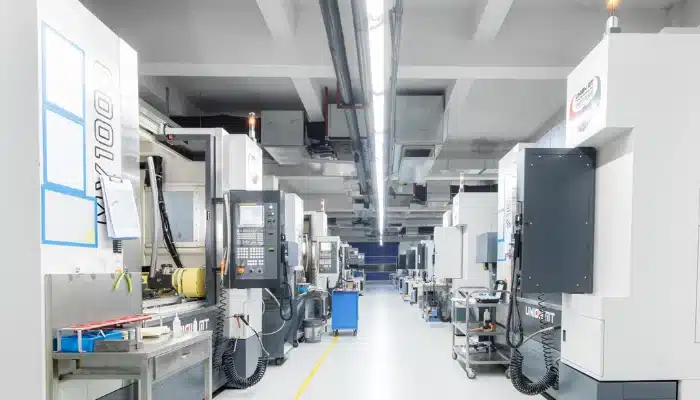
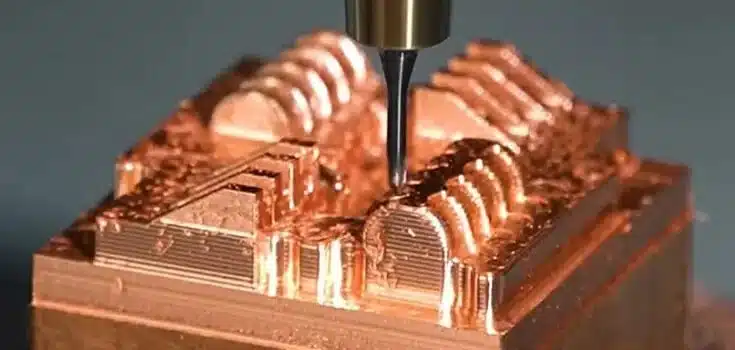
CNC machining is the most viable small-batch process for precision metal and plastic parts. There’s no tooling cost beyond the cutting tools already on the machine, no setup investment that has to be amortized, and no volume threshold before it becomes economic. A single CNC machined part can be quoted, programmed, and shipped within 24–72 hours.
The cost floor for a simple CNC part is roughly $50–$150 depending on material, geometry, and tolerances. That floor doesn’t change dramatically whether you order 1 or 20 parts. Above 50–100 units, per-part cost starts dropping meaningfully as the programming overhead gets spread across more pieces.
For quantities above 500, evaluate whether injection molding or die casting makes more economic sense depending on material and geometry requirements.
Where 3D Printing Fits and Where It Doesn’t
Additive manufacturing has no setup cost and no practical MOQ, which makes it genuinely good for concept models and fit-check prototypes. Lead times can be 24 hours or less for simple geometries.
The problem is material fidelity. FDM parts have anisotropic strength properties. SLA parts are brittle under load. Even metal 3D printing produces parts with porosity levels and surface roughness that require secondary machining before they meet functional tolerances. If you need parts that behave like production parts under real load conditions, machining is the right answer.
3D printing is best used to validate geometry cheaply before committing to machined prototypes. Not as a substitute for them. Yicen offers both Impressão 3D and CNC machining so you can use each process where it actually belongs.
Sheet Metal at Low Volume
Fabrico de chapas metálicas at low volume depends heavily on whether your design requires custom tooling (punches, dies) or can be produced entirely with laser cutting and standard press brake tooling. Laser-cut and bent sheet metal parts can be produced from quantity 1 with no tooling cost. Parts requiring custom punch tooling carry a die cost that only amortizes at higher volumes — typically 200+ units.
If you’re in the 1–50 unit range for sheet metal, design for laser cutting and standard bend radii. Avoid features that require custom punching.
How to Structure Your RFQ to Get Accurate Small-Batch Pricing
Most RFQ rejections and inflated quotes on small batch orders happen because the buyer didn’t give the supplier enough information to quote confidently. Uncertainty gets priced as risk. Here’s how to eliminate it.
Provide a complete STEP or IGES file. Not a PDF drawing alone. Suppliers who have to interpret a 2D drawing to model your part are guessing at geometry, and guessing gets priced in.
Specify tolerances explicitly — and only where they matter. If your drawing calls out ±0.01 mm on every feature, a supplier will quote as if every feature needs precision setup. Call out tight tolerances only where the design actually requires them. General dimensions can reference ISO 2768 medium or fine.
State your surface finish requirement. Ra 3.2 µm (125 µin) is a standard machined finish. Ra 0.8 µm (32 µin) requires additional passes. If you don’t specify, you’ll get either an assumption or a clarification request that delays your quote.
Be upfront about quantity tiers. If you need 10 now and anticipate ordering 100 in three months, say that. Some suppliers will price the initial run more reasonably if they understand the long-term relationship.
Ask for itemized pricing. A quote that shows setup, material, machining, and finishing separately tells you where your cost is concentrated. A lump-sum quote hides the structure and makes it impossible to optimize.
The Real Cost Comparison: In-House vs. Outsourced Small Batch
Buyers who consider building in-house machining capacity to avoid small-batch sourcing problems often underestimate the real cost of that decision. A capable 3-axis CNC mill costs $30,000–$150,000. Add tooling, fixtures, a CAM software license, and a machinist’s fully-loaded salary, and you’re looking at $150,000–$250,000 per year in fixed overhead before a single chip is cut.
That overhead has to be absorbed whether the machine runs at 30% utilization or 90%. At low utilization — typical for an in-house prototype shop — the effective cost per machined part is often 3 to 5 times higher than outsourcing to a purpose-built precision facility.
The math favors outsourcing for most engineering teams until you’re running machined parts consistently at 2,000+ hours per year. Below that threshold, a reliable external precision partner like Precisão Yicen is almost always the more cost-effective choice.
What to Look for in a Small-Batch Precision Supplier
Not every supplier that claims to do small runs is actually set up for them. Here’s how to evaluate before you commit.
No artificial MOQ. A supplier confident in their pricing structure doesn’t need an MOQ to protect their margins. An MOQ of 50 or 100 units on a CNC machining quote is a signal that small runs aren’t their actual business.
DFM feedback before machining. Good small-batch suppliers catch design problems before they become scrap. If a supplier quotes your file without asking a single question about tolerances or geometry, they either didn’t look carefully or they plan to charge you for revisions later.
Transparent lead time commitments. “We’ll get to it when we can” is not a lead time. A supplier serious about prototype work gives you a specific ship date at the time of quote and hits it.
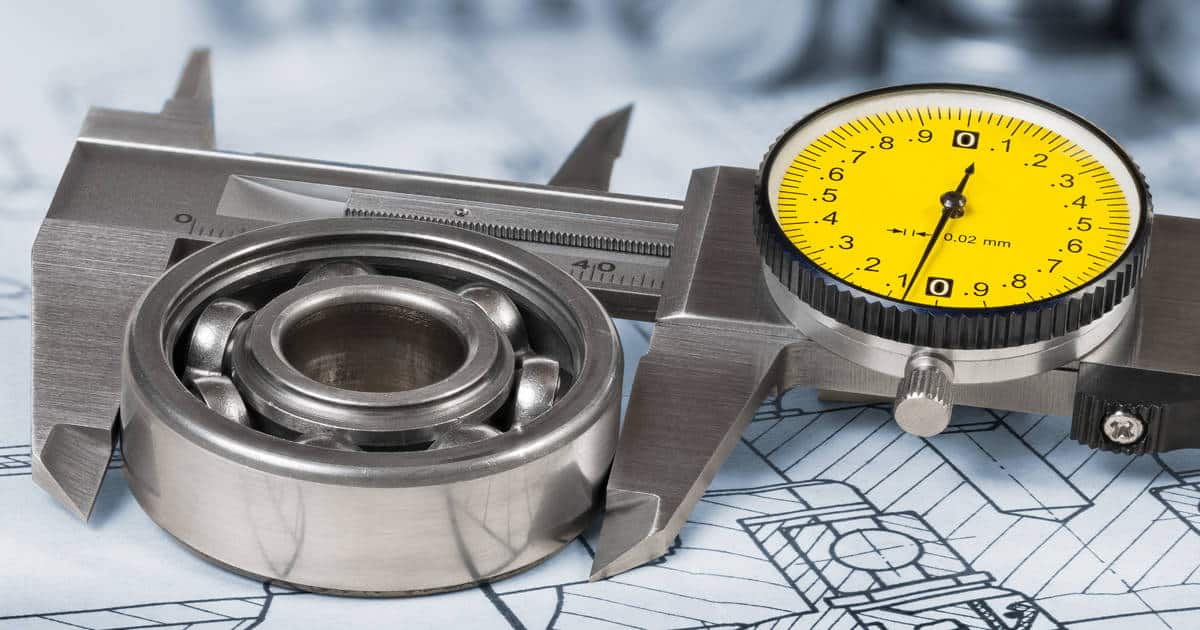
ISO certification and inspection documentation. Even on small batches, you need dimensional verification against your drawing. ISO 9001 certification is the minimum baseline. Ask what inspection equipment they use — CMMs, optical comparators, and surface profilometers are standard at a real precision shop.
Online quoting capability. If getting a price requires a 3-day back-and-forth email cycle, that shop isn’t optimized for the speed that small-batch prototyping requires. Instant or same-day quoting is now table stakes.
Conclusão
Small batch manufacturing is not a compromise. Done right with the right process selection, a well-structured RFQ, and a supplier actually built for low-volume precision work you get functional, inspection-documented parts faster and cheaper than any in-house alternative.
The MOQ trap is real, but it’s avoidable. Work with suppliers who price small runs honestly, give DFM feedback before machining, and commit to lead times they actually hit.
Upload your design file and get an instant quote from Yicen Precision. No minimum order. No setup fee penalties. Parts in as little as 24 hours.
Perguntas mais frequentes
What is the minimum order quantity for CNC machined parts at Yicen Precision?
There is no minimum order quantity. CNC machining is economic from a single part, and Yicen Precision quotes and produces orders starting at quantity 1. For very low volumes (1–5 parts), per-part cost is highest because setup and programming overhead is spread across fewer pieces. That cost drops noticeably at 10–20 units and continues declining through 100+ units.
Why is small batch manufacturing more expensive per part than high volume?
Fixed costs machine setup, CAM programming, fixture preparation, and quality documentation are spread across fewer parts at low volumes, which raises the cost per unit. A setup that costs $200 adds $200 per part at quantity 1 and $2 per part at quantity 100. This is a structural reality, not a pricing choice. Suppliers who advertise zero setup fees are typically building that cost into the base rate.
Which manufacturing process is best for prototype quantities of 1–10 parts?
CNC machining is the best process for functional metal or engineering plastic prototypes at 1–10 units. It produces parts with true material properties, tight tolerances, and finished surfaces without any tooling investment. 3D printing is faster and cheaper for pure geometry validation but should not be substituted for machined prototypes when functional performance under load matters.
How do I reduce cost on small batch CNC orders?
The fastest levers are: simplify geometry where tolerances aren’t functionally required, reduce the number of setups by designing for single-side machining where possible, specify tight tolerances only on mating features, and choose standard material stock sizes that don’t require custom material sourcing. A DFM review from your supplier before quoting will surface most of these opportunities.
What files do I need to submit for a small batch quote?
A STEP or IGES 3D file is required for an accurate quote. A PDF or 2D drawing should accompany it to capture tolerances, surface finish requirements, and material specifications. Submitting a STEP file without a drawing leads to assumptions that may not match your design intent.

 Portuguese
  English
  French
  Spanish
  Japanese
  German