 Skip to content

CNC machining is a computer-controlled subtractive process that cuts precise parts from solid metal or plastic blocks. Standard tolerances run ±0.005 inches on a 3-axis mill; tighter specs are achievable but cost more. It’s the right process for functional prototypes, low-to-mid volume production runs, and any part that needs geometry injection molding can’t deliver. This guide covers how it works, what operations matter, which materials machine well, and what actually drives your per-part cost.
If your parts have failed in the field, the machine usually isn’t the problem. Nine times out of ten, the issue traces back to a design that wasn’t optimized for the process before the first chip was cut. CNC machining is only as good as the instructions you give it — and understanding what it can and can’t do is how buyers stop paying for mistakes.
CNC machining (Computer Numerical Control machining) is the backbone of precision part production across aerospace, automotive, medical, and robotics. At Yicen Precision, we run CNC jobs from single prototypes to high-volume production runs, across 50+ materials, with ISO-certified quality standards on every order. This guide gives you the real picture: what the process does, what it costs, and how to spec your parts correctly the first time.
What Is CNC Machining, and How Is It Different from Other Processes?
CNC machining is a subtractive manufacturing method. A computer-controlled cutting tool removes material from a solid block — called a workpiece or billet — until the finished part geometry remains. The machine reads a program written in G-code and M-code, generated automatically from your CAD file by CAM software. No manual tool guidance. No operator interpreting a drawing by eye.
That’s the critical difference from traditional machining: consistency. A CNC mill running the same G-code program on part 1 and part 5,000 produces identical geometry within the same tolerance band. That repeatability is why industries with zero tolerance for dimensional variation — aerospace, medical devices, semiconductors — rely on it.
Compare that to 3D printing, which builds geometry up layer by layer and carries anisotropic strength properties. Or injection molding, which requires upfront tooling investment that only pays off at volumes above roughly 1,000 units. CNC machining sits in the middle: no tooling cost, fully functional material properties, tight tolerances, and economic from quantity 1.
How Does the CNC Machining Process Work?
The process runs in three stages. Each one affects your lead time and final part quality.
Stage 1: Design and DFM Review
Your CAD file (typically exported as STEP or IGES) goes through a Design for Manufacturability (DFM) review. This is where problems get caught before they cost money. Features that are too thin to machine without deflection, internal corners with no radius, or tolerances tighter than the process can hold — all flagged here. Skipping DFM is how buyers end up with revision cycles that double their lead time.
Stage 2: Pre-processing and G-Code Generation
CAM software converts your geometry into toolpaths and generates the G-code and M-code that drives the machine. G-codes control movement (feed rate, spindle speed, axis position). M-codes handle machine functions (coolant on/off, tool changes). This step takes minutes for simple parts. Complex 5-axis geometry takes longer. Either way, the quality of your design determines the quality of the output code — garbage in, garbage out.
Stage 3: Machining
The machine executes the program. Cutting tools remove material in controlled passes, following standard ISO 2768 tolerances unless tighter specs are called out on your drawing. The machinist monitors tool wear, applies coolant where needed, and runs inspection checks at set intervals. When the cycle completes, the part goes to inspection before it ships.
What CNC Operations Should You Know About?
The operation type determines what geometries are achievable, which materials are practical, and what tolerances are realistic. Most complex parts require two or more operations in sequence.
CNC Milling removes material using a rotating multi-point cutter while the workpiece stays fixed. It handles flat surfaces, pockets, slots, and complex 3D contours. CNC milling comes in 3-axis, 4-axis, and 5-axis configurations. 3-axis handles most standard parts. 5-axis machines move on five simultaneous axes, which lets them cut complex undercuts and compound angles in a single setup — fewer setups means better geometric accuracy and shorter lead times.
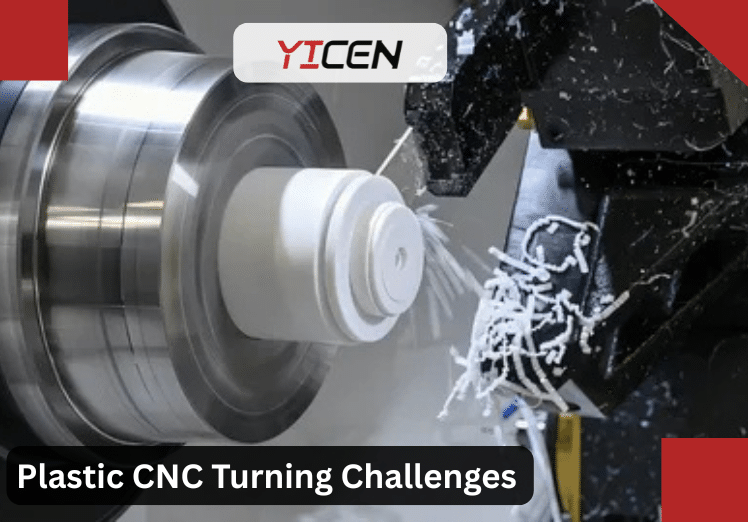
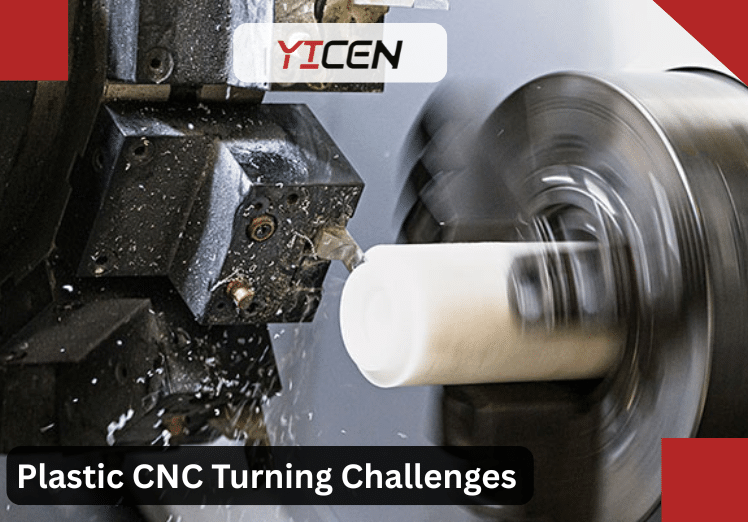
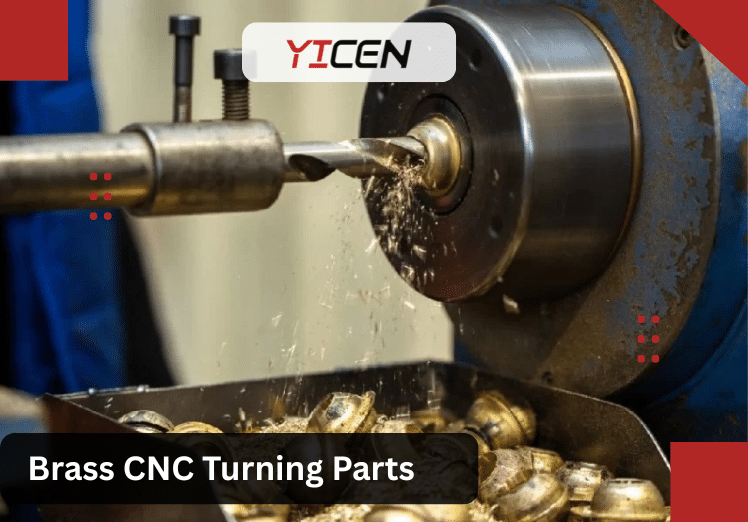
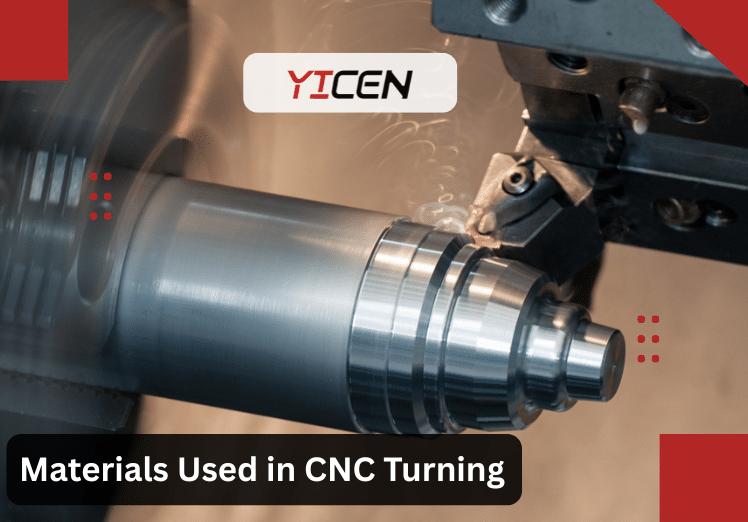
CNC Turning rotates the workpiece against a stationary cutting tool, producing cylindrical geometry. Shafts, bushings, threaded rods, and flanges are all turning jobs. CNC turning centers combine turning with milling and drilling in one setup, which is standard now for most precision shops.
CNC Drilling produces holes of controlled diameter and depth. It’s rarely a standalone operation — it’s typically done in the same setup as milling or turning. The precision matters: a hole drilled 0.002 inches off-center on an aerospace bracket can fail a fit check and scrap the part.
Wire EDM uses a thin electrically charged wire to erode material with spark discharge. No cutting forces means it can machine hardened tool steels and produce sharp internal corners that milling physically can’t reach. Wire EDM machining is slower and more expensive than milling, but for die components, precision slots, or parts where the geometry is impossible to mill, there’s no alternative.
CNC Routing is milling’s cousin — lower spindle forces, higher speeds, designed for softer materials like wood, composites, and some plastics. If you’re machining structural foam or carbon fiber panels, routing is the right operation.
Laser and Plasma Cutting are 2D profile operations for sheet stock. Fast, cost-effective for flat parts, but they don’t produce the 3D geometry that milling and turning do.
What Materials Can CNC Machining Handle?
CNC machines work across a wide range of metals and engineering plastics. Material choice affects machinability, tool wear, cycle time, and your per-part cost. Here’s how buyers should think about it.
Aluminum (6061, 7075) is the most commonly machined metal. It cuts fast, holds tight tolerances, and costs less per hour to machine than steel or titanium. Aluminum 6061 is the default for structural brackets, housings, and prototypes. 7075 is stronger but harder to machine and more expensive. If your part doesn’t explicitly need steel, aluminum is usually the right call.
Steel (mild steel, 4140, 303/304 stainless) is tougher on tooling and slower to cut. Cycle times run 2 to 3 times longer than aluminum for equivalent geometry. Use it when hardness, wear resistance, or corrosion resistance requirements justify the cost.
Titanium (Grade 5, Ti-6Al-4V) machines at slow feed rates, generates heat aggressively, and burns through cutting tools. It’s necessary in aerospace and medical implants. Expect significantly higher per-part costs compared to aluminum.
Engineering Plastics (PEEK, Delrin, nylon, ABS) machine well but require different tooling and chip management than metals. PEEK is the go-to for medical and high-temperature applications. Delrin is excellent for bushings and low-friction components.
Browse Yicen’s full material options — 50+ metals and plastics available across all services.
What Tolerances Can CNC Machining Actually Hold?
Standard CNC machining follows ISO 2768 general tolerances — typically ±0.1 mm (±0.004 in) for dimensions under 30 mm. Most precision shops, including Yicen, routinely hold ±0.05 mm (±0.002 in) on well-designed parts without special process controls.
Tight tolerances — ±0.025 mm (±0.001 in) and below — are achievable but require slower feed rates, premium tooling, temperature-controlled environments, and more inspection time. Every step tighter adds cost. The rule of thumb: tighter than ±0.025 mm typically means you’re moving from milling into grinding or EDM territory.
The most common buyer mistake is over-tolerancing. If a bracket doesn’t need ±0.005 mm, don’t call it out. Tight tolerances on non-critical features are one of the fastest ways to inflate your part cost without any functional benefit. On a design review, the first question we ask is: why does this feature need this tolerance? If the answer isn’t “because it mates with X component,” the tolerance is probably wrong.
Which Industries Source CNC Parts (and What Do They Prioritize)?
Aerospace requires tight tolerances on lightweight alloys and exotic materials. Titanium and aluminum 7075 are common. Documentation trails and material certifications are non-negotiable. Lead time pressure is high — program schedules don’t flex.
Automotive prioritizes consistency at volume. A supplier that holds ±0.05 mm on part 1 but drifts to ±0.15 mm on part 500 is useless. Statistical process control and in-process inspection are expected, not optional.
Medical Devices demand biocompatible materials (medical-grade stainless, titanium, PEEK) and traceability. ISO 13485 certification is often a supplier requirement. Surface finish specs are tight — Ra values matter as much as dimensional tolerances.
Robotics and Automation need structural parts with complex geometry — brackets, housings, end effectors — often in aluminum. Fast turnaround matters because development cycles move quickly. Yicen’s rapid prototyping service delivers parts in 24 hours when schedules are tight.
Consumer Electronics requires aesthetic surface finishes alongside tight dimensional tolerances. Anodized aluminum enclosures and precision plastic housings are common project types.
When Does CNC Machining Make Sense for Your Project?
CNC is the right process when your part needs functional material properties, tight tolerances, and you’re working at quantities from 1 to a few thousand. It’s also the only practical option when geometry is too complex for injection molding or too precise for 3D printing.
3D printing is faster and cheaper for concept models that don’t need structural integrity. But it can’t match CNC on tolerances, surface finish, or true material properties in metals. For anything going into a functional assembly under load, CNC is the right answer.
Injection molding beats CNC on cost per part — but only above roughly 1,000 units, and only after you’ve absorbed the tooling cost (typically $5,000 to $50,000+ depending on complexity). For quantities below that, CNC is almost always more economical. For parts with geometry that molding simply can’t produce — undercuts, thin walls with tight tolerances, mixed metal/plastic assemblies — CNC wins regardless of volume.
The decision is rarely complicated. If you need real parts that work in the real world, and you’re not running hundreds of thousands of identical units, CNC machining is almost certainly the right call.
Work With a Precision CNC Partner Who Gets It Right the First Time
Every part Yicen Precision ships goes through DFM review, in-process inspection, and final dimensional verification against ISO-certified standards. We machine 50+ materials, offer 30+ surface finishes, and deliver prototypes in as little as 24 hours.
Stop paying for revision cycles caused by DFM issues that should have been caught before machining started. Upload your design file and get an instant quote today.
Frequently Asked Questions
What does CNC stand for in manufacturing?
CNC stands for Computer Numerical Control. It refers to the automated system that controls machine tool movements using pre-programmed instructions (G-code and M-code) generated from a CAD/CAM software workflow. The “numerical” part refers to the coordinate-based positioning system the machine uses to move cutting tools precisely.
What’s the difference between CNC milling and CNC turning?
Milling uses a rotating cutting tool to remove material from a stationary workpiece — it’s used for flat surfaces, pockets, slots, and 3D contours. Turning rotates the workpiece against a stationary tool to produce cylindrical geometry like shafts, threads, and bores. Many modern turning centers combine both operations in a single setup.
What tolerances can CNC machining hold?
Standard CNC machining holds ±0.1 mm (±0.004 in) under ISO 2768 general tolerances. Precision setups routinely achieve ±0.05 mm (±0.002 in). Tighter than ±0.025 mm (±0.001 in) typically requires grinding or EDM rather than standard milling, along with additional process controls that increase cost.
How long does it take to get CNC machined parts?
Lead times depend on part complexity, material availability, and quantity. Simple parts in standard materials can ship in 24 hours from Yicen’s rapid prototyping service. More complex geometries or tight tolerance requirements typically require 3 to 7 business days. Production runs are quoted with specific timelines at the time of order.
What’s the minimum order quantity for CNC machined parts?
CNC machining has no minimum order quantity — it’s economic from a single part. That’s one of its core advantages over processes like injection molding, which require tooling investment that only pays off at higher volumes. Whether you need 1 part or 10,000, CNC machining scales to fit.
Interested in getting your parts machined with tight tolerances and fast turnaround?Request a quote from Yicen Precisionand upload your design file to get started.
 English
  French
  Spanish
  Japanese
  German
  Portuguese