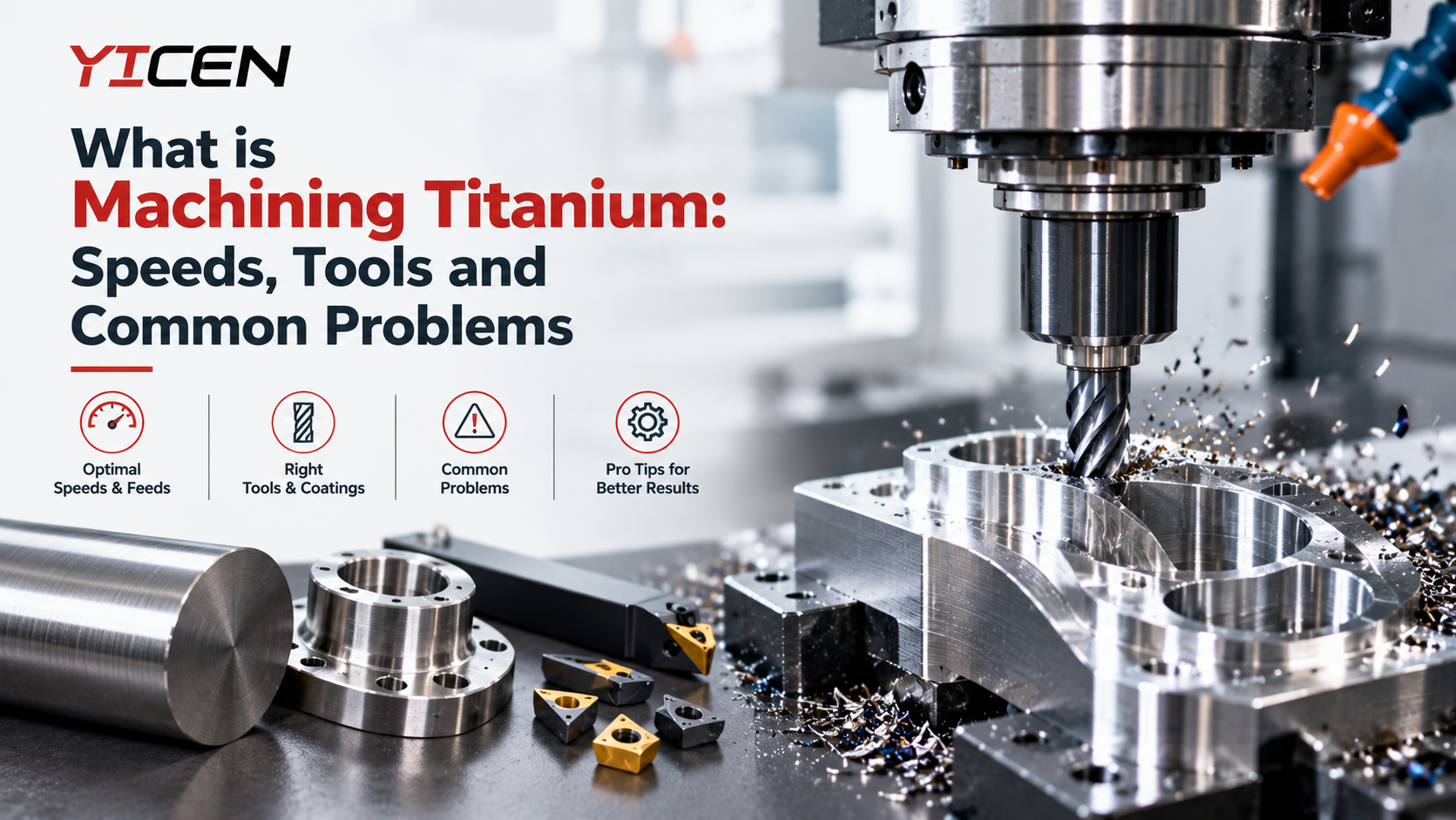
Titanium humbles people. One minute the cut sounds fine, the next you’re staring at a dead end mill and a scrapped blank. Machining titanium isn’t magic, though. It just doesn’t forgive sloppy habits. Teams in the aerospace industry, medical and racing keep choosing it because it’s light, strong and doesn’t corrode. The price is a metal that fights back on the machine. Here’s what actually works: starting speeds, tool choices and fixes for the problems that burn the most money.
Why Is Titanium So Hard on Your Tools?
Three things go wrong, and they feed each other.
Heat comes first. Titanium is a poor conductor. On steel, the chip hauls most of the heat away. Here it stays at the edge, and your carbide starts losing hardness.
Then there’s sticking. Hot titanium likes to weld itself to the cutting edge. When the weld breaks off, it takes a sliver of tool with it.
Finally, the metal flexes. Its low elastic modulus means the part pushes away from the cutter, then springs back. The tool ends up rubbing, and rubbing gives you chatter, ugly finishes and a hardened skin. Thin walls get hit hardest.
So the plan is simple. Keep the edge sharp, keep it cutting, keep it cool and keep everything stiff.
What Speeds and Feeds Suit Ti-6Al-4V Machining?
Grade 5 is the alloy most shops see, and Ti-6Al-4V machining wants slower surface speeds than aluminum or mild steel. It doesn’t want timid feeds, though. Treat this table as a starting point and tune it on your own machine.
| Operation | Carbide speed | Notes |
| Roughing | 100–150 SFM (30–45 m/min) | Light radial engagement |
| Finishing | 150–250 SFM (45–75 m/min) | Sharp tool, light cuts |
| Drilling | 50–100 SFM (15–30 m/min) | Peck only if chips pack |
| Tapping | 20–40 SFM (6–12 m/min) | Form taps if the print allows |
Commercially pure grades can usually run a bit faster.
How Do You Choose Feed and Engagement?
People get this wrong all the time. The cut turns noisy, so they slow the feed. Bad move. A tool that rubs work-hardens the surface and cooks the edge. For mid-sized end mills, around 0.002 to 0.005 inches per tooth is a fair place to begin.
Keep radial engagement light, about 5 to 15 percent of the diameter, and use more of the flute length. Dynamic toolpaths make this easy. They hold the chip load steady and spread the heat across the flute.
Which Tools Work for Titanium CNC Machining?
Good tooling matters more here than with almost any other metal, and it’s the backbone of reliable titanium CNC machining. When you buy cutters, look for:
- Positive rake and a keen edge. The tool shears instead of shoving.
- Fine-grain carbide. It keeps its edge when things get hot.
- Variable helix or variable pitch. Vibration breaks up before it becomes chatter.
- A sensible coating. AlTiN suits roughing. For finishing, plenty of shops prefer polished or lightly coated tools.
- Shrink-fit or hydraulic holders. Runout eats tools quietly.
High-speed steel is fine for a tiny run at low speed. Anything bigger, and carbide wins on cost per part.
Does Coolant Really Matter for Titanium?
Yes, and where you point it matters as much as how much you use. Coolant pulls heat out of the cut and flushes chips so the tool doesn’t chew them twice. Recut chips wreck edges. Aim at the spot where tool meets metal. Pressure of 300 psi or more helps a lot, and through-tool coolant is even better in deep pockets and drilled holes. Some finishing strategies work with an air blast, but you’ll need to test that yourself. If you’re unsure, flood it.
How Can You Get Longer Titanium Tool Life?
Titanium tool life isn’t about secret tricks. It’s habits:
- Don’t let the tool dwell in the cut. A pause makes a hot spot.
- Climb mill when you can. The chip thins on exit, so you get less heat.
- Swap tools on a schedule. Don’t wait for a failure.
- Keep stick-out short and fixtures solid.
- Program arcs into corners so the chip load doesn’t spike.
- Check holders and collets. Runout creeps in slowly.
Track wear by part count or cutting minutes, then pick a cautious change interval. Replacing an insert early costs a few dollars. Scrapping a finished part costs a lot more.
What Problems Show Up Most, and What Fixes Them?
Fast flank wear. Speed’s usually too high. Drop it 15 to 20 percent and check coolant flow.
Chipped edges. Suspect chatter, runout or an interrupted cut. Shorten the tool, tighten the setup or try a tougher carbide grade.
Built-up edge. Raise coolant pressure, nudge the feed up and consider a lower-friction coating.
Work hardening. Dull tools and light rubbing passes cause it. Make every pass cut under the hardened layer.
Rough finish. Look at tool wear first, then deflection. A light spring pass often cleans it up.
Thin-wall distortion. Rough, let the part relax, then finish with light cuts. Soft jaws or a custom fixture help.
Is Outsourcing Titanium Work Worth It?
Often, yes. Titanium needs stiff machines, high-pressure coolant and people who’ve already paid for their mistakes. If your parts need tight tolerances, material certs or a quick turnaround, a specialist can cost less than learning on your own bar stock. It also helps to review the available material options early, since grade choice changes both cost and cutting strategy.
Either way, knowing the process helps you ask sharper questions. Planning a job that involves machining titanium? Send us your drawing and material grade. We’ll check it for manufacturability and reply with a clear quote and process notes.
Frequently Asked Questions
Why is titanium hard to machine?
It holds heat at the cutting edge, sticks to tool material and flexes under load. That combination wears tools fast and causes chatter. Sharp tools, a rigid setup and steady chip loads keep it manageable.
What cutting speed works best for titanium?
With carbide on Ti-6Al-4V, start at 100 to 150 SFM for roughing and up to 250 SFM for finishing. Adjust for wear, coolant and rigidity. Slower speed with a confident feed usually beats the opposite.
Does titanium need coolant when machining?
Usually, yes. High-pressure coolant aimed at the cut controls heat and clears chips. Air blast can work for some finishing passes, but flood or through-tool coolant is safer.
Which tool material is best for titanium?
Fine-grain carbide suits most jobs because it holds its edge when hot. Use AlTiN for roughing and polished or lightly coated tools for finishing. High-speed steel only makes sense on very small runs.
How often should you change tools when cutting titanium?
Don’t wait for failure. Track part count or cutting minutes and replace tools at a cautious interval. A worn edge raises heat and cutting force, which can damage the part and the spindle.