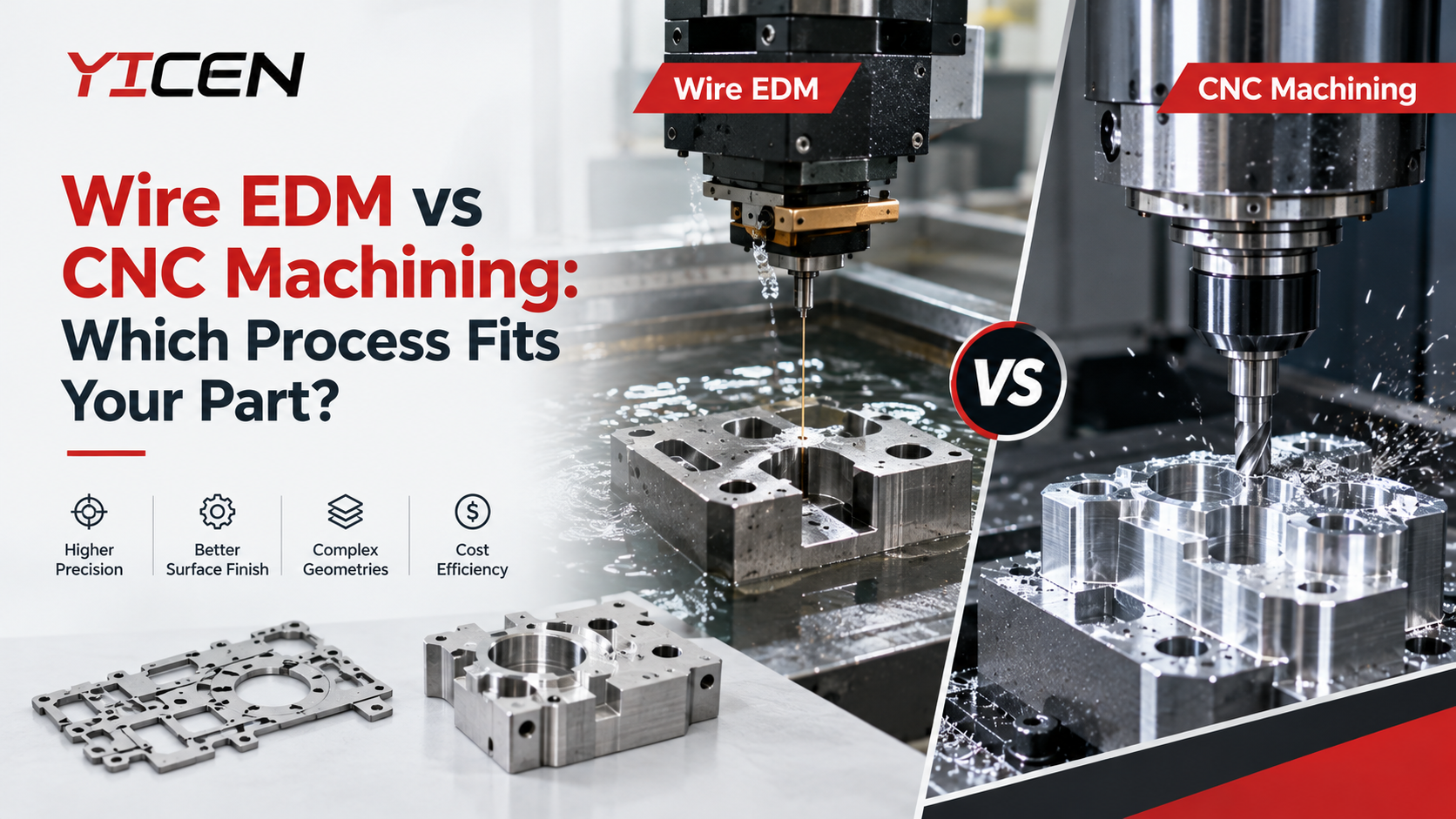
Picture two parts on a bench. One is an aluminum bracket with pockets and threaded holes. The other is a hardened steel punch with a sharp star-shaped profile. Both need to be cut, but no single machine handles both well. That is the heart of wire EDM vs CNC machining: each process solves a different kind of problem.
This guide shows how each one works, what it costs, and where it fits, so you can send the right drawing to the right machine.
What Is Wire EDM Machining, in Plain Terms?
How does a spark cut metal?
Wire EDM machining uses controlled electrical sparks to erode metal. A thin brass wire, often about 0.25 mm across, runs through the workpiece while water flows around the cut. Sparks jump between the wire and the part, and each one removes a tiny speck of material. The wire follows a programmed path and never touches the part.
Because nothing presses on the metal, the part stays free of cutting stress. Thin and delicate features come out straight.
What can’t it do?
The part must conduct electricity, so wire EDM works on steel, titanium, carbide, copper, and aluminum. Plastics and ceramics are out. The wire also has to pass through the whole thickness, which rules out blind pockets and sculpted 3D surfaces. For an interior cut, the machine threads the wire through a small pre-drilled hole.
How Does CNC Milling Approach the Same Job?
What does a spinning cutter do well?
A milling machine rotates a cutting tool and shaves chips off a block of material. Multi-axis machines reach many faces of the part without a reset. One program can produce pockets, bosses, angled surfaces, drilled holes, and threads. Metals and plastics both machine well, and chips fly fast.
That range is why most prototypes and production parts start on a mill.
Where does a cutter struggle?
A round tool leaves a rounded inside corner. Very hard steel wears the cutter down quickly. Slender walls bend away from the tool and ring like a bell. When a part combines hardness with fine detail, a mill spends more time fighting the job than finishing it.
Wire EDM vs CNC Machining Compare on Cost and Speed
Why does milling usually cost less?
For general parts, milling wins the clock. It removes large volumes of material in short order, and one setup often completes the part. Shops also keep mills busy with a wide mix of work, so hourly rates tend to run lower. If your part has no hard features and no needle-sharp corners, a mill will almost always quote lower and ship sooner.
Can wire EDM still save money?
Yes, in specific cases. Wire cutting is slow, but it can finish a hardened part in a single pass. That removes steps such as rough milling, extra grinding, custom fixtures, and rejected parts. A job that costs more per hour can cost less in total when it avoids rework.
Is Wire EDM More Precise Than Milling?
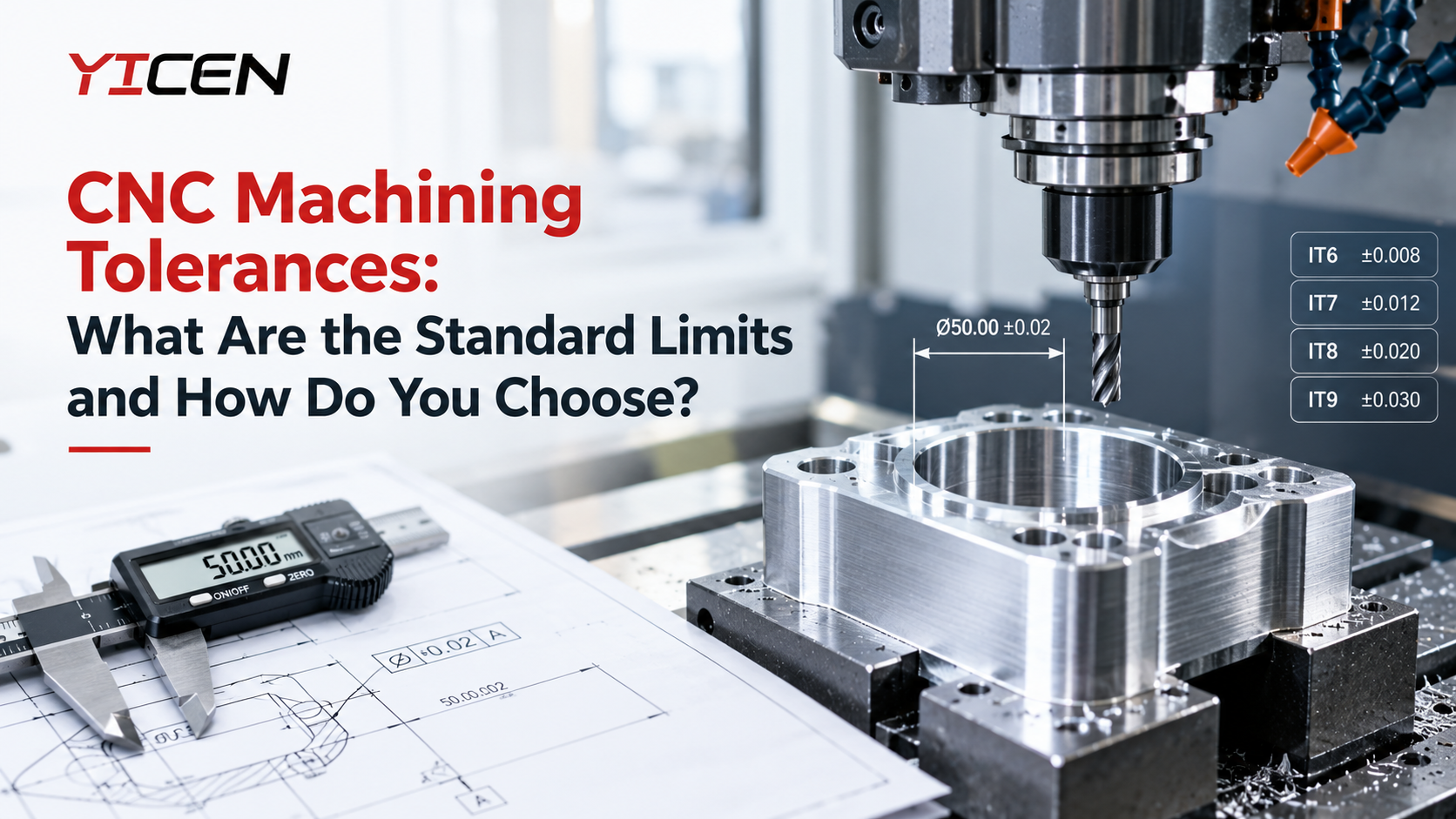
Wire EDM commonly reaches ±0.005 mm to ±0.01 mm on cut profiles, with a smooth surface straight off the machine. Milling often holds about ±0.025 mm on precision features, and careful shops can go tighter on selected dimensions. Our cnc machining tolerances guide explains how those numbers change with material, size, and inspection method.
| Factor | Wire EDM | CNC milling |
|---|---|---|
| Typical profile precision | ±0.005 to ±0.01 mm | About ±0.025 mm |
| Force on the part | Nearly none | Moderate to high |
| Hard materials | Cuts them with ease | Tool wear grows fast |
| Inside corners | Very sharp | Rounded to tool radius |
| Blind pockets, 3D shapes | Not possible | Straightforward |
| Removal rate | Slow | Fast |
Not always. A part can need a tight tolerance on one slot and nothing special elsewhere. In that case, you can mill the bulk of the part and reserve the wire for the one critical profile.
When Does Wire EDM Win Over a Mill?
Why does hardened tool steel point to the wire?
Shops often heat-treat steel before final cutting, because hardening can twist a finished part. Machining hardened tool steel with a mill burns through inserts and invites chatter. Wire EDM does not care about hardness. It cuts a die, punch, or mold insert at full strength and leaves the heat-treated structure intact.
When to use wire EDM on your own drawing?
Knowing when to use wire EDM comes down to a short checklist. Look for these signs:
- The profile has sharp inside corners that a round cutter cannot form.
- Walls or ribs are thin enough to flex under tool pressure.
- The material is hardened steel, carbide, or another tough alloy.
- The cut runs straight through the full thickness, as in gears, punches, or extrusion dies.
- You need a tight, repeatable profile across many identical pieces.
One caution: wire cutting leaves a thin recast layer on the surface. If your part faces heavy fatigue loads, ask the shop about a skim pass or light polishing.
When Does CNC Machining Come Out Ahead?
Why do most parts belong on a mill?
Any part with pockets, curved faces, tapped holes, or stepped depths belongs on a mill. Housings, brackets, manifolds, and enclosures all fit. Milling also takes plastics and soft metals that wire cutting cannot touch, and it delivers a faster lead time on nearly every general-purpose job.
How does order size shift the answer?
Milling gets cheaper as quantities grow. After the first part proves the program and fixture, every extra piece costs less. Wire cycle times stay long, so the per-part price falls slowly. For large runs of simple shapes, the mill wins by a wide margin.
How Do You Choose Between the Two Processes?
What does edm vs milling look like in real life?
Take a quick test. If the feature is hard, thin, sharp, or cut straight through, lean toward the wire. If the feature is a pocket, a curve, a hole pattern, or a soft material, lean toward the mill. The edm vs milling choice becomes clear on most drawings within a minute or two.
Can one part use both processes?
Often it should. A typical path mills the rough shape, sends the part out for heat treatment, and then wire cuts the critical profile to final size. Each process handles what it does best, and the part avoids both distortion and wasted tooling. Show your supplier the full drawing early so they can plan the order of operations.
Ready to Pick the Right Process for Your Part?
Send us your drawing, material, and order quantity. Our engineers will mark which features suit the wire, which suit the mill, and which route costs the least. Our CNC machining services cover prototypes, production runs, and mixed-process jobs under one roof. Request a free quote today and get a straight, practical recommendation before you commit.
What Do Buyers Ask Most About These Processes?
What is the difference between wire EDM vs CNC machining?
Wire EDM erodes conductive metal with sparks and applies almost no force. CNC machining cuts with a rotating tool and covers more shapes and materials at higher speed.
Is wire EDM more accurate than CNC milling?
Usually, yes, on through-cut profiles. Wire EDM holds about ±0.005 to ±0.01 mm, while milling averages around ±0.025 mm. Skilled shops can tighten milling on chosen features.
Can wire EDM cut hardened steel?
Yes. Hardness does not affect spark erosion, so the wire cuts fully hardened steel without tool wear. The only requirement is that the material conducts electricity.
Is wire EDM slower than CNC machining?
On most parts, yes, because sparks remove material in tiny amounts. It can still shorten the total schedule when it replaces grinding, fixturing, or rework.