 Ir al contenido
Alloy CNC machining covers a wide spectrum of metals, each with different machinability, strength, cost, and application requirements. Aluminum alloys (6061, 7075) machine 3–4x faster than steel and dominate prototyping and lightweight structural parts. Stainless steel alloys (304, 316, 17-4PH) provide corrosion resistance for medical and marine applications. Titanium alloys (Ti-6Al-4V) deliver the best strength-to-weight ratio but cost 5–10x more to machine than aluminum. This guide covers 15+ alloy grades, their real-world machining characteristics, typical applications, and how to choose the right one for your project.
You specified “steel” on your purchase order. Your supplier delivered parts in mild steel when your application needed 4140 alloy steel, heat-treated to 28–32 HRC. The parts failed under cyclic loading within two weeks.
That failure happened because “steel” isn’t a material. It’s a category containing hundreds of alloys with dramatically different properties. The difference between 1018 mild steel and 4340 alloy steel in fatigue resistance is roughly 3x. The difference in machining cost is roughly 2x. Specifying the right alloy grade is one of the most consequential decisions you make when ordering CNC machined parts.
Alloy CNC machining requires matching the right material to your application’s mechanical, thermal, and chemical demands, then machining it with parameters suited to that specific alloy’s behavior. This guide walks through every major alloy family, the grades that matter, and how to make the right selection for your next Mecanizado CNC order.
What Is an Alloy and Why Does the Grade Matter in CNC Machining?
An alloy is a metal combined with one or more other elements to enhance specific properties: strength, hardness, corrosion resistance, machinability, or thermal performance. Pure metals are rarely used in precision manufacturing because alloys outperform them in nearly every measurable way.
The grade (for example, 6061-T6 or 17-4PH) defines the exact chemical composition and heat treatment condition. Two alloys in the same family can behave completely differently on the machine and in service. Aluminum 6061 machines easily and costs $8–12/kg in bar stock. Aluminum 7075 is 40% stronger but harder to machine and costs $15–25/kg. Specifying the wrong grade wastes money (over-specifying) or causes part failure (under-specifying).
For CNC machining, alloy selection directly affects: cutting speed and feed rate (cycle time and cost), tool life (tooling cost), achievable tolerances and acabado superficial, post-machining heat treatment options, and the part’s in-service performance.
Aluminum Alloys: The Default Choice for Most CNC Work
Aluminum alloys dominate CNC machining because they combine low density (2.7 g/cm³, roughly one-third the weight of steel), excellent machinability, natural corrosion resistance, and competitive pricing. Aluminum machines 3–4x faster than steel from the same block geometry, which directly reduces cycle time and cost per part.
6061-T6 is the most widely used aluminum alloy in CNC machining. Good strength (276 MPa yield), excellent machinability, easy to anodize, weldable, and available everywhere at competitive prices. Use it for: structural brackets, housings, frames, jigs, fixtures, and general-purpose parts where weight and corrosion resistance matter. If you don’t specify a grade, most CNC shops will default to 6061.
7075-T6 provides approximately 40% higher strength than 6061 (503 MPa yield), making it comparable to many steels on a strength-to-weight basis. Standard for aeroespacial structural components, high-stress brackets, and defense applications. Costs more than 6061 and is harder to machine, but the performance justifies it for demanding applications.
2024-T3 excels in fatigue resistance, making it the choice for aircraft skin, wing structures, and any application with cyclic loading. Lower corrosion resistance than 6061, so it’s typically clad or coated.
5083-H116 offers the best corrosion resistance of any aluminum alloy, particularly in saltwater environments. Standard for marine hardware, boat components, and offshore equipment. Weldable without significant strength loss.
MIC6 (cast aluminum) is a precision cast plate with exceptional flatness and dimensional stability. Used for tooling plates, jig and fixture bases, mold components, and optical mounting plates where stability over time matters more than strength.
For most prototyping and general-purpose CNC work, 6061-T6 is the right starting point. Step up to 7075 only when your loading analysis demands it.
Steel Alloys: When Strength and Hardness Are Non-Negotiable
Steel alloys cover a vast range of properties depending on carbon content, alloying elements, and heat treatment. They machine slower than aluminum, cost more in cycle time, and require more robust tooling, but they deliver strength and hardness that aluminum cannot match.
1018 (mild steel) is the most machinable carbon steel. Low carbon content (0.18%) makes it soft, easy to machine, and weldable. Tensile strength around 440 MPa. Use it for: non-critical structural parts, pins, shafts, and brackets where strength requirements are moderate and machinability drives the cost decision.
4140 (alloy steel) is a chromium-molybdenum steel with good overall mechanical properties. Can be heat-treated to 28–32 HRC for medium-hardness applications. Commonly used for gears, shafts, axles, and automoción components requiring strength and toughness.
4340 (alloy steel) is the high-performance variant of 4140, with nickel added for improved toughness and fatigue resistance. Heat-treatable to over 50 HRC. Used for landing gear, crankshafts, power transmission gears, and any application where fatigue life is critical.
O1 (tool steel) is an oil-hardened tool steel machinable in the annealed condition, then heat-treated to 58–65 HRC. Used for cutting tools, dies, punches, and wear-resistant components. Machining must be completed before hardening.
D2 (tool steel) provides excellent wear resistance and dimensional stability. Commonly used for stamping dies, forming tools, and wear plates. Difficult to machine even in the annealed state due to high chromium and carbon content. Often requires Electroerosión por hilo for features after hardening.
Stainless Steel Alloys: Corrosion Resistance with Machining Tradeoffs
Stainless steels contain at least 10.5% chromium, forming a protective oxide layer that resists corrosion. This same property makes them harder to machine: the work-hardening behavior of austenitic stainless steels (300 series) dulls tools faster than carbon steel.
304 is the most common stainless steel grade. Good corrosion resistance, high ductility, and moderate strength. Used for food equipment, chemical processing, and general-purpose corrosion-resistant parts. Machines reasonably well with sharp tooling and proper feeds.
316 adds molybdenum for improved resistance to chloride corrosion (saltwater, chemical environments). Standard for marine hardware, medical device components, and pharmaceutical equipment. Slightly harder to machine than 304.
303 is the free-machining version of 304, with added sulfur for improved machinability. Use it when corrosion resistance is needed but machining cost must be minimized. Not suitable for welding.
17-4PH is a precipitation-hardened stainless steel that combines corrosion resistance with high strength (up to 1,310 MPa after aging). Used for aerospace fittings, valve components, and medical instruments. Machines well in the solution-annealed condition, then gets heat-treated to final hardness.
15-5PH offers similar properties to 17-4PH with slightly better toughness and more uniform through-hardening. Preferred for thicker cross-sections in aerospace and defense applications.
Titanium Alloys: Highest Performance, Highest Cost
Titanium alloys deliver the best strength-to-weight ratio of any structural metal. They maintain 80% of their strength at 300°C, resist corrosion in virtually every environment, and are biocompatible for medical implants. The tradeoff: they cost 5–10x more to machine than aluminum for similar geometries.
Ti-6Al-4V (Grade 5) is the most widely used titanium alloy, accounting for over 50% of all titanium consumption. Yield strength 880 MPa. Used for aerospace structural components, medical implants (hip and knee replacements), robótica components, and high-performance automotive parts.
Grade 2 (commercially pure) offers lower strength but excellent formability and corrosion resistance. Used for chemical processing equipment, marine hardware, and heat exchangers where strength is secondary to corrosion performance.
Machining titanium requires: rigid machine setups (5-axis preferred for shorter, stiffer tools), low cutting speeds (30–60 m/min versus 200–400 m/min for aluminum), high-pressure coolant to manage heat at the tool tip, and coated carbide or ceramic inserts. Tool life on titanium is 3–5x shorter than on aluminum.
For buyers: don’t specify titanium unless your loading, temperature, or biocompatibility analysis requires it. An engineer who switches from titanium to 7075-T6 aluminum where the performance allows it can reduce machining cost by 80% and still meet specifications.
Copper, Brass, and Bronze Alloys
These alloys serve specific applications where thermal conductivity, electrical conductivity, or low-friction properties matter.
Brass C360 (free-machining brass) is one of the most machinable materials available, producing excellent surface finishes at high cutting speeds. Used for electrical connectors, fittings, valves, and decorative hardware. Ideal for high-volume production on Torneado CNC machines due to chip formation characteristics.
Copper C101 (oxygen-free copper) provides the highest electrical and thermal conductivity. Used for heat sinks, electrical bus bars, and RF/microwave components in semiconductor y electrónica de consumo aplicaciones.
Bronze C932 (bearing bronze) offers excellent wear resistance and low friction. Used for bushings, bearings, wear plates, and sliding contact applications in automatización and industrial machinery.
Nickel-Based Superalloys
For extreme temperature applications (above 600°C), nickel superalloys are the only option.
Inconel 718 maintains over 90% of its strength at 700°C. Used for gas turbine components, rocket engine parts, and nuclear reactor internals. Extremely difficult to machine: work-hardens rapidly, generates severe heat at the cutting zone, and wears tools aggressively. Requires rigid 5-axis setups, ceramic or CBN inserts, and experienced programmers.
Hastelloy X provides excellent oxidation resistance at temperatures up to 1,200°C. Used for combustion chambers and afterburner components.
Machining superalloys typically costs 10–15x more per part than equivalent aluminum geometries. Reserve these materials for applications where no substitute exists.
How to Choose the Right Alloy for Your CNC Machined Parts
The alloy decision tree follows this logic:
Start with application requirements. What loads will the part see (static, cyclic, impact)? What temperature range? What corrosive environment? Does it need to be biocompatible, food-safe, or electrically conductive?
Identify candidate alloys. Usually 2–3 grades meet the functional requirements. Example: for an aerospace bracket needing moderate strength and low weight, both 6061-T6 and 7075-T6 are candidates.
Factor in machinability and cost. Between candidates that meet specifications, choose the one that machines faster and costs less. The material that machines faster produces lower per-part cost even if the raw stock is similar in price.
Consider post-machining processes. Will the part be anodized? (Not all aluminum alloys anodize equally well.) Heat-treated? (Steel alloys have different response to hardening.) Welded? (Some alloys crack during welding.) Plated? (Acabado superficial processes interact with alloy chemistry.)
Verify with your supplier. A good CNC machining partner will confirm alloy selection, flag potential issues (work hardening, dimensional instability after heat treatment, tool wear concerns), and recommend alternatives if your specified alloy is hard to source or unnecessarily expensive for the application.
Why Yicen Precision for Alloy CNC Machining
Yicen Precision machines 50+ materiales across every alloy family covered in this guide: aluminum alloys (6061, 7075, 2024, 5083), stainless steels (304, 316, 17-4PH, 15-5PH), alloy steels (4140, 4340), tool steels, titanium (Grade 2, Ti-6Al-4V), brass, copper, bronze, and engineering plastics (PEEK, Delrin, Nylon, Ultem).
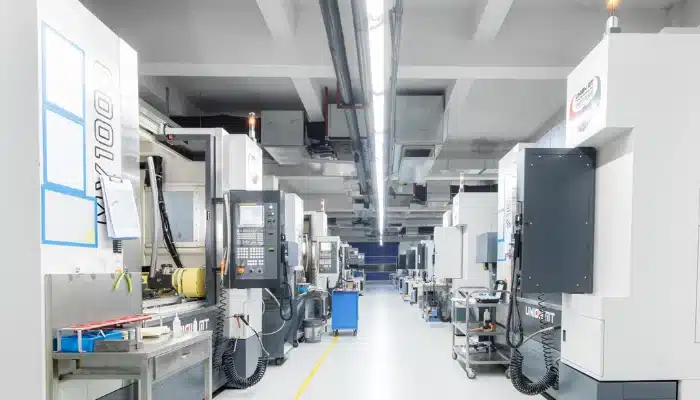
300+ CNC machines including multi-axis milling, Torneado CNC, Electroerosión por hilo, CNC drillingy rectificado de precisión. Tolerances to ±0.005 mm. 30+ acabado superficial options including anodizing, passivation, plating, and recubrimiento en polvo. ISO 9001:2015, ISO 13485, ISO 14001, IATF 16949 certified. Factory-direct, no middlemen.
Conclusión
Alloy CNC machining starts with material selection. The right alloy balances mechanical performance, machinability, cost, and post-processing requirements for your specific application.
Three practical rules: start with 6061-T6 aluminum unless your analysis requires something stronger, heavier, or more corrosion-resistant. Never specify “steel” or “stainless” without a grade number. And always verify alloy selection with your CNC supplier before committing to a production run.
Obtenga un presupuesto instantáneo from Yicen Precision for alloy CNC machining. Upload your CAD file and specify your alloy: 50+ materials, 300+ machines, tolerances to ±0.005 mm, delivery from 24 hours. ISO 9001, ISO 13485, IATF 16949 certified. Creación rápida de prototipos to full production.
Preguntas frecuentes
What alloys are most commonly used in CNC machining?
Aluminum 6061-T6 is the most widely used CNC alloy overall. For higher strength, 7075-T6 aluminum is standard in aerospace. Stainless steel 304 and 316 dominate corrosion-resistant applications. Alloy steel 4140 covers medium-strength mechanical parts. Titanium Ti-6Al-4V serves weight-critical and biocompatible applications. Brass C360 is the go-to for high-volume turned electrical components.
How does alloy selection affect CNC machining cost?
Alloy choice directly impacts cycle time, tool life, and raw material cost. Aluminum machines 3–4x faster than steel from the same geometry, producing lower per-part cost. Titanium costs 5–10x more to machine than aluminum due to slower cutting speeds and faster tool wear. Free-machining alloys (303 stainless, C360 brass) reduce cost compared to their standard counterparts (304 stainless, C101 copper).
Can you machine titanium on standard CNC equipment?
Titanium can be machined on standard CNC mills and lathes, but it requires rigid setups, low cutting speeds (30–60 m/min), high-pressure coolant, and coated carbide or ceramic inserts. 5-axis machining is preferred because it allows shorter, stiffer tools that reduce deflection and chatter. Tool life on titanium is 3–5x shorter than on aluminum.
What is the difference between 6061 and 7075 aluminum?
6061-T6 has a yield strength of 276 MPa, excellent machinability, good corrosion resistance, and is weldable. 7075-T6 has a yield strength of 503 MPa (about 40% higher), making it comparable to many steels by strength-to-weight ratio. 7075 costs more, is harder to machine, and does not weld as cleanly. Use 7075 only when your loading analysis requires the extra strength.
How do I specify the right alloy on my CNC machining order?
Always call out the specific alloy grade and temper/condition on your drawing and purchase order (for example, “6061-T6” not “aluminum,” or “17-4PH Condition H900” not “stainless steel”). If you’re unsure which alloy suits your application, describe your loading, temperature, and corrosion requirements to your CNC supplier and ask for a recommendation.

 Spanish
  English
  French
  Japanese
  German
  Portuguese