 Aller au contenu
Introduction
Jigs and fixtures are fundamental to the precision, speed, and efficiency of manufacturing operations. They serve as work-holding and tool-guiding devices that ensure parts are machined or assembled with high consistency and accuracy. While both tools are often grouped together in discussions, understanding their differences and the critical design elements can significantly enhance manufacturing outcomes.
Why Jig & Fixture Design Matters in Manufacturing
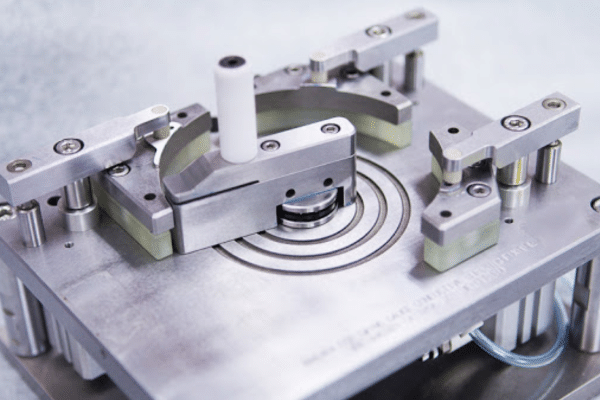
In the manufacturing world, the need for precise and repeatable production is paramount. Jigs guide the cutting tools, while fixtures hold the workpiece steady during machining processes. Properly designed jigs and fixtures enhance throughput, minimize human error, and ensure that the final product meets the required tolerances. They are crucial for optimizing production cycles, improving safety, and reducing operational costs.
Jig and Fixture Difference
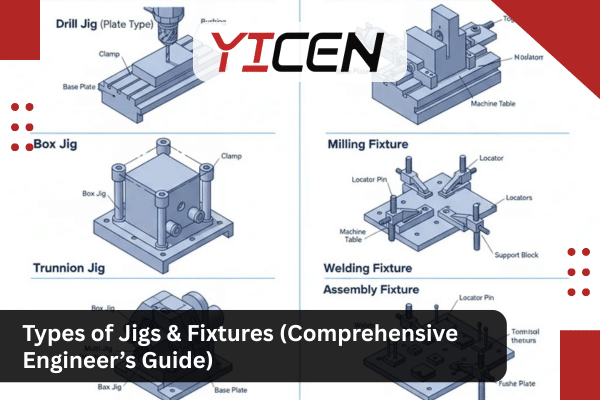
Jig → Guides the tool: Jigs are used primarily for guiding tools, ensuring that they stay on the correct path during operations like drilling or cutting. Their primary role is to provide precision by maintaining the tool’s position relative to the workpiece.
Fixture → Holds the workpiece: Fixtures are stationary devices that hold the workpiece in place, ensuring it remains steady during machining, welding, or assembly. Unlike jigs, fixtures do not guide the tool but focus on securing the part in a fixed position to ensure accuracy in the operation.
Functional vs Semantic Difference: While the functional difference is clear—jigs guide the tool, and fixtures secure the workpiece—the semantic distinction between the two can be blurred. In practice, jigs and fixtures are sometimes referred to interchangeably, but understanding their specific roles can greatly aid in selecting the right device for the task.
Examples to Clarify:
- Jig Example: A drilling jig used to ensure a drill bit is guided at a specific angle.
- Fixture Example: A welding fixture designed to hold a metal frame in place during assembly.
Core Elements of Every Jig and Fixture
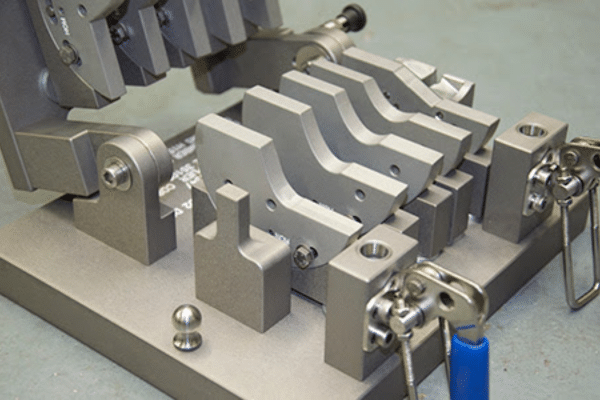
This section dives deep into the essential components that form the backbone of any jig or fixture. Proper understanding and attention to these elements ensure that the design is effective, reliable, and efficient.
1. Body / Base Plate
Function & Design Considerations:
The base plate forms the foundation of any jig or fixture. It provides the primary surface for locating and mounting other components, including clamping elements, locators, and supports. The plate must be rigid, durable, and capable of withstanding mechanical stresses during operation.
Material Selection:
- Acier: Offers high strength and durability for heavy-duty fixtures.
- Aluminium: Light yet strong, ideal for applications requiring lower weight.
- Cast Iron (CI): Known for vibration damping, making it suitable for high-precision operations.
2. Locating Elements
Purpose of Locating:
Locators are crucial for positioning the workpiece accurately within the fixture. Properly designed locators ensure that each part is positioned consistently for the machining process.
Types of Locators:
- Flat locators: Simple and cost-effective, suitable for flat workpieces.
- Cylindrical pins: Used for cylindrical workpieces, ensuring accurate alignment.
- Diamond & round pin pair: Often used for more complex geometries where standard locators don’t suffice.
- V-blocks: Ideal for cylindrical workpieces, offering superior alignment.
- Adjustable locators: Allow flexibility for different workpieces.
- Nesting locators: Help position workpieces with complex shapes by nesting them within the fixture.
Avoiding Redundant Location (Over-constraint):
It’s important to avoid over-constraining a workpiece, as this can lead to distortion or unnecessary force. Over-constrained parts are harder to load, and the excess locating points may complicate operations.
3. Clamping Elements
What Clamping Must Achieve:
Clamping elements secure the workpiece during machining or assembly. Their primary function is to hold the workpiece without causing deformation. A well-designed clamp ensures that the part is held tightly but without introducing stress or distortion.
Types of Clamps:
- Strap clamps: Secure parts along their edges.
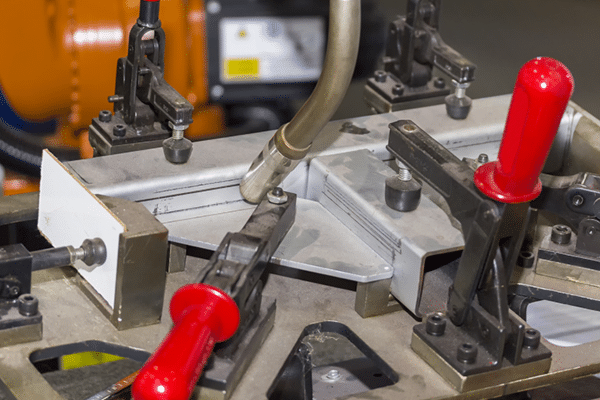
- Toggle clamps: Popular for fast, repetitive clamping with high holding force.
- Cam clamps: Provide quick and strong clamping with minimal effort.
- Hydraulic clamps: Offer adjustable clamping force, ideal for high-volume operations.
- Pneumatic clamps: Often used in automated systems, providing quick and repeatable clamping.
- Magnetic & vacuum clamping: Used for parts that are thin or hard to hold mechanically.
Clamp Placement Rules:
Correct placement of clamps is critical. They must be positioned in such a way that they don’t interfere with machining operations and should not create distortions.
Auxiliary but Important Design Elements
Wear Plates & Hardened Surfaces
In high-wear areas, wear plates are used to extend the life of the fixture and prevent frequent replacements of components. Hardened surfaces can be used in critical locations that face repeated mechanical stress, such as where clamping forces are applied or where the workpiece is positioned.
Modular Tooling Plates
Modular plates offer flexibility in the design, allowing quick reconfiguration to accommodate different workpieces. They are ideal for flexible manufacturing systems.
Vibration Control Elements
These are designed to reduce or eliminate vibrations that could affect the accuracy of the machining process. Proper vibration damping increases precision and reduces wear on the machine and tools.
Alignment Keys & Locating Rails
These ensure the fixture is properly positioned relative to the machine tool, preventing misalignment during setup.
Workholding Accessories (from Industrial Catalogs)
Workholding accessories include items such as fixture keys, threaded inserts, and locating rails, which provide additional support and flexibility in fixture design.
Engineering Design Considerations for Jigs & Fixtures
Accuracy & Repeatability Requirements
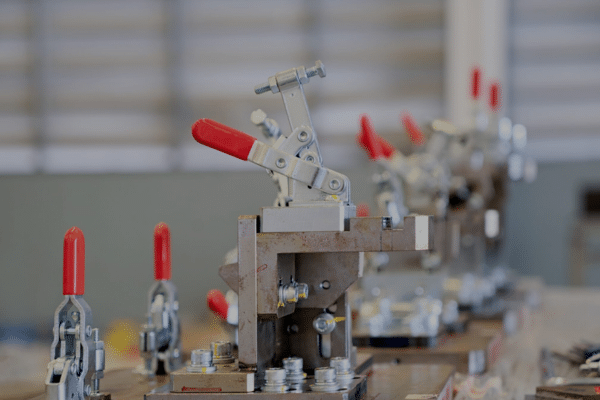
Designing for high accuracy and repeatability ensures that the fixture consistently holds parts in the same orientation, reducing errors and ensuring uniformity in production.
Rigidity & Strength Calculations
Every fixture must be robust enough to withstand the forces applied during the machining process without deforming. Strength calculations help prevent failures and ensure that the fixture can handle expected loads.
Machining Force Analysis
Understanding the forces generated during machining operations (e.g., cutting forces) helps in designing fixtures that won’t deform under load and ensures optimal workpiece support.
Tool Approach & Accessibility
Designs must allow for sufficient clearance for tools to approach the workpiece without interference. Tool access is especially important in multi-operation setups.
Maintainability & Replaceable Components
Fixtures should be designed with easy maintenance in mind. This includes features like replaceable parts and accessible cleaning areas to ensure the fixture can remain operational over a long period.
Cost vs Performance Balance
Designers must balance the cost of materials and complexity with the performance requirements of the fixture. A more expensive fixture may provide better durability and performance, but its ROI must be considered in the context of the overall production process.
Modern Enhancements in Jig & Fixture Design
CNC-Compatible Fixtures
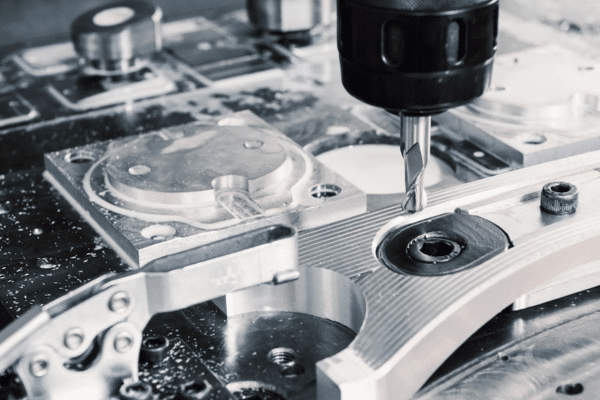
With the rise of CNC machining, fixtures must be designed to work seamlessly with automated systems. CNC-compatible fixtures can significantly enhance precision and repeatability in high-volume production.
3D-Printed Jigs (Polymer & Metal)
Impression 3D technology is making it possible to create jigs and fixtures with complex geometries that were previously difficult or expensive to manufacture. This technology can reduce lead times and improve flexibility in fixture design.
Smart Fixtures with Sensors
Smart fixtures that incorporate sensors can provide real-time feedback on clamping force, part alignment, and other critical parameters, enabling more automated and precise production processes.
Vacuum & Magnetic Workholding Upgrades
Magnetic and vacuum workholding systems are increasingly being used in modern fixture designs. These systems provide non-contact clamping, which is especially useful for delicate parts that may be damaged by traditional mechanical clamping.
Modular & Quick-Change Systems
Quick-change fixtures are designed for faster setup and changeover times, especially in high-mix, low-volume manufacturing environments. Modular systems allow parts of the fixture to be swapped out or reconfigured quickly without the need for complete fixture redesigns.
Conclusion
The successful design of jigs and fixtures is essential to achieving high efficiency and quality in manufacturing. Understanding the core elements, engineering considerations, and the modern technologies that enhance fixture design can empower engineers to create solutions that meet the needs of evolving manufacturing environments.
FAQ
What are the main elements of a jig?
The main elements of a jig include the body/base plate, locating elements (e.g., pins, V-blocks), clamping elements (toggle clamps, hydraulic clamps), tool guiding elements (bushings), and supporting elements. Each of these components plays a crucial role in ensuring that the tool is guided correctly and securely during machining
What are the essential features of a fixture?
Fixtures are designed to securely hold a workpiece in place during operations. Essential features include a base plate for stability, locators to position the part, clamps to secure the part, and supports to prevent deformation. The fixture must be robust, adaptable, and capable of withstanding forces generated during machining.
How do jigs and fixtures differ semantically?
Semantically, jigs guide tools, while fixtures hold workpieces. Jigs are generally lighter, focusing on guiding the cutting tool, whereas fixtures are built to withstand higher mechanical stresses to secure the workpiece without guiding the tool.
What materials are best for jigs & fixtures?
Common materials for jigs and fixtures include tool steel for high-wear applications, mild steel for general use, aluminum for lightweight designs, and cast iron for vibration damping. Material choice depends on the specific application, production volume, and wear resistance required.
Which clamps and locators are used most?
Toggle clamps are popular for their speed and reliability, while strap clamps and cam clamps are used for heavier workpieces. Locators such as cylindrical pins, V-blocks, and adjustable locators are commonly used to secure the workpiece in place, ensuring accurate positioning during operations.



 French
  English
  Spanish
  Japanese
  German
  Portuguese