 Aller au contenu
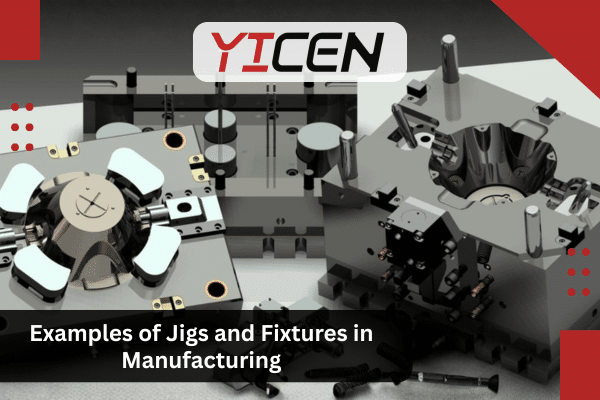
In the manufacturing world, jigs and fixtureset tooling are integral tools that streamline processes and ensure precision. While the terms “jig” and “fixture” are often used interchangeably, they perform different functions. Understanding these differences and how they are applied in real-world manufacturing environments can significantly improve productivity, accuracy, and cost efficiency.
What Is a Jig?
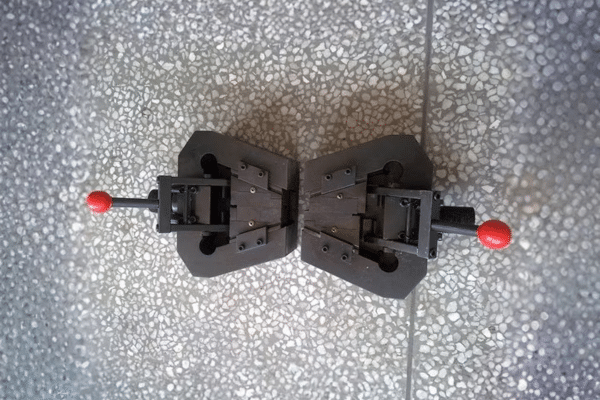
A jig is a specialized tool used to guide a cutting tool or other equipment during a manufacturing process. Its primary purpose is to ensure that the tool follows a specific path, such as drilling, reaming, or tapping. By guiding the tool, jigs help achieve repeatable, accurate results across multiple parts.
What Makes a Tool a “Jig”
A tool qualifies as a jig when it directly interacts with the cutting tool, guiding its motion to specific points on the workpiece. The key characteristic of a jig is that it is used to ensure precision by controlling the tool’s path, rather than positioning the workpiece.
Industries That Commonly Use Jigs
- Automobile: Jigs are used in drilling and assembly operations to ensure precise hole placements and component positioning.
- Aérospatiale: Drilling jigs ensure accurate hole alignment for components subject to high stress.
- Électronique: Jigs guide tools in the assembly of circuit boards, ensuring accurate placement of components.
What Is a Fixture?
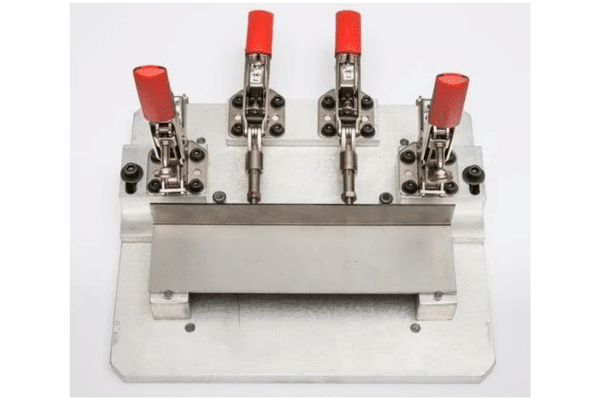
A fixture is a device used to secure and hold a workpiece in place during machining or assembly operations. Unlike a jig, it does not guide the tool but ensures the workpiece is positioned correctly to enable precise operations.
What Makes a Tool a “Fixture”
A tool becomes a fixture when it holds the workpiece in place, aligning it to the correct position relative to the tool or machine. Fixtures are designed to provide support and stability during multi-dimensional operations like milling, grinding, and turning.
Industries That Commonly Use Fixtures
- Fabrication: Fixtures are used extensively in Usinage CNC, milling, and grinding to hold workpieces firmly in place.
- Welding: Welding fixtures ensure parts are aligned and remain steady during welding to prevent distortion.
- Assemblée: In assembly lines, fixtures are used to secure components while they are being assembled or tested.
Common Examples of Jigs in Manufacturing
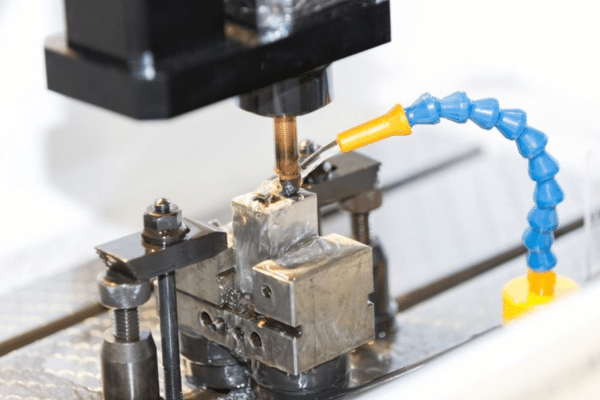
Drill Jig
- Use Case (Hole Location Accuracy): Drill jigs guide a drill bit to precise locations on a workpiece, ensuring holes are drilled at the right angle and spacing.
Template Jig
- Repetitive Cutting or Marking: Template jigs use pre-marked templates to guide the tool for repetitive cutting or marking tasks, ensuring consistency across multiple parts.
Leaf Jig
- Swinging Cover for Tool Access: Leaf jigs feature a hinged cover that swings open to allow easy loading and unloading of parts, making them ideal for quick, high-volume operations.
Channel Jig
- Longitudinal Drilling: Channel jigs are used for guiding tools along the length of long, narrow workpieces, ensuring precision in drilling or cutting.
Box Jig
- Multi-side Machining: Box jigs enclose the workpiece on multiple sides, allowing machining from various angles without repositioning the workpiece.
Ring / Diameter Jig
- Circular Workpieces: These jigs are designed for cylindrical or round workpieces, ensuring tools follow the correct circular path for operations like drilling or milling.
Universal Jig
- Adjustable for Variable Parts: Universal jigs are adaptable and can be used for different parts or operations, offering flexibility in various manufacturing environments.
Welding Positioning Jig
- Ensures Repeatable Weld Joints: Welding jigs hold workpieces in precise positions during welding, ensuring that each joint is consistent and meets specifications.
PCB Assembly Jig
- Fabrication de produits électroniques: Jigs in PCB assembly guide tools to place components accurately on the board, minimizing errors in electronic manufacturing.
3D-Printed Jigs
- Custom Low-Volume Prototyping: 3D printing allows the rapid creation of custom jigs for small-batch or prototyping runs, reducing material costs and production time.
Common Examples of Fixtures in Manufacturing
Milling Fixture
- Holding Stock on CNC Milling Machines: These fixtures secure workpieces on CNC milling machines, ensuring accurate cuts and finishes during milling operations.
Turning / Lathe Fixtures
- Mandrels, Chucks, Collets: Used in lathes to hold round or irregularly shaped parts while rotating them for turning, ensuring uniformity and precision.
Drilling Fixtures
- Multi-Spindle Drilling: Drilling fixtures can hold multiple parts in place during simultaneous drilling, ensuring consistent hole placement across all workpieces.
Dispositifs de soudage
- Clamps + Locator Systems for BIW / Fabrication: These fixtures hold automotive body parts in place during welding, ensuring precise alignment for optimal weld quality.
Assembly Fixtures
- Automotive, Electronics: Used in assembly lines to hold components in precise positions during assembly, improving accuracy and reducing labor.
Grinding Fixtures
- Precision Finishing: Grinding fixtures secure parts during grinding operations, ensuring smooth finishes and precise dimensions.
Broaching Fixtures
- Gear & Spline Production: Broaching fixtures hold workpieces steady while broaching tools cut complex shapes like keyways and splines.
- Welding Jigs vs Assembly Jigs
- While both welding jigs et assembly jigs play a crucial role in ensuring accuracy, they differ in their functions and applications:
- Welding Jigs: Primarily used to hold workpieces in position during welding, ensuring precise alignment for strong and accurate welds. These jigs are vital in industries like automotive and heavy machinery.
- Gabarits d'assemblage: Used during the assembly process to hold parts in place while they are being joined. These jigs help in mass production, particularly in automobile et electronics industries, enhancing accuracy et efficiency during the assembly of components.
Welding Jigs vs Assembly Jigs
While both welding jigs and assembly jigs play a crucial role in ensuring accuracy, they differ in their functions and applications:
- Welding Jigs: Primarily used to hold workpieces in position during welding, ensuring precise alignment for strong and accurate welds. These jigs are vital in industries like automotive and heavy machinery.
- Gabarits d'assemblage: Used during the assembly process to hold parts in place while they are being joined. These jigs help in mass production, particularly in automobile et electronics industries, enhancing accuracy et efficiency during the assembly of components.
Inspection / Checking Fix tures
- Go/No-Go, CMM Holding, Layout Templates: Used in quality control to position workpieces for accurate measurement and inspection.
Tailstock Fixtures
- Long Shaft Machining: These fixtures support long workpieces during machining, preventing deflection and ensuring accuracy in processes like grinding or turning.
Modular Fixturing Systems
- T-Slot Plates, Fixture Plates, Grid Plates: Modular fixtures are adaptable systems that can be reconfigured for different workpieces or operations, improving flexibility and efficiency.
ADVANCED & MODERN TOOLING EXAMPLES
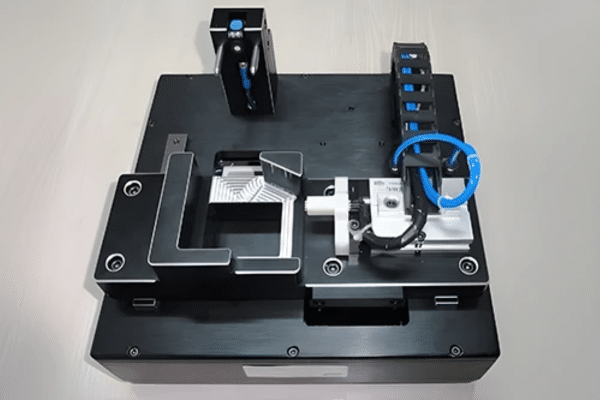
Modern Jigs & Fixtures in Smart Manufacturing
CNC-Controlled Fixtures
- Fixtures that can be integrated into CNC machines to provide automated adjustments and improvements in positioning accuracy.
IoT-Enabled Fixtures (Smart Sensors)
- Fixtures equipped with sensors that monitor parameters like temperature, pressure, and alignment in real-time, helping maintain consistent quality.
Quick-Change Tooling Systems
- Modular systems that allow quick swapping of fixtures and jigs, reducing setup time and increasing efficiency in manufacturing environments.
Additively Manufactured (3D Printed) Fixtures
- 3D printing technology is used to create custom fixtures that are lightweight, cost-effective, and fast to produce, especially for small batch or prototype runs.
Ergonomic Human-Centric Fixtures
- Designed with user safety and comfort in mind, these fixtures reduce operator fatigue and improve the ease of handling and adjustment.
JIGS, FIXTURES & TOOLING TOGETHER
How Jigs, Fixtures, and Tooling Work as a System
A well-coordinated workcell setup integrates jigs, fixtures, and other tooling systems to ensure smooth, efficient, and high-quality production. The system typically includes:
- Locators: Ensure precise placement of workpieces.
- Clamps: Secure the workpieces in place.
- Tool guides: Direct tools to the correct locations.
- Inspection fixtures: Verify dimensions and quality.
Case Study Examples
- Automotive Body-In-White Line: Uses a combination of jigs and fixtures to assemble body parts with high precision.
- Aerospace Hole-Drilling Systems: Jigs guide drilling tools for precise hole placement in aerospace components.
- Electronics Assembly Production: Fixtures hold PCB components in place while jigs guide soldering and assembly tools.
APPLICATION-BASED EXAMPLES
Examples by Industry
Automobile
Jigs and fixtures are widely used in automotive manufacturing, from assembly to welding, to ensure consistent quality and efficiency.
Aérospatiale
Precision in aerospace manufacturing is paramount, and jigs and fixtures help maintain tolerances during drilling, assembly, and testing operations.
Metalworking Shops
In metalworking, jigs and fixtures hold parts steady during cutting, milling, grinding, and finishing operations, ensuring accuracy and reducing scrap rates.
Fabrication de produits électroniques
Jigs and fixtures in electronics help ensure precise placement of components and connectors on PCBs, enhancing assembly quality.
Dispositifs médicaux
In the medical device industry, jigs and fixtures are used to hold delicate components in place during machining and assembly processes, ensuring functionality and safety.
Woodworking & Furniture
Woodworking uses jigs for precise cutting, routing, and joining of wood pieces, while fixtures hold parts steady for finishing operations.
Jewelry & Fine Work
In jewelry making, jigs and fixtures ensure precise positioning for cutting, setting stones, and other delicate operations.
Advantages of Using Proper Tooling
Benefits Specific to Jigs
- Increased accuracy: Ensures tools follow the correct path.
- Répétabilité: Makes operations more consistent across multiple parts.
- Cost-efficiency: Reduces the need for expensive machinery.
Benefits Specific to Fixtures
- Workpiece stability: Secures the workpiece, preventing movement during machining.
- Precision in multi-axis operations: Ensures accuracy during complex machining tasks.
Benefits of Combined Tooling Systems
- Enhanced productivity: By combining jigs, fixtures, and other tooling, manufacturers can streamline processes and reduce cycle times.
- Improved safety: Properly designed tooling reduces the likelihood of accidents during operations.
Summary
This guide highlighted real-world examples of jigs and fixtures, showcasing their role in enhancing manufacturing processes across various industries. Whether used individually or in combination, jigs and fixtures provide the precision, stability, and repeatability needed for high-quality production.
FAQS
What is an example of a jig?
A drill jig is a common example, where it guides the drill bit to precise locations on the workpiece for accurate hole placement.
What is an example of a fixture?
A milling fixture is a fixture used to hold a workpiece securely in place during milling operations to ensure accurate cuts and finishes
Can a tool be both a jig and a fixture?
While most tools are either jigs or fixtures, certain tools may combine aspects of both. For example, some jigs may incorporate fixture-like elements to secure a workpiece while guiding a tool.
What industries use jigs and fixtures the most?
Industries like automobile, aérospatiale, electronicset medical device manufacturing rely heavily on jigs and fixtures for ensuring precision and consistency in their operations.
Are 3D printed jigs and fixtures reliable?
3D-printed jigs and fixtures can be highly reliable for low-volume production or prototyping, but they may not offer the same level of precision or durability as traditionally manufactured jigs and fixtures, especially in high-stress environments



 French
  English
  Spanish
  Japanese
  German
  Portuguese