 Skip to content

Introduction to CNC Jigs and Fixtures
What Are CNC Machining Jigs?
CNC machining jigs are custom-designed tools that guide the cutting tool to the correct location on the workpiece. They provide a reliable way to position the workpiece during machining operations. While a jig’s main function is to ensure precise tool movement, it can also include features like bushings to guide the tool for accurate hole placement or profile cuts. Jigs are critical in maintaining repeatability and accuracy, especially in high-volume production runs.
What Are CNC Machining Fixtures?
CNC machining fixtures, on the other hand, hold the workpiece securely in place during machining operations. Unlike jigs, fixtures do not guide the cutting tool but instead focus on stabilizing the part and ensuring its alignment with the machine’s cutting tools. Fixtures provide a consistent reference for each part, which is essential for producing parts with minimal variation.
Why Workholding Is Critical in CNC Manufacturing
In CNC manufacturing, precise workholding is key to achieving high-quality, repeatable parts. Without effective jigs and fixtures, parts may shift during machining, leading to errors, misalignments, and scrap. Workholding devices help mitigate these risks by securing the workpiece in place, aligning it accurately with the cutting tool, and preventing movement during operations. This level of precision is particularly important when achieving tight tolerances or complex geometries.
Differences Between Manual, Semi-Automated & CNC-Driven Fixtures
Fixtures can be categorized into three types: manual, semi-automated, and CNC-driven. Manual fixtures are used with manual machines and require the operator to manually position the workpiece and make adjustments. Semi-automated fixtures assist the operator by providing some automation, such as pneumatic or hydraulic clamping. CNC-driven fixtures are fully integrated with CNC machines, automatically positioning and clamping the workpiece to optimize machining processes.
Why CNC Requires Specialized Jigs & Fixtures
High-Speed Cutting Forces & Vibrations
CNC machining involves high-speed cutting that generates significant forces and vibrations. Specialized jigs and fixtures are designed to absorb and resist these forces, ensuring the workpiece remains stable during operations. This stability is crucial for maintaining part quality and preventing distortion or inaccuracies caused by vibrations.
Multi-Axis Motion Constraints (3, 4, 5-axis)
Modern CNC machines often have multi-axis capabilities, such as 3, 4, or 5-axis motion. Fixtures for multi-axis machines must be designed to accommodate these complex movements. The fixture must hold the workpiece securely while allowing the cutting tool to move freely across multiple axes. Specialized fixtures are essential for ensuring that the part is correctly aligned for each machining operation, whether it’s a simple 3-axis or complex 5-axis operation.
Achieving Repeatability and ±0.001″ Tolerances
CNC machining requires repeatability with extremely tight tolerances, often in the range of ±0.001″ or better. This level of precision is achieved through the use of custom-designed jigs and fixtures that provide a fixed reference for each part. Without precise workholding, it would be impossible to achieve such high levels of consistency across multiple parts or production runs.
Workpiece Distortion, Tool Deflection & Thermal Effects
During machining, cutting forces and thermal expansion can cause distortion in the workpiece or tool deflection, affecting part quality. Jigs and fixtures are designed to minimize these effects by securely holding the workpiece in place and compensating for tool deflection. Additionally, fixtures may be designed to accommodate thermal effects by incorporating materials that absorb heat or by allowing for cooling systems to mitigate thermal expansion.
Types of CNC Jigs & Fixtures
- CNC Jigs
- Drilling Jigs for CNC Drill Cycles: These jigs are designed to guide the drill bit and ensure holes are drilled in the exact location and at the correct angle. They are essential for high-volume drilling operations.
- Positioning Jigs for Robotic/CNC Alignment: These jigs help align workpieces accurately for robotic arms or CNC machines, ensuring that parts are placed in the correct position for machining.
- Modular Jigs for Quick Setups: Modular jigs consist of interchangeable components that allow for rapid reconfiguration. These jigs are particularly useful in environments with frequent part changes.
- Drilling Jigs — Types, Applications & Engineering Design Guide: A specialized type of jig focused on drilling operations, offering precise hole placement and alignment for various CNC applications.
- Drilling Jigs for CNC Drill Cycles: These jigs are designed to guide the drill bit and ensure holes are drilled in the exact location and at the correct angle. They are essential for high-volume drilling operations.
CNC Fixtures
Milling Fixtures
- Base Plates: Provide a stable foundation for securing workpieces during milling operations.
- Modular Fixtures: Allow for quick reconfiguration and adjustment, making them ideal for shops with varied part sizes and machining operations.
- T-slot Fixtures: Feature slots where clamps and other components can be placed to hold the workpiece securely.
- Vise-Mounted Fixtures: Secure parts using a standard CNC vise, often used for smaller or simpler parts.
Turning Fixtures
- Soft Jaws: Custom-shaped jaws that grip workpieces without damaging them, often used for turning operations.
- Mandrels: Devices that hold a workpiece securely while rotating, particularly useful for cylindrical parts.
- Collet Fixtures: Hold parts with a collet, providing a secure grip for turning operations.
5-Axis & Multi-Axis Fixtures
- Trunnion Fixtures: Allow for parts to be rotated and machined on multiple axes, ideal for 5-axis CNC machining.
- Tombstone Fixtures: Hold multiple workpieces simultaneously, improving efficiency in multi-sided machining.
- Self-Centering Vises: These vises automatically center the part, making them ideal for high-precision 5-axis operations.
- Zero-Point Fixtures: Enable quick setup changes and precise positioning for high-accuracy CNC machines.
Vacuum Fixtures (for Thin Parts)
Vacuum fixtures use suction to hold thin, flat parts in place during machining. They are ideal for delicate or flexible materials that could be damaged by traditional clamping methods.
Magnetic Fixtures (for Ferromagnetic Parts)
Magnetic fixtures hold ferromagnetic workpieces using a magnetic field, offering quick setup times and secure holding without mechanical clamping.
Automation-Ready Fixtures (Robotic CNC Cells)
Fixtures designed for robotic CNC cells allow automated loading and unloading of parts. These fixtures are typically modular and adaptable to different part sizes.
Components of CNC Machining Fixtures
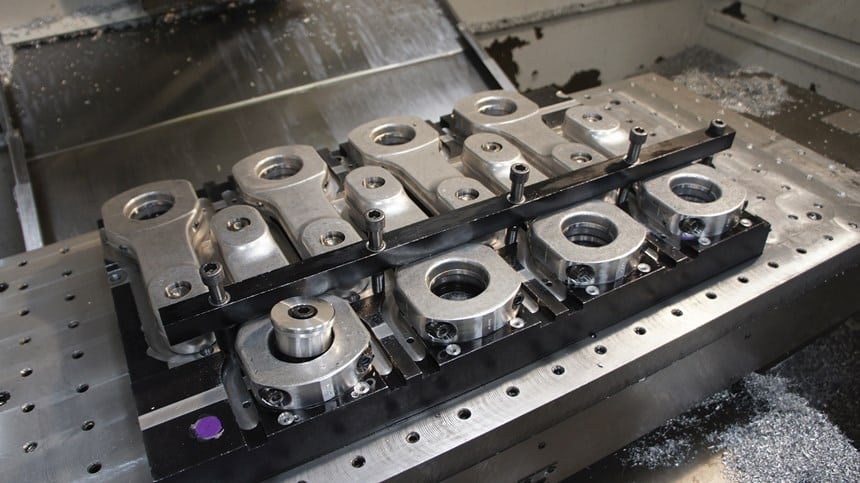
Fixture Base (Plate / Sub-Plate)
The base plate provides a rigid foundation for the fixture. It must be flat and stable to ensure accurate part placement and machining.
Locators (3-2-1 Principle for CNC)
Locators are used to position the workpiece in the fixture, ensuring that it is aligned with the cutting tool. The 3-2-1 principle is often employed, where three locators constrain the workpiece in space, ensuring accurate positioning.
Clamping Devices (Manual / Hydraulic / Pneumatic)
Clamping devices hold the workpiece securely during machining. They can be manual (e.g., toggle clamps), hydraulic, or pneumatic, with each offering different advantages depending on the application.
For a deeper dive into how these devices work with jigs and fixtures, refer to our Clamping & Locating Devices in Jigs and Fixtures — Complete Guide.
This guide will help you understand how clamping & locating devices enhance precision and efficiency in CNC machining..
Supports & Rest Pads
Support elements help hold the workpiece in place without distortion. Rest pads prevent deformation of thin or delicate parts by distributing the clamping forces evenly.
Bushings & Guide Elements (for Jigs)
Bushings guide the cutting tool along a predefined path, ensuring that operations such as drilling or milling are performed accurately.
Alignment Keys & Zero-Point Modules
Alignment keys ensure that the fixture is correctly positioned relative to the machine tool. Zero-point modules provide a precise reference for fixture positioning, improving repeatability.
Fixture Columns / Tombstones for Horizontal CNCs
Fixture columns and tombstones are used in horizontal CNC machines to hold multiple parts, allowing for simultaneous machining and increased productivity.
Custom CNC Machining Jigs — When & Why You Need Them
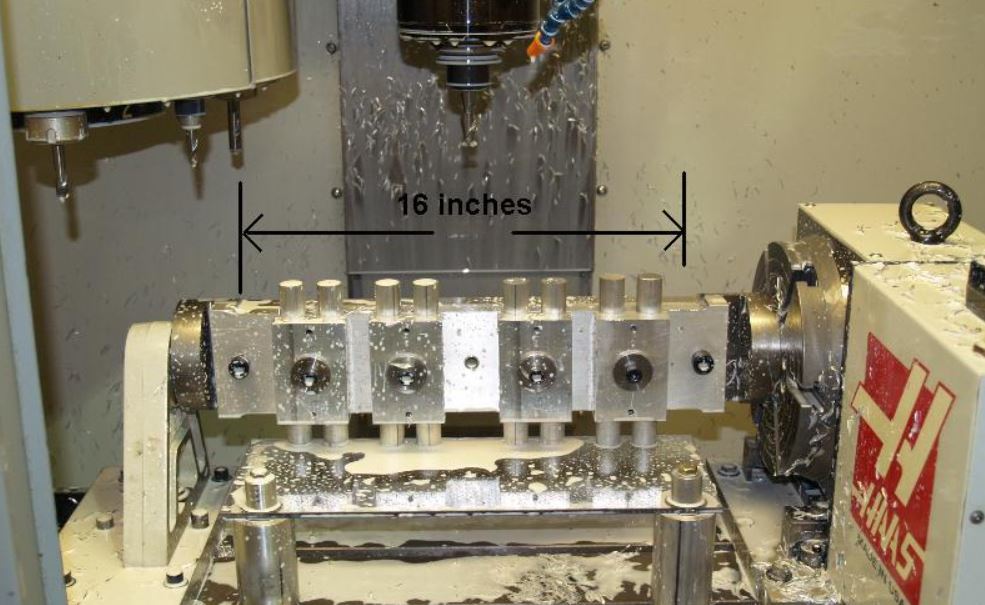
High-Mix, Low-Volume Production
Custom jigs are ideal for high-mix, low-volume production runs, where quick changes in fixture setups are necessary to handle a wide variety of parts.
Complex Shapes That Vises Cannot Hold
When parts have irregular geometries or complex shapes, standard vises and clamps may not provide adequate holding. Custom jigs are designed to fit the part perfectly, ensuring secure placement during machining.
Thin-Wall or Delicate Components
For thin-walled or delicate components, custom jigs can be designed to apply minimal pressure, preventing damage while still holding the part securely.
Multi-Operation Machining (3 Sides, 4 Sides, 6 Sides)
Custom jigs enable multi-operation machining by securing parts for multiple machining operations. These jigs can hold the workpiece in position for various angles, ensuring consistency and precision across all sides.
Requirements for Robotics & Automation
Custom jigs are essential in automated and robotic CNC cells, where parts must be loaded and unloaded without operator intervention. These jigs are designed for fast, repeatable operations in automated systems.
Designing Effective Jigs & Fixtures for CNC MachiningStep 1 — Define Machining Operations & Tool Paths
The first step in designing jigs and fixtures is to define the machining operations and tool paths. Understanding the required operations allows for precise fixture design and optimal workholding strategies.
Determine Forces (Cutting, Shear, Clamping)
Next, engineers need to calculate the forces that will be applied during machining. These include cutting forces, shear forces, and clamping forces. The fixture must be designed to withstand these forces without causing deformation or misalignment.
Apply 3-2-1 Locating Principle
Using the 3-2-1 principle, engineers determine the optimal number and placement of locators to constrain the workpiece. This principle ensures that the workpiece is accurately positioned and stable during machining.
Choose Clamping Strategy
Selecting the appropriate clamping strategy is critical. Options include toggle clamps, self-adjusting clamps, hydraulic clamps, and quick-change clamps. The choice depends on factors such as part geometry, required clamping force, and automation needs.
Ensure Chip Clearance & Coolant Flow
Effective chip clearance and coolant flow are essential for maintaining part quality and preventing overheating. Fixtures should be designed with channels or openings to allow for efficient chip removal and coolant distribution.
Optimize for Cycle Time
Fixture design should focus on minimizing cycle time by ensuring quick part loading and unloading, efficient clamping, and easy part access.
Validate Using Digital Twin / CAD Simulation
Before manufacturing the fixture, engineers can use CAD simulation or digital twin technology to validate the design. This step ensures that the fixture performs as expected and meets all requirements for accuracy and stability.
Materials Used for CNC Jigs and Fixtures
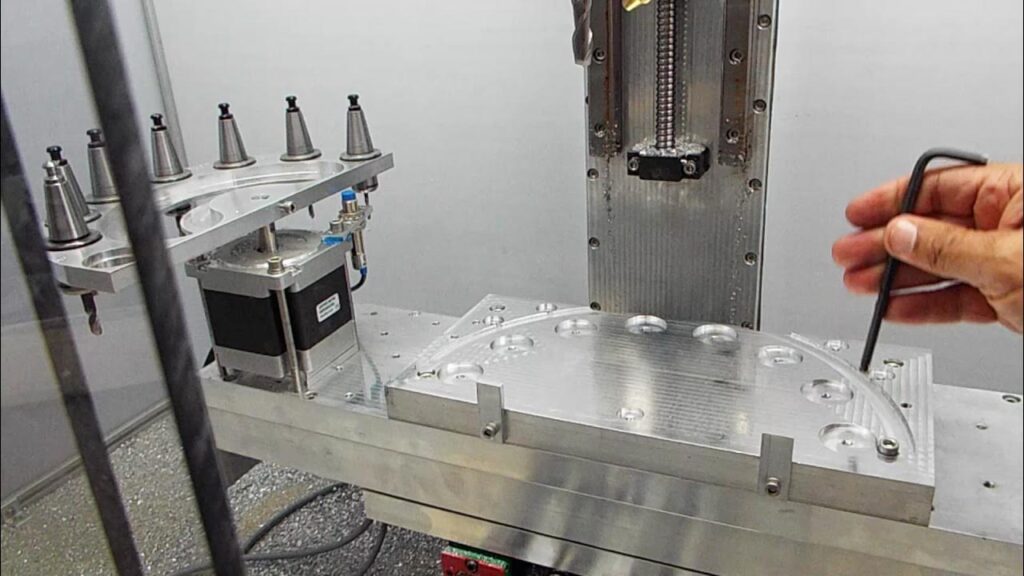
Aluminum (Lightweight & Fast Machining)
Aluminum is commonly used for fixtures requiring lightweight materials and fast machining times. It is particularly useful for prototype production or short-run jobs.
Steel / Tool Steel (Heavy-Duty CNC Loads)
Steel, including tool steel, is used for high-load CNC applications. Tool steel is durable, wear-resistant, and ideal for fixtures that need to withstand heavy machining forces.
Cast Iron (Vibration Damping)
Cast iron is excellent for damping vibrations during machining, making it ideal for fixtures that need to absorb cutting forces without transferring them to the workpiece.
Hardened Steel Inserts
Hardened steel inserts are often used in high-wear areas of fixtures, providing a durable surface that resists damage from cutting tools.
Polymer/Composite Fixtures (3D Printed, Carbon-Filled Nylon)
Polymer and composite materials, including 3D-printed components, are used for custom fixtures and jigs. These materials offer flexibility and cost-effectiveness, especially for low-volume or complex parts.
CNC Workholding Techniques (Advanced)
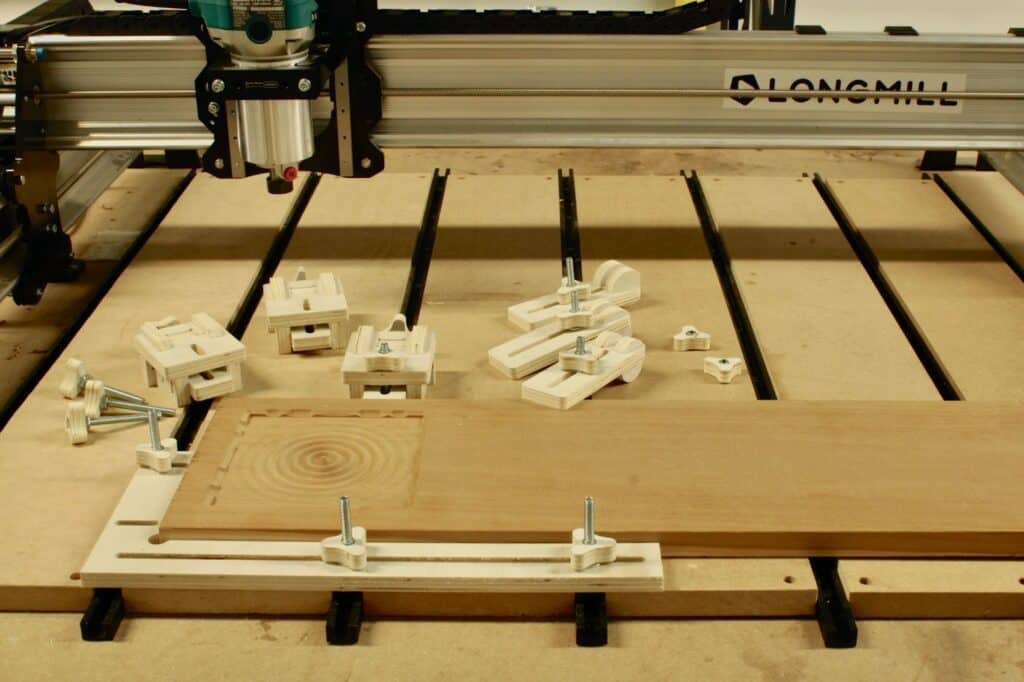
Zero-Point Workholding (Quick-Change)
Zero-point workholding systems allow for rapid fixture changeovers. These systems use precise reference points for quick alignment, reducing downtime and improving machine efficiency.
Modular Fixturing Systems
Modular fixturing systems provide flexibility by allowing for quick reconfiguration of fixture components to accommodate different part sizes and shapes.
Ball-Lock Systems
Ball-lock systems use locking pins to secure fixture components quickly and accurately. These systems are ideal for high-volume production where frequent fixture changes are required.
Self-Centering Vises for 5-Axis
Self-centering vises automatically center parts, reducing setup time and ensuring precise alignment for 5-axis CNC machining.
Workholding for Micro-Machining
For micro-machining, specialized fixtures are required to hold small parts securely without damaging them. These fixtures often use vacuum or magnetic workholding methods.
Automation Pallets & Robotic Fixturing
Automated workholding systems, including pallets and robotic fixturing, streamline production by enabling fully automated part loading and unloading, increasing efficiency in CNC cells.
Jig & Fixture Examples for CNC Machining
3-Axis Milling Fixture for Aluminum Bracket
A 3-axis milling fixture secures an aluminum bracket for machining on all three axes. This fixture provides precise positioning and stability during the milling operation.
5-Axis Fixture for Aerospace Impeller
A 5-axis fixture is used to hold an aerospace impeller, ensuring that it remains stable during multi-axis machining. The fixture allows for machining of complex geometries with high precision.
Vacuum Fixture for Thin Plates
A vacuum fixture is used to hold thin metal plates securely in place during machining, preventing deformation while ensuring accurate cuts.
Mandrel Fixture for Turning Tube Parts
A mandrel fixture holds cylindrical parts during turning operations, providing a secure grip while allowing for precise cuts along the length of the tube.
Soft Jaw Custom Fixture for Complex Contours
A custom soft jaw fixture is designed to hold parts with complex contours, ensuring that delicate parts are held securely without damaging their surface.
CNC Fixture Optimization for Productivity
Reduce Setup Time with Modular Designs
Modular designs allow quick fixture reconfiguration, reducing setup time between production runs. This is particularly valuable in high-mix, low-volume production environments.
Improve Tool Access for Multi-Side Machining
Fixtures designed for multi-side machining provide easy access to all areas of the part, improving efficiency and reducing cycle time.
Reduce Vibrations & Chatter
Fixtures that absorb vibrations and prevent chatter help maintain tool life and part quality, particularly in high-speed machining operations.
Cycle Time Reduction via Smart Clamping
Smart clamping systems provide optimal clamping force and positioning, reducing cycle time by ensuring faster part loading, clamping, and unloading.
Automation-Friendly Design (Robot Loading)
Fixtures designed for robotic loading and unloading improve efficiency in automated CNC cells, reducing the need for manual intervention and increasing throughput.
Common CNC Jig & Fixture Problems (and Fixes)
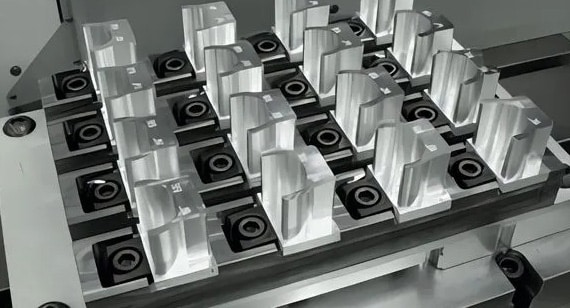
Workpiece Slipping
To prevent workpiece slipping, use higher clamping force or incorporate additional locators to stabilize the part.
Fixture Deflection
Fixture deflection can be minimized by using stronger materials or adding reinforcements to weak areas.
Poor Repeatability
Ensure that locators and clamping devices are positioned correctly and maintained regularly to prevent errors in repeatability.
Clamping Marks on Workpiece
To prevent clamping marks, use soft jaws or protective pads to distribute clamping force evenly across the part.
Thermal Expansion Issues
Thermal expansion can be addressed by using materials that absorb heat or by designing fixtures with thermal compensation features.
Chip Accumulation Blocking Locators
Ensure that fixtures are designed with adequate chip clearance to prevent debris from interfering with locators.
Maintenance & Inspection of CNC Fixtures
Cleaning Locators & Clamps
Regular cleaning of locators and clamps ensures that they remain free from debris, which could affect accuracy and performance.
Checking Wear on Contact Surfaces
Inspect contact surfaces for wear and tear, and replace worn components as necessary to maintain precision.
Replacing Bushings & Guides
Bushings and guides should be regularly inspected and replaced to prevent wear and maintain proper tool guidance.
Lubrication Points
Ensure that all moving parts of the fixture, including clamps and guides, are properly lubricated to reduce friction and wear.
Calibration of Zero-Point Systems
Regular calibration of zero-point systems ensures that the fixture remains accurately aligned with the machine tool for consistent results.
CNC Jigs vs. Fixtures — When to Use Which
CNC Machining Scenarios Where Jigs Are Still Useful
Jigs are still useful for operations like drilling, where tool guidance is necessary for precise hole placement. They are also valuable for high-mix, low-volume production runs.
Why Fixtures Dominate CNC Milling & Turning
Fixtures dominate in CNC milling and turning because they provide a stable, secure hold on the workpiece, ensuring accuracy during complex cutting operations.
Hybrid Jig-Fixture Systems
Hybrid systems combine the benefits of both jigs and fixtures, offering tool guidance while also securely holding the workpiece. These systems are ideal for multi-operation machining processes.
Conclusion
CNC jigs and fixtures are essential for achieving precision, repeatability, and efficiency in CNC machining. They secure parts, guide tools, and reduce errors, ensuring high-quality results with minimal setup time and operator skill.
Role in Modern Lean Manufacturing & Automation
Jigs and fixtures play a crucial role in lean manufacturing by reducing waste, improving efficiency, and supporting automated production. Their adaptability and precision make them essential in modern CNC machining environments.
FAQs
What’s the Lifespan of a CNC Fixture?
The lifespan of a CNC fixture depends on factors such as material, usage, and maintenance. Well-maintained fixtures can last for many years, but high-volume production may require more frequent replacement of certain components.
Are CNC Fixtures Universal or Custom?
CNC fixtures are often custom-designed to fit specific workpieces. Universal fixtures are available for standard parts but may not provide the same level of precision as custom fixtures.
What’s the Lifespan of a CNC Fixture?
The lifespan of a CNC fixture depends on factors such as material, usage, and maintenance. Well-maintained fixtures can last for many years, but high-volume production may require more frequent replacement of certain components.
How Do You Secure Irregular Shapes?
Irregular shapes are typically secured using custom fixtures designed to fit the geometry of the part. These fixtures often incorporate specialized clamping or supporting elements to hold the part securely.
When Is Vacuum Workholding Recommended?
Vacuum workholding is recommended for thin, flexible, or delicate parts that cannot be securely held using traditional clamps. It is particularly useful for flat parts and materials that could be damaged by mechanical clamping.
 English
  French
  Spanish
  Japanese
  German
  Portuguese