
The best 3-axis CNC machine supplier in the USA depends on whether you’re buying a machine or buying parts. For machine purchases, Haas, Hurco, and Tormach lead in the 3-axis VMC market. For CNC machining services (outsourcing parts), Protolabs, Xometry, Fictiv, and factory-direct partners like Yicen Precision offer different tradeoffs in pricing, speed, quality control, and scalability. This guide compares both categories with real specs, pricing context, and a head-to-head supplier comparison table.
The phrase “best 3-axis CNC machine supplier” means different things to different people. If you’re a shop owner looking to buy a vertical machining center, you’re comparing machine brands on spindle speed, work envelope, rigidity, and price. If you’re an engineer or buyer who needs 3-axis machined parts made by someone else, you’re comparing CNC service providers on tolerance, lead time, cost per part, and quality system.
Both are valid searches. Both involve choosing the right “supplier.” And getting the wrong one in either category costs you real money.
This guide covers both sides: the best 3-axis CNC machine brands for shops buying equipment, and the best 3-axis CNC machining service providers for companies outsourcing parts. We compare them on the specs that actually affect your outcome.
What Is 3-Axis CNC Machining and What Can It Produce?
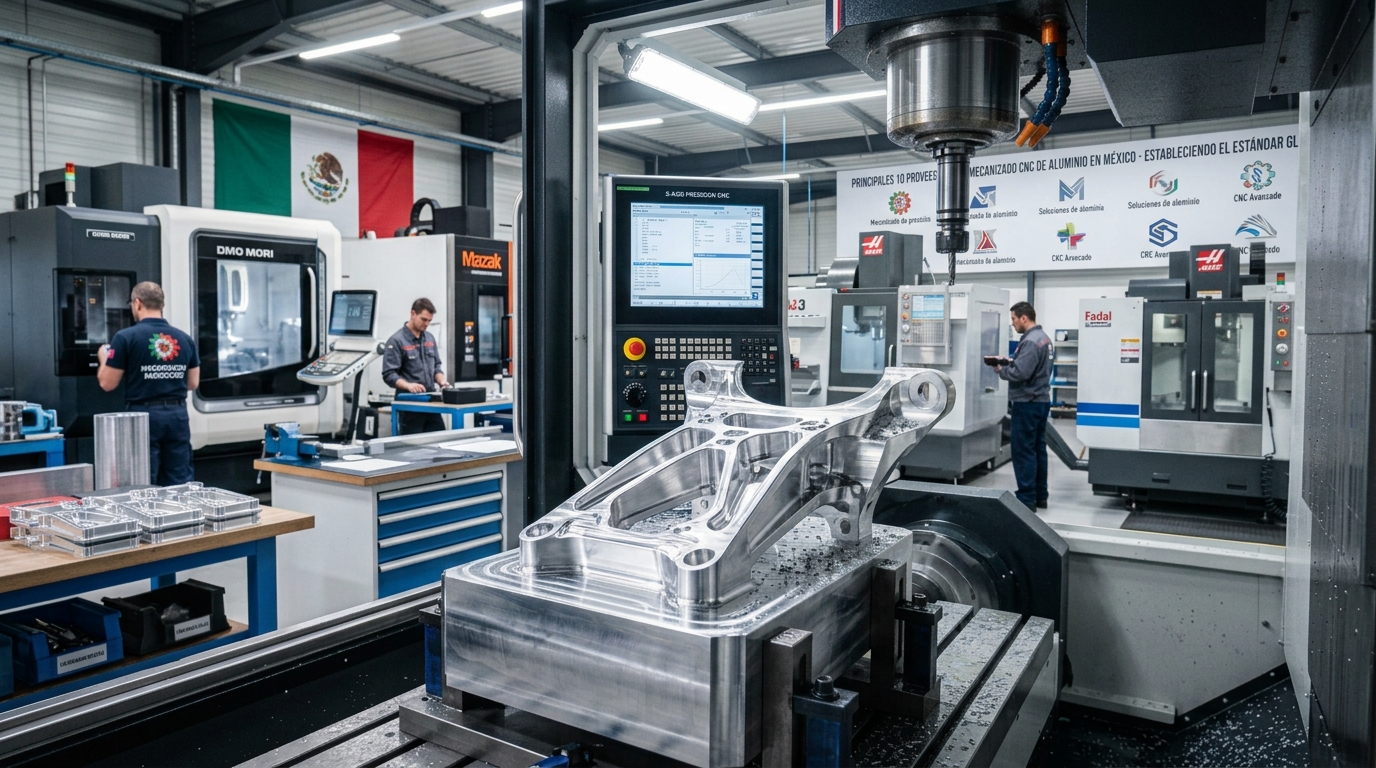
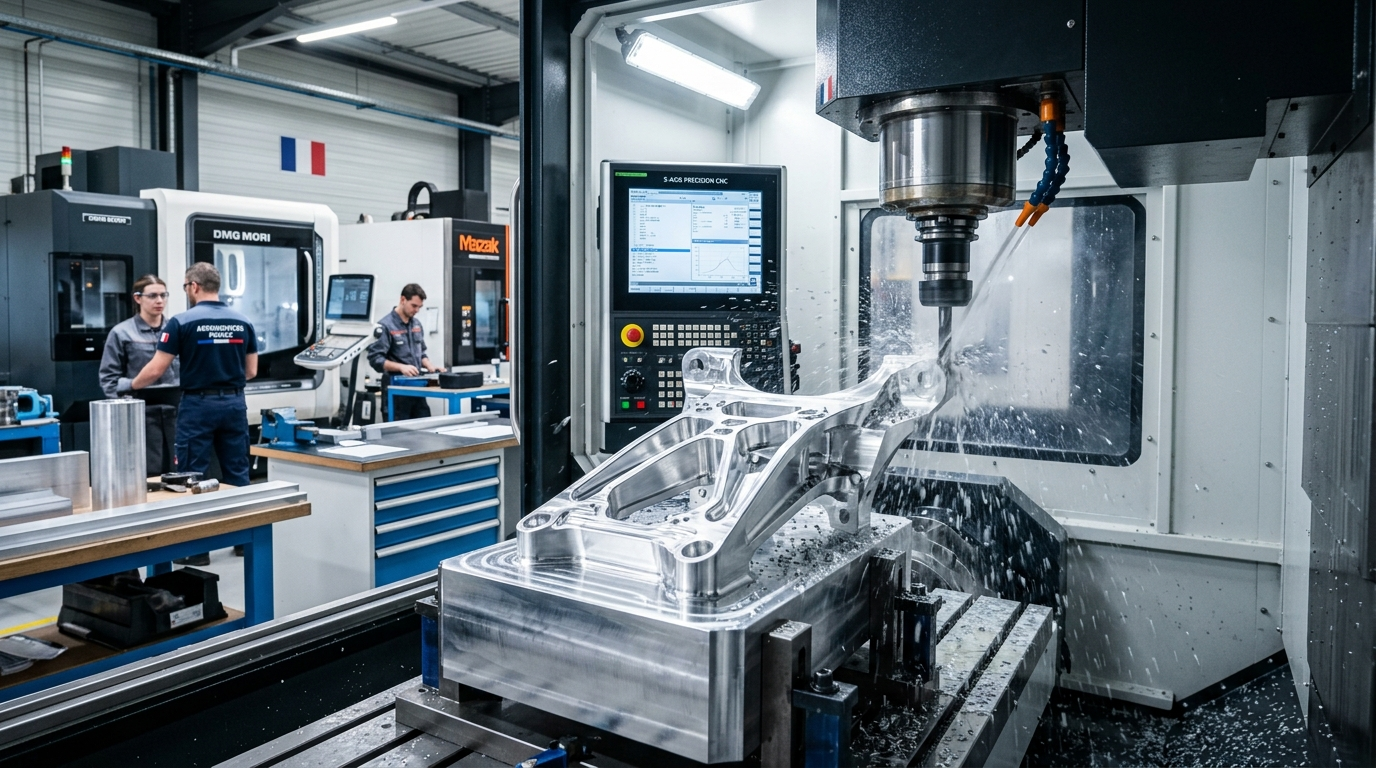
A 3-axis CNC machine moves a cutting tool along three linear directions: X (left-right), Y (front-back), and Z (up-down). The workpiece stays fixed while the tool moves to cut features. It’s the most common and widely available form of CNC machining.
3-axis machines handle the majority of precision parts that exist in production today. Flat surfaces, pockets, slots, through-holes, threaded holes, counterbores, and simple contours are all 3-axis work. The typical standard tolerance for 3-axis CNC milling at service bureaus is ±0.005” (±0.127 mm), though capable shops routinely hold ±0.001” (±0.025 mm) on critical features.
3-axis limitations appear when your part needs features on more than one face. Each additional face requires unclamping, re-fixturing, and re-zeroing, which adds time and introduces cumulative positional error. For parts needing 4+ face access or complex contours, 5-axis machining becomes more cost-effective.
But here’s the important nuance: about 70–80% of all machined parts can be produced on a 3-axis machine with proper fixturing. It’s the workhorse of the industry, and the smartest approach for most buyers is to design for 3-axis whenever possible and reserve multi-axis for parts that genuinely require it.
Best 3-Axis CNC Machine Brands for Shops Buying Equipment (USA)
If you’re buying a 3-axis VMC (Vertical Machining Center) for your shop, these are the leading suppliers in the US market.
Haas Automation
Headquarters: Oxnard, California Key 3-axis models: VF-1, VF-2, VF-4, Mini Mill, Super Mini Mill Spindle speed: Up to 15,000 RPM (standard); 30,000 RPM (high-speed options) Positional accuracy: ±0.0001” (±0.0025 mm) Price range: $35,000–$120,000+
Haas is the largest CNC machine tool builder in North America and the default choice for most US job shops. Their VF series is the workhorse of the industry: reliable, well-supported, and competitively priced. The VF-2 is arguably the most popular 3-axis VMC in the country. Haas machines are known for positional accuracy of ±11 microns at production feed rates, with ±2.5 micron repeatability at slower speeds. Their service network is the broadest in the US.
Best for: Job shops, production facilities, and educational institutions wanting reliable, affordable 3-axis capability with strong domestic support.
Hurco
Headquarters: Indianapolis, Indiana Key 3-axis models: VM10i, VM20i, VM30i (VM Series) Control system: WinMax (conversational + G-code) Price range: $60,000–$150,000+
Hurco’s VM Series stands out for its control system. The WinMax control supports both conversational programming (ideal for operators without G-code expertise) and traditional G-code, making it one of the most accessible controls on the market. The machines feature cast iron frames, Big Plus spindle systems, and a compact footprint with surprisingly large work cubes.
Best for: Shops that value programming flexibility, operators transitioning from manual to CNC, and job shops running diverse part types.
Tormach
Headquarters: Waunakee, Wisconsin Key 3-axis models: 1100MX, 770MX, PCNC 440 Control system: PathPilot Price range: $9,000–$25,000
Tormach targets the gap between hobby machines and full industrial VMCs. Their machines are genuine 3-axis mills (not routers) at price points accessible to small shops, makerspaces, and startups. The PathPilot control includes free software updates. The 1100MX handles steel and aluminum with legitimate precision for its class.
Best for: Startups, small shops, educational programs, and R&D labs needing real milling capability without the $50,000+ price tag.
Mazak
Headquarters (USA): Florence, Kentucky Key 3-axis models: VCN-530C, VCU-400 5X (configurable as 3-axis) Price range: $100,000–$300,000+
Mazak builds premium machines with a focus on productivity and automation integration. Their VCN series offers high rigidity, advanced thermal compensation, and integration with Mazak’s SMOOTH CNC control. These are production-grade machines for shops running high-value parts at volume.
Best for: Established manufacturers and production shops where machine uptime, precision, and automation readiness justify the premium investment.
DMG MORI
Headquarters (USA): Hoffman Estates, Illinois Key 3-axis models: CMX 600 V, CMX 800 V, CMX 1100 V Price range: $120,000–$350,000+
DMG MORI offers a global lineup of 3-axis machines with a reputation for European engineering quality. The CMX V series provides high accuracy and rigid construction. The CELOS control interface simplifies operation and integrates with factory automation. Premium pricing reflects the build quality and global service network.
Best for: Precision manufacturing environments, aerospace shops, and facilities integrating CNC machines into automated production cells.
Comparison Table: Top 3-Axis CNC Machine Brands (USA)
| Supplier | Country | Top 3-Axis Model | Max RPM | Accuracy | Price Range | Control System | Best For |
|---|---|---|---|---|---|---|---|
| Haas | USA | VF-2 | 15,000 | ±0.0001” | $55K–$90K | Haas CNC | Job shops, production, education |
| Hurco | USA | VM20i | 12,000 | ±0.0004” | $70K–$130K | WinMax | Diverse job shops, conversational programming |
| Tormach | USA | 1100MX | 10,000 | ±0.001” | $15K–$25K | PathPilot | Startups, small shops, R&D |
| Mazak | Japan/USA | VCN-530C | 18,000 | ±0.00004” | $120K–$250K | SmoothCNC | High-volume production, automation |
| DMG MORI | Germany/Japan | CMX 800 V | 15,000 | ±0.00008” | $150K–$300K | CELOS | Precision aerospace, automated cells |
Note: Prices are approximate US list prices and vary by configuration, options, and dealer.
Best 3-Axis CNC Machining Service Providers in the USA
If you don’t need a machine but need parts, these service providers handle 3-axis CNC work at scale.
Protolabs
Model: In-house manufacturing (owns the machines) Location: Maple Plain, Minnesota (multiple US facilities) Standard tolerance: ±0.005” (±0.127 mm); precision to ±0.001” Lead time: As fast as 1 day; standard 3–7 days Certifications: ISO 9001, AS9100D, ITAR Strengths: Fastest turnaround in the industry for standard parts. Automated DFM feedback at quoting. Owns and operates the machines, providing consistent quality. Limitations: Higher pricing than global alternatives. Automated toolpathing can reject complex geometries.
Xometry
Model: Broker network (5,000+ global partner shops) Location: North Bethesda, Maryland Standard tolerance: ±0.005” (metals); ±0.010” (plastics) Lead time: 2–10 days for CNC; expedited options available Certifications: ISO 9001, AS9100D, ITAR (through network partners) Strengths: Massive capacity. AI-powered instant quoting. Broadest range of processes. No MOQ. Limitations: Variable quality (you may not know which shop makes your part). Broker markup increases costs.
Fictiv
Model: Managed network (vetted partners) Location: San Francisco, California Standard tolerance: ±0.005”; precision to ±0.0001” on select jobs Lead time: 3–10 days standard Certifications: ISO 9001; partners hold AS9100, ISO 13485, IATF 16949 Strengths: Managed quality layer above raw network. Strong DFM feedback. Project management for complex orders. Limitations: Higher cost than factory-direct options. Smaller network than Xometry.
Prototek
Model: In-house manufacturing Locations: New Hampshire, Wisconsin, California Standard tolerance: ±0.005”; precision available Lead time: 3–5 days standard; rush available Certifications: ISO 9001, AS9100 Strengths: US-based in-house manufacturing with strong quality control. Multiple locations reduce shipping time. Handles 3-axis through 9-axis mill-turn. Limitations: Higher pricing than overseas alternatives. Best for US-domestic requirements.
Comparison Table: Top 3-Axis CNC Machining Service Providers
| Provider | Model | Tolerance | Lead Time | Certifications | Price Level | Best For |
|---|---|---|---|---|---|---|
| Protolabs | In-house (owns machines) | ±0.005” std / ±0.001” precision | 1–7 days | ISO 9001, AS9100D, ITAR | High (premium) | Fast-turn prototypes, urgent parts |
| Xometry | Broker (5,000+ shops) | ±0.005” metals | 2–10 days | ISO 9001, AS9100D (via network) | Moderate (moderate) | Broad capacity, diverse processes |
| Fictiv | Managed network | ±0.005” std / ±0.0001” select | 3–10 days | ISO 9001 (partners hold aerospace) | High (premium) | Managed quality, complex projects |
| Prototek | In-house (3 US facilities) | ±0.005” std | 3–5 days | ISO 9001, AS9100 | High (premium) | US-domestic, multi-axis capability |
| Yicen Precision | Factory-direct (owns 300+ machines) | ±0.005 mm (±0.0002”) | 1–5 days proto; 5–15 days production | ISO 9001, ISO 13485, IATF 16949 | Most competitive | Production volumes, cost-sensitive programs |
When to Buy a 3-Axis Machine vs. When to Outsource
Buy a machine when: You have consistent daily machining work. You need in-house iteration speed (prototype, test, revise the same day). You’re building a machine shop as a business. Your work is primarily 3-axis and you can keep the machine utilized at 60%+ capacity.
Outsource parts when: You need parts, not a capability. Your volumes are project-based, not continuous. You need tighter tolerances than your in-house equipment can hold reliably. You need multiple materials and surface finishes that require different machine setups. You’re scaling from prototype to production and need a partner with capacity.
Hybrid approach: Many companies run a small in-house machine (Tormach or Haas Mini Mill) for fast prototype iteration, then outsource production volumes to a CNC machining service with the capacity, material range, and quality certifications to handle production-grade work.
The Factory-Direct Alternative: Why Global Sourcing Complements US Suppliers
US-based CNC suppliers offer domestic convenience, fast shipping, and regulatory compliance for ITAR/defense work. But for production volumes, factory-direct manufacturers in global manufacturing hubs offer a compelling cost advantage.
The math: US machine shop hourly rates typically run $75–$150/hour. Factory-direct rates from certified manufacturers in Shenzhen run $25–$50/hour for equivalent machine capability. That 50–70% cost difference compounds on production runs of 100+ parts.
Yicen Precision operates 300+ CNC machines (3-axis through 5-axis) with tolerances to ±0.005 mm, 50+ materials, 30+ surface finishes, and ISO 9001/ISO 13485/IATF 16949 certifications. Air freight delivery to the US takes 3–5 days via DHL/FedEx.
The practical strategy for US buyers: use domestic US suppliers for urgent prototypes and ITAR-restricted defense work. Use factory-direct global partners for production volumes where cost per part drives the economics.
Conclusion
The best 3-axis CNC machine supplier in the USA depends entirely on what you’re buying.
For machines: Haas dominates the US job shop market on price and support. Hurco wins on control flexibility. Tormach makes real machining accessible to small shops. Mazak and DMG MORI serve the premium production tier.
For machining services: Protolabs delivers the fastest US turnaround. Xometry offers the broadest capacity. Fictiv provides managed quality. Yicen Precision delivers the best cost efficiency at production volumes.
For most buyers, the right answer isn’t one supplier. It’s the right supplier for each stage: a local US shop or in-house machine for prototyping, and a factory-direct partner for production economics.
Get an instant quote from Yicen Precision and compare factory-direct pricing against your current US supplier quotes. 300+ machines, 50+ materials, tolerances to ±0.005 mm, delivery from 24 hours.
Frequently Asked Questions
Who is the largest 3-axis CNC machine manufacturer in the USA?
Haas Automation, headquartered in Oxnard, California, is the largest CNC machine tool builder in North America. Their VF series of vertical machining centers is the most widely installed 3-axis platform in US job shops. The VF-2 is their most popular model, offering reliable 3-axis performance starting around $55,000–$90,000 depending on configuration.
What tolerance can 3-axis CNC machining achieve?
Standard 3-axis CNC machining at major service bureaus (Protolabs, Xometry, Fictiv) holds ±0.005” (±0.127 mm). Capable job shops and factory-direct manufacturers routinely hold ±0.001” (±0.025 mm) on critical features. Machine capability is typically much higher than advertised service tolerances, which include safety margins for the variability of custom part production.
Is it cheaper to buy a 3-axis CNC machine or outsource machining?
It depends on volume and consistency. A $60,000 Haas VF-2 costs approximately $80,000 in the first year including tooling, software, and maintenance. If you outsource $80,000 worth of parts annually, the machine pays for itself in year one. If your annual machining spend is below $30,000, outsourcing is typically more cost-effective. For production volumes, factory-direct overseas partners offer 50–70% lower per-part costs than US shops.
What is the difference between a 3-axis CNC machine and a 5-axis?
A 3-axis machine moves the cutting tool along X, Y, and Z linear axes. The workpiece stays fixed. A 5-axis machine adds two rotary axes, allowing the tool or workpiece to tilt and rotate during cutting. 5-axis machines produce complex geometries in a single setup, while 3-axis parts with multi-face features require multiple setups and re-fixturing. About 70–80% of machined parts can be produced on 3-axis equipment.
Which 3-axis CNC machining service is best for fast prototypes in the USA?
Protolabs offers the fastest domestic turnaround, delivering CNC parts in as fast as 1 day from their in-house automated factories. Xometry and Fictiv typically deliver in 2–10 days. For cost-sensitive prototypes with slightly longer timelines (3–5 days production plus 3–5 days air shipping), factory-direct manufacturers offer significantly lower pricing.