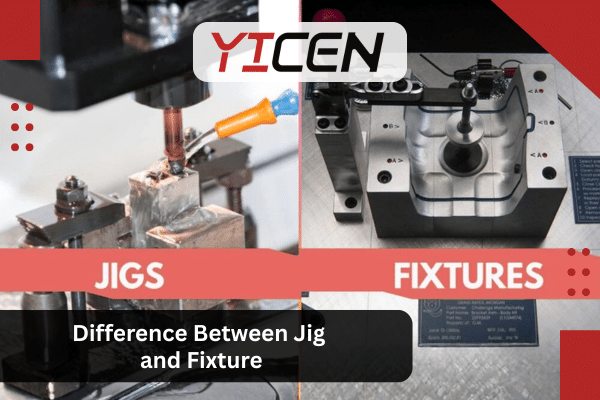
Jigs and fixtures are indispensable in the world of manufacturing and machining. Despite being used interchangeably, they serve distinct purposes. Understanding the differences between them is essential for optimizing manufacturing processes, ensuring precision, and improving overall productivity. This guide will explore the key differences between jigs and fixtures, providing detailed insights into their functions, types, advantages, and uses in various industries.
What Is a Jig?
Purpose & Function
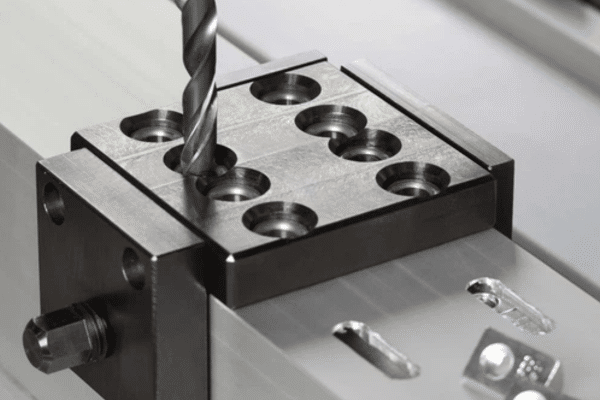
A jig is a tool used in manufacturing to control the location and motion of another tool, usually a cutting tool. The primary function of a jig is to guide the cutting tool to the desired location on the workpiece, ensuring precise and repeatable operations. In many cases, jigs are designed for operations such as drilling, reaming, or tapping, where the cutting tool must follow a specific path.
- Tool guiding: A jig guides the tool along the right path to make accurate cuts or holes.
- Reducing manual error: By providing consistent guidance, jigs reduce human error, improving overall accuracy.
- Suitable operations: Jigs are most commonly used in operations like drilling, reaming, tapping, and counterboring, where precision is critical.
Key Features of a Jig
- Tool guide mechanisms: Often include bushings or other guide components to direct the tool’s movement.
- Precision: Designed to ensure parts are made to exact specifications, increasing product consistency.
- Repeatability: Jigs allow for repeated operations to be performed with the same precision, enhancing efficiency.
Common Types of Jigs
- Template Jig: Uses a template to guide the tool during the operation.
- Plate Jig: A flat plate with drill bushings for tool guidance.
- Channel Jig: Encloses the workpiece in a channel-like structure for stability.
- Leaf Jig: A hinged jig that covers the workpiece and guides the tool.
- Box Jig: A 3D framework surrounding the workpiece for precise tool alignment.
- Diameter Jig: Specifically designed for cylindrical workpieces.
- Indexing Jig: Used for rotating the workpiece in increments for multi-point operations.
What Is a Fixture?
Purpose & Function
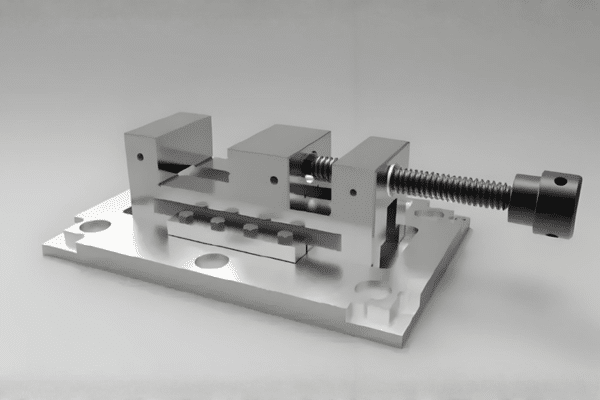
A fixture is a tool used to securely hold and support a workpiece in place during a machining operation. Unlike a jig, a fixture does not guide the cutting tool but ensures that the workpiece is held firmly in the correct position and orientation. Fixtures are used in operations like milling, turning, grinding, and welding, where the workpiece must remain stationary while the tool performs the machining.
- Workholding: Fixtures hold the workpiece steady during machining operations.
- Positioning: Fixtures ensure the correct orientation of the workpiece relative to the tool.
- Stability and rigidity: Fixtures provide the necessary stability for precise machining, particularly in high-torque and high-precision environments.
Key Features of a Fixture
- Clamping devices: Fixtures often incorporate clamps or screws to hold the workpiece securely.
- Locating elements: Locators ensure the part is positioned in the correct alignment for machining.
- Rigidity: Fixtures must be robust enough to handle cutting forces and maintain precise positioning during operations.
Common Types of Fixtures
- Milling Fixtures: Used to secure parts during milling operations.
- Turning Fixtures: For holding parts on lathes during turning operations.
- Boring Fixtures: Used in boring operations to hold the workpiece.
- Grinding Fixtures: Hold parts during grinding to ensure smooth surfaces.
- Broaching Fixtures: Secure parts for broaching operations.
- Tapping Fixtures: Used to hold parts during tapping to ensure thread consistency.
- Welding Fixtures: Maintain the positioning of parts during welding.
- Assembly Fixtures: Help align and hold parts during the assembly process.
- Duplex Fixtures: Allow the simultaneous machining of two parts.
Key Differences Between Jigs and Fixtures in Manufacturing
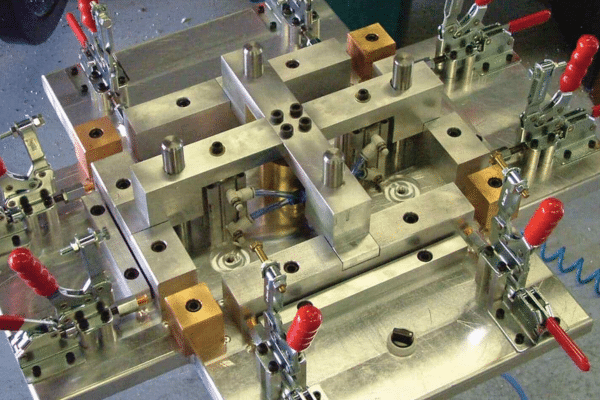
Functional Difference
- Jig: Guides the cutting tool to the precise location on the workpiece.
- Fixture: Holds and supports the workpiece in a fixed position during machining.
Tool Interaction Difference
- Jig: Interacts with the cutting tool to guide it during the operation.
- Fixture: Does not come into contact with the tool, but rather holds the workpiece steady.
Workpiece Interaction Difference
- Jig: Positions the tool and the workpiece to ensure accuracy in the operation.
- Fixture: Primarily focuses on securing the workpiece, ensuring its correct orientation.
Operation Suitability
- Jig: Ideal for guided operations like drilling, reaming, and tapping.
- Fixture: Best suited for operations that require the workpiece to stay in a fixed position, such as milling, turning, or welding.
Level of Automation
- Jig: Less common in automated processes, as it typically requires manual intervention.
- Fixture: Often used in automated and CNC machining processes for consistent and repeatable results.
Design Complexity
- Jig: Typically more complex, with components designed to guide tools accurately.
- Fixture: Simpler in design, focusing on the stable support of the workpiece.
Cost & Manufacturing Effort
- Jig: Generally more expensive due to the precision required for tool guidance.
- Fixture: Typically less expensive, as the design is focused on workholding rather than guiding tools.
Skill Requirement for Operator
- Jig: Generally easier to use and requires less skill since it directly guides the tool.
- Fixture: May require more setup time and precision but does not need as much direct interaction with the cutting tool.
Jig vs Fixture
| Aspect | Jig | Fixture |
| Function | Guides the tool during machining operations | Holds the workpiece in position during machining |
| Tool Interaction | Guides the tool | Does not interact with the tool |
| Workpiece Holding | Positions workpiece, but not the primary function | Primarily designed to hold and secure the workpiece |
| Application | Drilling, reaming, tapping, etc. | Milling, turning, grinding, welding, etc. |
| Design Complexity | More complex due to tool guidance components | Simpler, focused on securing the workpiece |
| Flexibility | Less flexible, specific to tasks | More flexible, adaptable to various parts |
| Components | Includes drill bushings, locators, and clamps | Includes clamps, screws, and support structures |
| Setup Time | Longer setup due to tool alignment | Shorter setup focused on securing workpiece |
| Cost | Higher due to specialized design | Lower, due to simpler design |
Why Jigs Improve Manual Work
Jigs are invaluable in reducing human error and ensuring precise cuts or holes are made in every part. They make operations like drilling much more accurate, especially in high-volume production environments.
Why Fixtures Support Automated Processes
Fixtures are essential in automated manufacturing, as they provide stability and precision in high-speed, high-volume operations. Fixtures ensure that parts are held securely during machining, facilitating consistency and repeatability.
When Jigs and Fixtures Are Used Together
In some cases, jigs and fixtures are used in tandem to achieve both precision and stability. Jigs guide the tool to the correct position, while fixtures hold the workpiece firmly in place, resulting in improved accuracy and efficiency.
Components Used in Jigs and Fixtures
Locating Elements
Used to position the workpiece correctly within the jig or fixture.
Clamping Elements
Secure the workpiece in place, preventing any movement during machining.
Support Elements
Provide additional stability, ensuring the workpiece remains firmly positioned.
Fasteners, Handles & Hardware
Used for securing, positioning, and adjusting the jig or fixture.
Pneumatic/Hydraulic Clamping (Fixtures)
Used in fixtures to enhance clamping force and ensure secure positioning during high-demand operations.
MANUFACTURING & MATERIALS
How Jigs and Fixtures Are Manufactured
Jigs and fixtures are commonly manufactured using CNC machining, welding, EDM, and additive manufacturing methods, depending on the complexity and requirements of the part being produced.
Materials Used for Jigs and Fixtures
- Steel: Common for both jigs and fixtures due to its strength.
- Aluminum: Used for lightweight jigs.
- Cast Iron: Often used for large, stable fixtures.
- Tool Steel: Used for components subject to wear and tear, like bushings.
USE CASES AND APPLICATIONS
Applications of Jigs
Used in drilling, reaming, and tapping, where tool guidance is critical for precision.
Applications of Fixtures
Common in milling, turning, grinding, and welding, where workholding and stability are the primary requirements.
Industry Examples
Automotive
Jigs and fixtures are used extensively in automotive manufacturing for precise component assembly.
Aerospace
Aerospace components require high precision, making jigs and fixtures essential in their production.
Electronics
Used in the assembly of electronic components, ensuring that parts are placed and held with precision.
Machine Shops
Both jigs and fixtures are vital in machine shops for ensuring the accuracy and repeatability of machining operations.
ADVANTAGES & DISADVANTAGES
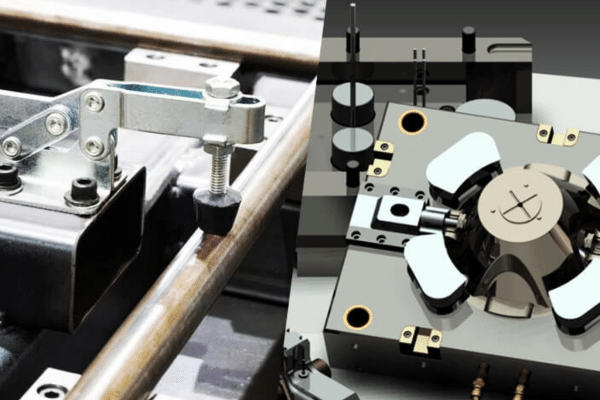
Advantages of Jigs and Fixtures
- Increased production speed
- Improved accuracy and consistency
- Reduced skill requirements
- Lower scrap and rework rates
Disadvantages of Jigs and Fixtures
- Lack of flexibility in design
- Storage and handling challenges
- Maintenance requirements
- High initial costs
Summary
In summary, jigs guide the tool during machining operations, ensuring precision, while fixtures hold the workpiece steady, enabling stable machining. Both tools are integral to modern manufacturing processes, enhancing speed, consistency, and accuracy.
FAQs
What is the main difference between a jig and a fixture?
The main difference is that a jig guides the tool to the correct position during machining, while a fixture holds and supports the workpiece in place during the operation.
Can a fixture guide a tool?
No, a fixture is designed to only hold the workpiece in place. It does not guide the tool.
Why are jigs used in drilling?
Jigs are used in drilling to ensure the drill bit is positioned accurately, reducing errors in hole placement.
Which is more expensive — jig or fixture?
Generally, jigs are more expensive due to their specialized design and precision components, while fixtures are usually simpler and less costly.
How do industries choose between jig and fixture?
Industries choose between jigs and fixtures based on the nature of the operation. Jigs are selected for tasks that require tool guidance, such as drilling, while fixtures are used when the workpiece needs to be securely held during operations like milling or welding
 English
  French
  Spanish
  Japanese
  German
  Portuguese