Your material choice locks in more than 60% of a part’s final cost before a single cut is made. Get it wrong and you’re looking at expensive redesigns, tool failures, or parts that pass the drawing but fail in service. This guide breaks down the real trade-offs between steel, aluminum, and titanium so you can make the right call the first time.
Why Material Selection Matters More Than Most Buyers Realize
The metal you specify determines your part’s cycle time, tooling cost, achievable tolerance, and long-term reliability. No other single decision affects all four factors simultaneously.
A material change that looks minor on a BOM can slash or double your machining cost. Feed rates for aluminum run 6 to 8 times faster than for steel. Titanium runs at roughly 40% of steel’s speed and demands high-pressure coolant and specialized tooling. Those differences translate directly into price per part and lead time.
Material also drives downstream decisions: surface treatment options, weld compatibility, corrosion performance, and recyclability. Engineers who evaluate material early in the design process avoid the expensive loop of ordering parts, testing them, and redesigning when they underperform.
Yicen Precision provides DFM (Design for Manufacturability) feedback on every uploaded CAD file. If your material choice is adding cost without adding performance, we flag it before cutting starts. Upload your file for a free DFM review.
Quick Comparison: Steel, Aluminum, and Titanium
| Propriété | Acier inoxydable 304 | 6061-T6 Aluminum | Ti-6Al-4V (Grade 5) |
|---|---|---|---|
| Densité (kg/m³) | 7,900 | 2,700 | 4,430 |
| Tensile strength (MPa) | 515 | 310 | 950 |
| Yield strength (MPa) | 205 | 275 | 880 |
| Conductivité thermique (W/m-K) | 16 | 167 | 6.7 |
| Relative cutting speed | 1× | 6-8× | 0.3-0.4× |
| Raw material cost (relative) | 1× | 1.5-2× | 6-8× |
| Résistance à la corrosion | Good (stainless) | Moderate (anodize required) | Excellent |
| Best applications | Gears, shafts, fasteners, molds | Housings, frames, brackets, fixtures | Aerospace structures, surgical implants |
These numbers are typical values for the most common alloy grades. Specific grades vary. Yicen machines 50+ material options including specialty alloys — see the full materials library.
Steel for CNC Machining Parts
When steel is the right choice
Steel dominates applications where load-bearing strength, wear resistance, or elevated temperature performance is the priority. It’s the default for gears, shafts, structural brackets, injection mold tooling, and any part that transfers significant mechanical force.
Stainless grades (304, 316L, 17-4 PH) add corrosion resistance. Carbon and alloy grades (1045, 4140, H13) are heat-treatable to high hardness for wear surfaces and tooling. No other metal family offers this breadth of property range at steel’s price point.
Machining characteristics
304 stainless work-hardens quickly if feed rates drop too low. The cut must stay aggressive enough to shear material cleanly rather than rub and harden the surface. This requires rigid fixturing, proper coolant delivery, and carbide tooling with sharp edges.
Mild steel (1018, 1045) machines freely and is the most cost-effective option when corrosion resistance is provided by a coating. Alloy steels at high hardness (40+ HRC) require hard-milling strategies and generate significant cutting forces.
At Yicen Precision, Fraisage CNC et Tournage CNC of steel parts are supported across the full alloy range, with post-process heat treatment coordination available.
Surface finish options for steel
Steel accepts a wide range of finitions de surface: electropolishing, passivation, zinc plating, black oxide, powder coating, and hard chrome. 316L stainless can be finished to Ra 0.2 µm for medical device components.
Cost profile
Steel billet is the cheapest of the three metals per kilogram. Machining cost depends on grade: mild steel is fast and cheap to machine, while stainless and hardened alloy steels require slower feeds and more tool changes. For structural parts where weight isn’t a constraint, steel is typically the lowest total cost option.
Aluminum for CNC Machining Parts
When aluminum is the right choice
Aluminum is the most commonly machined metal for good reason. The strength-to-weight ratio of 6061-T6 covers a huge range of structural and enclosure applications. At one-third the density of steel with 60% of its yield strength, aluminum is the first choice for any part where weight reduction matters: drone frames, robotic arms, EV battery housings, heat sinks, and consumer electronics enclosures.
7075-T6 pushes tensile strength to 570 MPa, approaching medium-carbon steel, making it viable for aerospace structural components where weight is critical.
Machining characteristics
Aluminum’s machinability is its defining commercial advantage. High-speed spindles can cut aluminum at surface speeds above 600 m/min, producing clean chips that evacuate easily. Cycle times for equivalent aluminum and steel parts can differ by a factor of five or more.
This speed advantage flows directly to cost and lead time. Prototype runs of aluminum parts that would take three days in steel can be completed in 24 hours. Yicen’s rapid prototyping service most commonly handles aluminum precisely for this reason.
Surface finish options for aluminum
Type II anodizing produces a decorative, corrosion-resistant oxide layer in standard or custom colors. Type III (hardcoat) anodizing increases surface hardness to 60-70 HRC for wear-critical applications. Both options are available directly from Yicen without third-party coordination. See the full surface finish catalog.
Cost profile
Aluminum billet costs roughly 1.5 to 2× more per kilogram than mild steel, but the machining speed advantage typically makes finished aluminum parts cheaper than equivalent steel parts once cycle time is factored in. For high-mix, low-volume production, aluminum almost always delivers better economics unless the application demands steel’s mechanical properties.
Titanium for CNC Machining Parts
When titanium is the right choice
Titanium’s combination of high strength, low density, and outstanding corrosion resistance is unmatched across the metal spectrum. Ti-6Al-4V delivers 950 MPa tensile strength at 4,430 kg/m³ density — roughly 40% lighter than steel at nearly double the strength. It also passes human body compatibility requirements, making it the implant material of choice in orthopedic and dental applications.
The applications that justify titanium’s cost are specific: aerospace structural parts where weight reduction has a direct fuel cost, implants médicaux where biocompatibility is non-negotiable, high-performance automobile components, and marine hardware exposed to saltwater.
If your part isn’t in one of these categories, titanium is almost certainly not the economical choice.
Machining characteristics
Titanium’s low thermal conductivity (6.7 W/m·K compared to 167 for aluminum) traps heat at the cutting edge rather than conducting it into the chip. This generates high cutting temperatures that accelerate tool wear and can cause surface damage if parameters are wrong.
Successful titanium machining requires:
High-pressure coolant. Directed at the cutting zone, not just flooded over the part. This drives heat away from the tool tip and prevents built-up edge formation.
Sharp, fine-grain carbide tooling. Dull edges generate heat through rubbing. Tool changes happen more frequently than with aluminum or steel.
Conservative radial engagement. Keeping the tool lightly engaged prevents the spring-back that causes rubbing on the back side of the cut.
Rigid workholding. Titanium’s elasticity causes chatter if the setup has any flex. Proper fixturing is critical.
Yicen Precision’s engineers apply adaptive toolpath strategies specifically developed for titanium, maintaining consistent chip loads throughout the cut to extend insert life and protect surface integrity.
Surface finish options for titanium
Titanium accepts anodizing (producing decorative colored oxide layers, used in medical and aerospace), electropolishing, bead blasting, and passivation. For implant-grade components, Ra values to 0.2 µm are achievable with finishing operations. Yicen’s meulage de précision service handles titanium bore finishing where dimensional tolerances require it.
Cost profile
Raw Ti-6Al-4V billet costs 6 to 8 times more per kilogram than mild steel. Combined with slower machining speeds and higher tool consumption, finished titanium parts typically cost 10 to 15 times more than equivalent aluminum parts. Projects must have a clear functional justification for this premium before committing.
The Decision Framework: Which Metal for Which Part?
Work through these questions in order before specifying a material.
Step 1: What is the primary mechanical requirement?
High static load with no weight constraint? Start with steel. Load-bearing with weight constraints? Evaluate aluminum first, titanium if aluminum’s strength falls short. Extreme strength at minimum weight, or medical/corrosive environment? Titanium.
Step 2: What is the operating environment?
Indoor, moderate conditions: all three options are viable; cost decides. Outdoor or humid: stainless steel or anodized aluminum. Marine or chemical exposure: titanium or 316L stainless. Implanted in the human body: titanium (or PEEK for polymer options via Services d'usinage CNC).
Step 3: What volume and lead time do you need?
Single prototype in 24 hours: aluminum is fastest and cheapest. Low-volume production run (50-500 parts): aluminum or steel depending on mechanical requirements. High-volume production where per-part economics dominate: optimize by material and process together.
Step 4: What are the downstream requirements?
If the part needs welding, check alloy compatibility. If it needs plating or anodizing, confirm the process works with your grade. If it’s a medical component, confirm the grade meets ISO 10993 biocompatibility requirements. Yicen holds ISO 13485 certification for medical device manufacturing.
| Type d'application | Recommended Starting Point | Reason |
|---|---|---|
| Structural bracket, indoor | Aluminium 6061-T6 | Cost, speed, sufficient strength |
| Gear or shaft under high load | 4140 or 17-4 PH steel | Wear resistance, heat treatability |
| Aerospace rib or fitting | 7075-T6 aluminum or Ti-6Al-4V | Weight-critical, load-bearing |
| Orthopedic implant | Ti-6Al-4V | Biocompatibility, strength, corrosion |
| Injection mold insert | H13 or P20 steel | Hardness, thermal conductivity |
| Drone frame | Aluminium 6061-T6 | Weight, machinability, cost |
| Marine fastener | 316L stainless or titanium | Saltwater corrosion resistance |
How Surface Treatment Changes the Equation
The right surface finish extends part life, adds functionality, and affects cost. Material choice gates which finishes are available.
Aluminium : Type II anodize (decorative, corrosion-resistant), Type III hardcoat (wear-resistant), alodine/chromate conversion (electrical conductivity preserved), revêtement en poudre.
Acier : Zinc plating, electroless nickel, black oxide, hard chrome, electropolishing (stainless), passivation. Black oxide on steel is low-cost and improves appearance without adding significant thickness.
Titanium: Anodizing (color varies by voltage, no dye required), electropolishing, bead blasting, passivation. Titanium anodize is used cosmetically in medical instruments and aerospace fasteners.
Surface treatment selection affects dimensional planning. Hard anodize on aluminum adds 0.013-0.025 mm per surface. If you have a fit that requires a tight dimensional window, the machined dimension must compensate. Flag this in your drawing notes or during Yicen’s DFM review.
Tolerances Achievable Across All Three Materials
Yicen Precision holds tolerances to ±0.005 mm across steel, aluminum, and titanium with proper fixturing and toolpath strategy. The following table reflects typical achievable tolerances at Yicen’s facility.
| Feature Type | Acier | Aluminium | Titane |
|---|---|---|---|
| General dimensions | ±0,01 mm | ±0,01 mm | ±0,01 mm |
| Precision bores | ±0.005 mm | ±0.005 mm | ±0.008 mm |
| Surface finish (as-machined) | Ra 0.8 µm | Ra 0.4 µm | Ra 0.8 µm |
| Surface finish (with grinding) | Ra 0.2 µm | Ra 0.4 µm | Ra 0.2 µm |
Titanium’s spring-back characteristic means precision bore tolerances occasionally require a final grinding pass. Yicen’s meulage de précision et services d'assemblage handle this in-house, keeping your supply chain simple.
Inspection and Quality Documentation
Material traceability matters in regulated industries. Yicen provides:
- Material certificates confirming alloy grade and heat number
- CMM inspection reports with dimensional data against your drawing
- First Article Inspection (FAI) reports for new part numbers
- RoHS declarations on request
- Full traceability documentation for dispositif médical et aérospatiale customers
Yicen holds ISO 9001:2015, ISO 13485, IATF 16949, and ISO 14001 certifications. See our quality documentation.
Get Your CNC Machining Parts Quoted Now
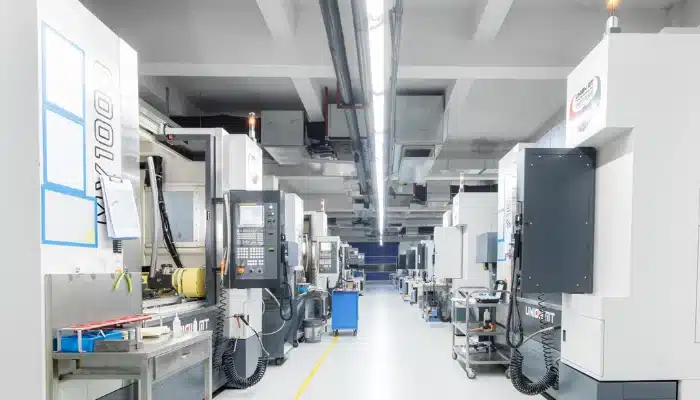
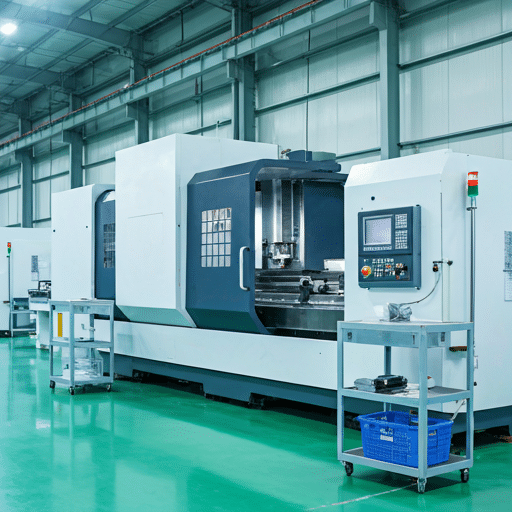
Yicen Precision operates 300+ CNC machines in Shenzhen, Bao’an District. Factory-direct pricing, no broker markup. ISO 9001:2015, ISO 13485, IATF 16949, and ISO 14001 certified. Tolerances to ±0.005 mm. 50+ materials, 30+ surface finishes. Prototypes in 24 hours.
Upload your CAD file for an instant quote: yicenprecision.com/get-a-quote
Questions before you quote? Contact our engineering team at sales@yicenprecision.com or +86 0755 2705 2682. Response within 12 hours.
Questions fréquemment posées
Can I switch materials after my first prototype?
Yes. Switching between aluminum, steel, and titanium typically requires only toolpath adjustments in CAM programming, not a new drawing. The main consideration is whether features designed for one material machine cleanly in another (wall thickness, internal radii). Yicen’s DFM review catches these issues before the second run begins.
Which material holds the tightest tolerances?
All three can hold ±0.005 mm on precision features with proper fixturing. Titanium’s spring-back adds complexity in deep bores and may require an additional grinding pass to hit the tightest specs. For general precision work, aluminum and steel are more forgiving.
Is 7075 aluminum stronger than some steels?
Yes. 7075-T6 reaches 570 MPa tensile strength, which exceeds mild steel (400 MPa typical) and matches lower-carbon alloy steels. At one-third the density, it delivers a better strength-to-weight ratio than all but the strongest steel grades.
What is the minimum order quantity at Yicen for these materials?
There is no minimum order quantity for prototypes. Yicen accepts single-part orders for prototyping. Low-volume production (5 to 500 parts) is available across all three materials. Obtenir un devis immédiat with your CAD file for exact pricing and lead time.
Does Yicen machine titanium in-house?
Yes. Titanium is machined in-house at Yicen’s Shenzhen facility using dedicated tooling and high-pressure coolant systems. No outsourcing. You deal directly with the team cutting your parts.
How do I specify surface finish on my drawing?
Use Ra values (e.g., Ra 1.6 µm as-machined, Ra 0.4 µm after anodize) and call out the specific process (Type II anodize, passivation per ASTM A967, etc.). If you’re unsure what finish your application needs, Yicen’s engineers will recommend an appropriate option during the quote review.
 French
  English
  Spanish
  Japanese
  German
  Portuguese