
Why the Process Choice Matters Before the Quote
Engineers often pick a manufacturing process by habit. Sheet parts go to laser cutting, blocks go to CNC milling, and exotic alloys go to wire EDM. The habit is roughly right but the wrong process choice on a given part can multiply cost by 3–5x or push a job months out of spec on lead time.
This guide compares the three processes across the dimensions that actually matter when picking one: geometry, material, tolerance, finish, cost, and speed. By the end, you should be able to look at a drawing and know — within a minute — which process to specify.
Quick Comparison: Wire EDM vs CNC Milling vs Laser Cutting
| Attribute | Wire EDM | CNC Milling | Laser Cutting |
| Best for | Hard metals, sharp internal corners | 3D shapes, pockets, threaded holes | Flat sheet parts, profiles |
| Material thickness | 0.1–300 mm | 0.5 mm to several meters | 0.5–25 mm typical |
| Achievable tolerance | ±0.0025 mm | ±0.005 mm | ±0.1 mm |
| Surface finish | Ra 0.2–1.6 µm | Ra 0.4–3.2 µm | Edge Ra 3.2–12.5 µm |
| Heat-affected zone | Minimal | None | Yes, varies by power |
| Speed | Slow | Moderate | Fast |
| Cost per hour | High | Moderate | Low |
| Geometry | 2D profiles, tapered cuts | Full 3D, multi-axis | 2D profiles only |
How Each Process Actually Works
Wire EDM (Electrical Discharge Machining)
Wire EDM uses a thin brass or zinc-coated wire (typically 0.10–0.30 mm) charged with electrical current to erode metal in a dielectric fluid bath. There is no mechanical cutting force — the wire never touches the workpiece. This means hardened steel, carbide, and other materials too tough to mill can be cut with the same precision as soft aluminum.
Wire EDM is the only process that can produce sharp internal corners with a radius equal to the wire radius (0.05–0.15 mm). It works regardless of material hardness, which makes it indispensable for tooling, dies, and post-hardening adjustments.
CNC Milling
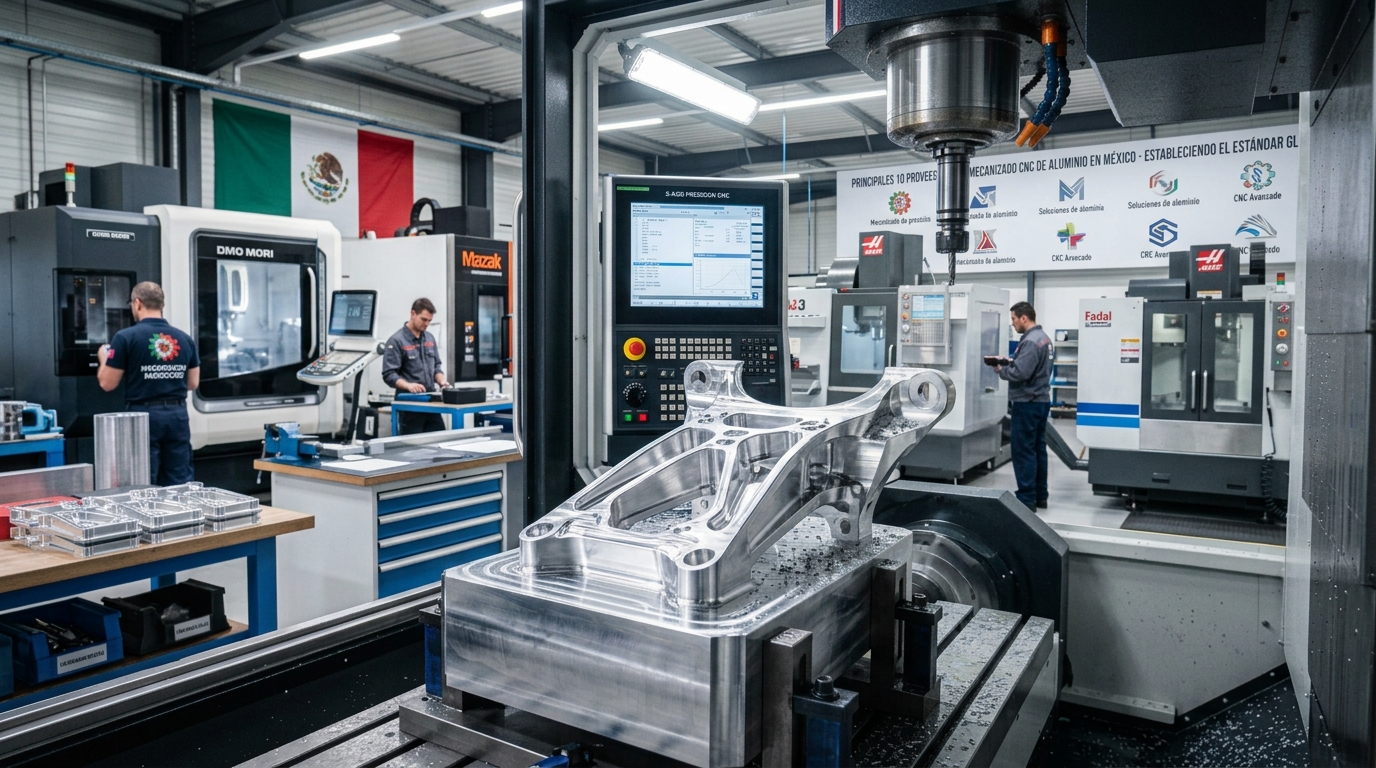
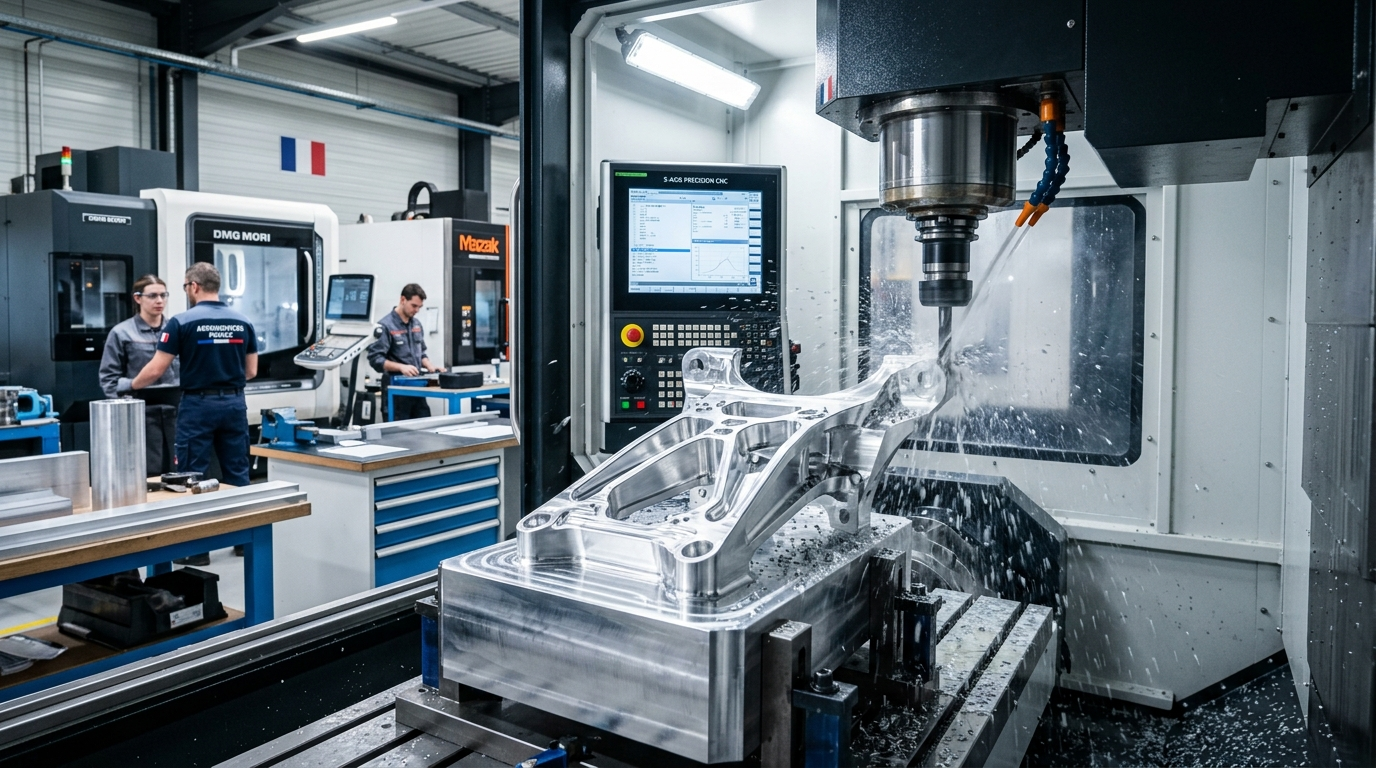
CNC milling uses rotating cutters to remove material from a stationary workpiece. Modern 5-axis mills can produce almost any 3D shape, including pockets, undercuts, threaded holes, and complex curved surfaces. Tolerance ranges from rough (±0.1 mm) on cast surfaces to precision (±0.005 mm) on finish-machined faces.
CNC milling is the most versatile of the three processes. It handles the broadest range of geometries and the widest spread of materials. The constraint is that material hardness directly affects tool life — machining hardened steel is possible but expensive.
Laser Cutting
Laser cutting uses a focused beam (typically fiber laser at 1.06 µm wavelength) to melt and blow away material along a 2D profile. Modern fiber lasers cut 6 mm steel at 12+ meters per minute. The constraint is dimensional: laser cutting is fundamentally a 2D process. It cannot produce pockets, threads, or any feature that requires depth control.
Choose by Geometry First
The fastest filter is geometry. Most parts fall cleanly into one of three buckets, and the bucket determines the process.
2D Flat Profile → Laser Cutting
Sheet metal panels, gaskets, electrical lugs, brackets, plates with through-features only. If you can describe the part as “a profile cut from a sheet,” laser cutting is the right answer 90% of the time. Speed is the differentiator: a 100-piece sheet metal job runs in hours on a laser, days on a mill.
3D Shape with Pockets, Threads, or Multi-Face Features → CNC Milling
Housings, manifolds, fixtures, brackets with bosses, anything with features on more than one face. CNC milling is the only process of the three that handles depth-sensitive features. Threads, blind holes, counterbores, and 3D contours all require milling.
Complex Profile in Hard Material → Wire EDM
Punch-and-die sets, gears, mold cavities, parts post-hardening, parts with sharp internal corners that mills cannot cut, parts in tungsten carbide or hardened tool steel. Wire EDM is also used for any part where the cutting force from milling would distort the workpiece (very thin walls, springs, fragile assemblies).
Choose by Material
Material hardness changes the calculation. CNC milling and laser cutting both struggle once material exceeds about 50 HRC. Wire EDM doesn’t care about hardness at all.
| Material | Best Process | Why |
| Aluminum sheet (≤6 mm) | Laser cutting | Fast, clean edge |
| Aluminum block | CNC milling | 3D shape capability |
| Mild steel sheet | Laser cutting | Fiber laser optimal |
| Stainless 304/316 | Laser cutting or CNC milling | Both work; laser for sheet, mill for block |
| Hardened tool steel (>50 HRC) | Wire EDM | Milling cutters fail rapidly |
| Tungsten carbide | Wire EDM | Too hard for conventional cutters |
| Titanium | CNC milling | EDM works but milling is faster |
| Copper, brass | CNC milling or laser | Both excellent |
| Acrylic, plastics | Laser cutting | Clean edge, no chipping |
| Wood, MDF, fabric | Laser cutting | Only practical option |
Choose by Tolerance
Tolerance requirements often force the process choice on their own. The three processes operate in three different precision tiers.
- Standard tolerance (±0.1 mm or looser): All three processes handle this. Pick by speed and cost — usually laser cutting for sheets, milling for 3D.
- Precision tolerance (±0.025 mm): CNC milling for 3D parts, wire EDM for 2D profiles. Laser cutting is out at this level.
- Ultra-precision tolerance (±0.005 mm or tighter): Wire EDM for 2D, multi-axis grinding or precision milling for 3D. Laser cutting cannot hit this range.
Choose by Cost (At the Right Volume)
Cost per part differs by process and by quantity. The three processes have very different economics.
| Volume | Laser Cutting | CNC Milling | Wire EDM |
| Prototype (1–5) | Fast, low cost | Moderate cost | High cost |
| Small batch (10–50) | Lowest per part | Moderate per part | High per part |
| Medium batch (100–500) | Excellent for sheets | Excellent for 3D | Only if process required |
| Production (1,000+) | Stamping may overtake | Soft tooling competes | Often replaced by wire-cut + grind |
Wire EDM is rarely the cheapest process. It is chosen when no other process can hit the spec — material too hard, corners too sharp, walls too thin to clamp. When the geometry can be milled, milling is almost always cheaper.
Combining Processes for Best Results
The most cost-effective approach often combines two processes. A common pattern: rough out the bulk shape with CNC milling, then finish critical features with wire EDM. Another common pattern: laser-cut the flat blank, then mill the depth features.
Yicen Precision routinely combines processes within a single part flow. We use:
- Laser cutting + bending for sheet metal enclosures
- CNC milling + wire EDM for hardened tooling
- CNC turning + milling for shafts with flats and keyways
- CNC milling + precision grinding for surface finishes finer than Ra 0.4 µm
Real-World Examples
Example 1: Aluminum Electronics Enclosure
A 200 x 150 x 80 mm aluminum 5052 enclosure with cutouts, mounting holes, and a powder-coat finish. The right answer is laser cutting + bending + powder coat. Putting this on a CNC mill would cost 3–4x more and take 2–3x longer.
Example 2: Stainless Manifold with Threaded Ports
A 100 x 80 x 60 mm stainless 316L block with eight threaded ports, internal channels, and ±0.05 mm flatness on the mating face. The right answer is CNC milling. Laser cannot do threads or channels; wire EDM cannot do depth.
Example 3: Hardened Punch and Die Set
A 50 mm punch and matching die in D2 tool steel, hardened to 60 HRC, with internal corners sharper than 0.1 mm radius. The right answer is wire EDM. Milling cutters cannot hold an edge in 60 HRC steel; laser cutting cannot hold the tolerance.
Frequently Asked Questions About Wire EDM, CNC Milling, and Laser Cutting
Is wire EDM more accurate than CNC milling?
Yes, on 2D profiles. Wire EDM holds ±0.0025 mm; precision CNC milling holds ±0.005 mm. But wire EDM cannot produce 3D features, threads, or pockets — so accuracy comparison only matters for parts that can be made by both processes.
Can laser cutting replace CNC milling?
Only for 2D parts. Any part with a feature that requires depth control (pocket, threaded hole, counterbore, 3D contour) must be milled. For flat sheet parts, laser cutting is faster and cheaper.
Why is wire EDM expensive?
Wire EDM cuts slowly — typical feed rates are 1–10 mm² per minute, compared to 100+ mm² per minute for CNC milling. Machine hourly rates are also higher because the equipment costs more. The trade-off is precision and the ability to cut materials nothing else can.
What is the thickest material wire EDM can cut?
Modern wire EDM machines cut up to about 300 mm thick. Cutting speed drops as thickness increases. For very thick stock, sinker EDM or alternative processes may be more practical.
Which process is best for prototype parts?
It depends on geometry. Flat parts in soft material → laser cutting (fastest, cheapest). 3D parts in any material → CNC milling (most versatile). Hard-material precision parts → wire EDM. For early-stage iteration, 3D printing often beats all three on lead time, then transition to the right traditional process for production.
Choose the Right Process with Yicen Precision
Yicen Precision runs all three processes in-house — wire EDM, CNC milling on 3-, 4-, and 5-axis equipment, and fiber laser cutting up to 25 mm thick. We routinely combine processes within a single part flow to deliver the right balance of precision, cost, and lead time. Send us a CAD file and our engineering team will recommend the lowest-cost process combination that meets your specification, with a full quote in 24 hours.