Reviewed by the Yicen Precision Engineering Team | Last updated: June 2026
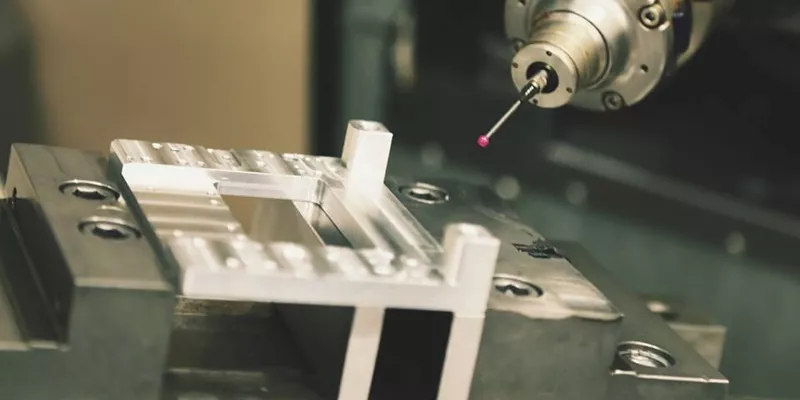
CNC workholding is the set of devices and methods used to locate and clamp a workpiece on the machine table so it stays exactly where it needs to be while the cutter does its work. It is the link between the machine and the raw material, and it is the single factor that decides whether a sharp tool and an accurate machine actually produce an accurate part. If the workpiece moves, lifts, or vibrates, the program and the tooling no longer matter.
Most workholding guides are written for hobby machinists or are product catalogs for one brand of vise. This one is written for the production decision: which method fits your part, your operation, and your volume, and when it pays to stop fighting standard workholding and invest in a custom fixture. We make that call with customers every week as part of our CNC machining services, and the framework below is how we approach it.
Why Workholding Decides Part Accuracy
Cutting forces in milling are large and they change direction constantly, because each tooth of the cutter strikes and releases many times a second. Drilling pushes the part down and tries to spin it. Turning throws material outward. Every operation tries to move the part, and workholding is what refuses to let it.
When workholding is weak, the symptoms show up as poor surface finish, parts out of tolerance, premature tool wear, and scrap from slippage. When it is right, the machine delivers the tolerance and finish it is capable of, setups go faster, and a wider range of operators can run the job at the same quality. The cost of good workholding is almost always smaller than the cost of the scrap and rework that bad workholding produces.
The Core Principles Behind Every Setup
Whatever device you reach for, the same engineering rules apply.
Locate to the 3-2-1 principle. Three points fix the primary plane, two fix the secondary, one fixes the tertiary, which together remove all six degrees of freedom. Our breakdown of the 3-2-1 principle of location covers why this is the foundation of repeatable positioning.
Drive cutting forces into solid support. The thrust of the cut should land on the locators or the fixture body, never on the clamps. Clamps hold the part in place. They are not built to absorb machining loads.
Clamp over support, toward the locators. A clamp pressing on an unsupported span bows the part, and it springs back out of tolerance when released.
Keep the work rigid and low. Height reduces rigidity and invites chatter. Mounting the part close to the table is one of the cheapest ways to improve finish.
Foolproof the load. A pin or step that makes it impossible to load the part wrong prevents more scrap on a production run than any inspection step.
Protect repeatability. The whole point of workholding is that part number 500 sits exactly where part number 1 did. Clean chips off locating surfaces, use dowels and hard stops, and design so the part cannot creep.
Types of CNC Workholding
Workholding ranges from a single vise to a fully automated fixture. Here is the practical menu, with the job each option does best.
Machine Vise
The default for prismatic parts and the most used device in any milling shop. A good ground vise with a wedge action that pulls the movable jaw down, plus a set of parallels, handles a large share of work with no custom tooling. Self-centering vises locate parts on their centerline, and sine vises hold work at precise angles.
Best for: block-shaped parts, prototypes through medium production.
Soft Jaws
Machinable jaws fitted to a vise and cut to match a specific part. They give you a custom locating profile in minutes for the cost of a block of aluminum, which makes them the cheapest path to a semi-dedicated setup for short and medium runs.
Best for: repeatable holding of a specific part without building a full fixture.
T-Slot and Step Clamps
Clamps that bolt into the table T-slots or a tooling plate to hold larger or irregular parts directly. Step clamps use machined steps and a step block to set clamp height. Simple, flexible, and slow to set, so they suit larger parts and lower volumes.
Best for: large or odd-shaped parts that will not fit a vise.
Chucks and Collets
Chucks grip round and irregular parts, including on rotary and turning work, while collets hold round stock and small parts with high concentricity. Both are standard on CNC turning and on rotary milling setups.
Best for: round parts and high-concentricity small parts.
Fixture (Tooling) Plate
A flat plate with a precision grid of dowel and tapped holes that mounts to the table and becomes the foundation for vises, modular elements, or dedicated locating details. Dowels give repeatable location to within roughly half a thousandth, which standardizes setups across jobs.
Best for: a repeatable base layer under other workholding.
Modular Fixturing
Reconfigurable kits of bases, locators, and clamps that bolt together into a custom layout, then come apart for the next job. Modular systems deliver most of the benefit of a dedicated fixture without the dedicated cost or lead time, which is why they fit prototype and low-to-medium volume work so well.
Best for: varied jobs and uncertain volumes where flexibility matters.
Vacuum Workholding
Uses suction to hold thin, flat, or non-ferrous parts that clamps would distort, such as plates, panels, and delicate stock. No clamps means no marks and full access to the top face. Thin material down to a few thousandths can be held in seconds.
Best for: thin, flat, or delicate parts and full-surface support.
Magnetic Workholding
Magnetic chucks hold ferrous parts with full access to the top and sides and no clamp interference. More common in grinding, but used in milling for flat steel parts where clamps would be in the way.
Best for: flat ferrous parts needing open access.
Dedicated Custom Fixtures
Purpose-built tooling designed for one part or one operation, with locating and clamping optimized for fast, foolproof loading. Dedicated fixtures give the fastest cycle times and the best repeatability, and they pay back across high volumes. This is the category we design and build through our custom jig and fixture design services.
Best for: high-volume, tight-tolerance, or awkward parts where standard workholding is too slow or unreliable.
Fixtures are also named by the operation they serve, such as milling fixtures, turning fixtures, and drilling fixtures. Our types of jigs and fixtures guide covers the full family.
Workholding Type Comparison
| Method | Best for | Setup speed | Flexibility | Relative cost |
| Machine vise | Block parts, general work | Fast | High | Low |
| Soft jaws | Specific repeatable parts | Fast once cut | Medium | Low |
| T-slot / step clamps | Large or odd parts | Slow | High | Low |
| Chucks / collets | Round and small parts | Fast | Medium | Low to medium |
| Fixture plate | Repeatable base layer | Medium | High | Medium |
| Modular fixturing | Varied jobs, uncertain volume | Medium | High | Medium |
| Vacuum | Thin, flat, delicate parts | Fast | Medium | Medium |
| Magnetic | Flat ferrous parts | Fast | Medium | Medium |
| Dedicated fixture | High volume, tight tolerance | Fastest in run | None, part-specific | High upfront |
Matching Workholding to the Operation
Different operations load the part differently, so the workholding has to answer the specific force it creates.
| Operation | Main force on the part | Best workholding response |
| Milling | Strong, changing side loads | Vises, fixture plates, side clamps with solid support |
| Drilling | Downward push and tendency to spin | Top clamps with a backing or spoilboard |
| Turning | Outward centrifugal force | Chucks and collets that grip on the centerline |
| Engraving and light work | Low force but vibration sensitive | Vacuum, adhesive, or full-surface support |
On most real jobs you combine several methods, since a single part may be milled, drilled, and finished in one setup.
Workholding for 3-Axis vs Multi-Axis Machining
On a 3-axis machine the tool approaches from essentially one direction, so workholding mainly has to resist side and downward loads while staying out of the cutter path. On 4-axis and 5-axis machines the part rotates to present new faces to the tool, which raises the stakes for workholding in two ways: the fixture must hold the part securely through every orientation, and it must not block the tool as the part turns.
Multi-axis work often uses tombstones and dedicated 4th and 5th-axis fixtures so several faces, or several parts, are reachable in one setup. That cuts the number of operations and the handling between them, which is where a lot of cost and error hides. We cover this in depth in our guide to fixturing for 5-axis machining, and you can see the multi-axis capability on our CNC milling page.
Standard vs Modular vs Dedicated: The Investment Decision
This is the choice that drives cost and lead time.
| Factor | Standard (vise, clamps) | Modular | Dedicated (custom) |
| Upfront cost | Lowest | Medium | Highest |
| Lead time | Immediate | Hours to days | Days to weeks |
| Setup speed in production | Medium | Medium | Fastest |
| Repeatability | Good | Good | Best |
| Flexibility across jobs | High | High | None |
| Best volume range | Prototype to low | Low to medium | Medium to high |
The logic is simple. Prototypes and low volumes favor standard workholding and soft jaws, because tooling cost would never pay back. High volumes favor dedicated fixtures, because faster load times and lower scrap multiply across thousands of parts. Modular sits in the middle and is the smart default when you are not yet sure how a program will scale.
Automation-Ready Workholding
As shops move toward lights-out and automated production, workholding has to support it. Quick-change and zero-point clamping systems let a fixture or part be removed and replaced in a known position in seconds, so a robot or pallet system can swap work without re-indicating. Pneumatic and hydraulic clamps apply consistent, repeatable force without an operator. The payoff is consistent positioning across unattended runs and far less manual intervention. If automation is on your roadmap, it is worth designing workholding for it now rather than retrofitting later.
Build vs Buy: When a Custom Fixture Pays Off
A custom fixture carries real upfront cost in design, material, machining, and validation. It returns that through three levers.
Cycle time. Faster, foolproof loading saves seconds on every part, and seconds become hours of machine time across a long run.
Scrap reduction. Reliable location and foolproofing cut the mistakes that turn material and machine hours into rejects.
Repeatability and labor flexibility. A good fixture lets more operators, or an automated cell, run the job at the same quality.
The rule we use: high volume, tight tolerance, or an awkward part usually justifies a dedicated or modular fixture quickly. One-off prototypes almost always belong in standard workholding and soft jaws. When the math sits in between, modular fixturing is the low-risk middle path.
If your part is fighting standard workholding, or you are scaling a program and want to cut cycle time, our team will design the workholding around your part, your volume, and your tolerances. Send us your part files for a quote and we will recommend the most cost-effective approach, including telling you when standard workholding is already the right answer.
Frequently Asked Questions
What is CNC workholding? CNC workholding is the devices and methods used to locate and clamp a workpiece on a machine table so it stays fixed during machining. It creates the stable link between the machine and the raw material that precision machining depends on.
What are the main types of CNC workholding? Common types include machine vises, soft jaws, T-slot and step clamps, chucks and collets, fixture plates, modular fixturing, vacuum and magnetic workholding, and dedicated custom fixtures built for a specific part.
What is the difference between workholding and a fixture? Workholding is the broad category of all devices and methods that hold a part. A fixture is a specific, often custom workholding device designed to locate and clamp a particular part for a particular operation with high repeatability.
What is the most common CNC workholding device? The machine vise is the most used workholding device in milling because it is fast, accurate, and flexible enough to handle a large share of block-shaped parts without any custom tooling.
How do I choose the right workholding? Start with the part shape, the operation and its cutting forces, the tolerance required, and the production volume. Standard workholding suits low volumes and prototypes, while dedicated or modular fixtures suit higher volumes and tight tolerances.
When should I invest in a custom fixture? A custom fixture pays off when the part is high volume, has tight tolerances, or is awkward to hold in standard workholding, because the faster loading and lower scrap rate justify the upfront tooling cost across the run.
Getting Workholding Right on Your Parts
Workholding is the quiet decision that controls part accuracy, cycle time, and scrap. Locate to the 3-2-1 principle, drive cutting forces into solid metal, clamp over support, and match the method to your operation and volume. Use standard workholding for prototypes and low runs, modular when volumes are uncertain, and dedicated fixtures when the numbers justify them.
If you have a production part that keeps slipping, chattering, or running slow in standard workholding, that is the signal a purpose-built fixture will earn its keep. Send us your part files for a quote and our engineering team will design the workholding approach that fits how you actually make the part.

 English
  French
  Spanish
  Japanese
  German
  Portuguese