Revisado por el equipo de ingeniería de precisión de Yicen | Última actualización: junio de 2026
A drill jig and a boring jig are both hole-making jigs that hold a workpiece and guide a cutting tool through a hardened bushing so the same hole lands in the same place on every part. The difference is the operation and the bushing. A drill jig guides a drill to create a hole. A boring jig guides and supports a boring bar to enlarge an existing hole to a precise diameter, so its bushings are larger, often lubricated with oil grooves, and frequently doubled up to support the bar at both ends.
That is the short answer. The longer answer matters, because three different terms get mixed up constantly: the boring jig (a workholding and guiding device), jig boring (a precision machine and process), and boring versus drilling (two different cutting operations). This guide separates all three, then shows where each jig fits today. It builds on our deeper guide to drilling jigs, so start there if you want the full drill jig picture.
Drill Jig and Boring Jig: The Core Difference
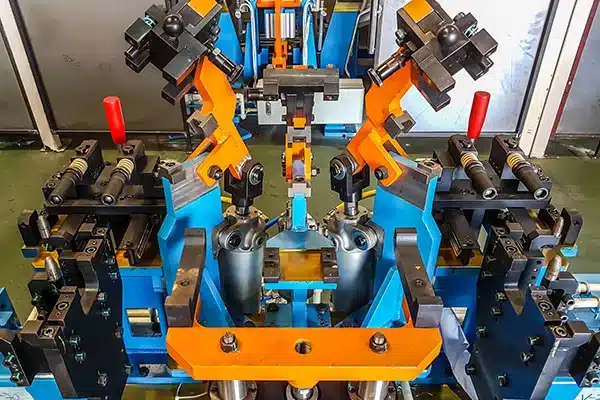
Both devices share the same DNA. They locate the part, clamp it, and steer the tool through bushings so holes come out accurate and repeatable without marking out each part. They differ in what the tool is doing.
A drill jig guides a rotating drill that cuts a new hole from solid material. Drill jigs also handle reaming, tapping, chamfering, counterboring, and countersinking, since those tools follow the same bushing.
A boring jig guides a boring bar that enlarges and trues an existing hole to a precise diameter and finish. Because a boring bar is larger and longer than a drill and runs at different loads, the bushing design changes.
| Característica | Drill jig | Boring jig |
| Operación | Creates a new hole (plus ream, tap, chamfer, etc.) | Enlarges and finishes an existing hole |
| Tool guided | Drill bit and similar tools | Boring bar |
| Bushing size | Sized to the drill | Larger, sized to the boring bar |
| Bushing count | Usually one per hole | Often two, to support the bar at both ends |
| Lubrication | Estándar | Often has internal oil grooves to keep the bar lubricated |
| Typical accuracy | Good positional accuracy | Tighter diameter, roundness, and finish |
| Construcción | Light to medium | Heavier and more rigid |
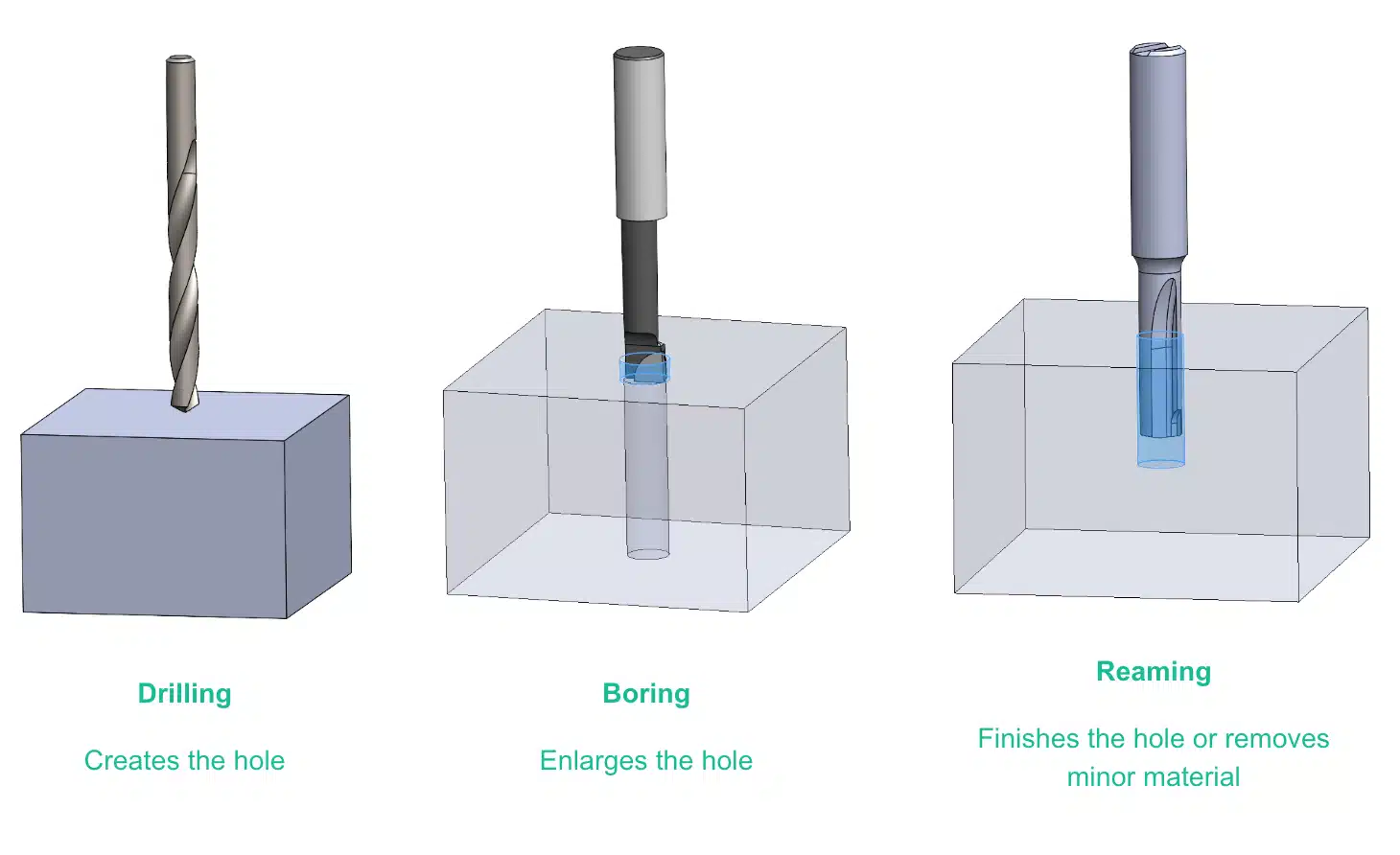
The single most useful way to remember it: a drill jig makes the hole, a boring jig perfects it. In a sequence, you often drill first with a drill jig, then bore to final size, which is why the two are designed as close cousins.
Why Boring Jig Bushings Are Different
A boring bar is a slender tool carrying a single cutting point, and it has to remove material evenly around an existing hole to hit a tight diameter and roundness. That puts two demands on the jig.
First, the bushing has to be large enough to guide the bar, not a drill, so boring jigs run bigger bushings. Second, the bar needs support so it does not deflect and chatter, which is why boring jigs often use two bushings, one on each side of the work, to steady the bar through the cut. Internal oil grooves in the bushing keep the bar lubricated as it rotates and slides, which protects both the bushing and the surface finish. Get those three features right and a boring jig holds a diameter and roundness that a drill jig was never built to deliver.
The locating and clamping fundamentals are the same as any jig, so locate to the Principio 3-2-1 and foolproof the load. The bushing strategy is what makes a boring jig a boring jig.
The Confusion: Boring Jig vs Jig Boring vs Boring Operation
These three terms sound alike and get used as if they mean the same thing. They do not.
Boring jig (the device). A workholding and tool-guiding jig, as described above. It is tooling that bolts onto or holds a part, not a machine.
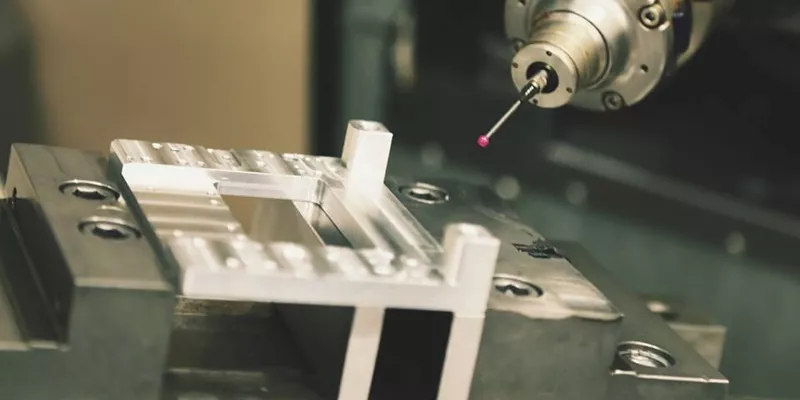
Jig boring (the machine and process). A jig borer is a precision machine tool built for extreme positional accuracy, often to a few microns, using a single-point boring bar, a rigid low-slung casting, and fine table movement. Historically, jig borers were invented to make accurate holes in jigs, fixtures, and gauges, which is where the name comes from. They enlarge a smaller pre-drilled hole to an exact size and location in soft material.
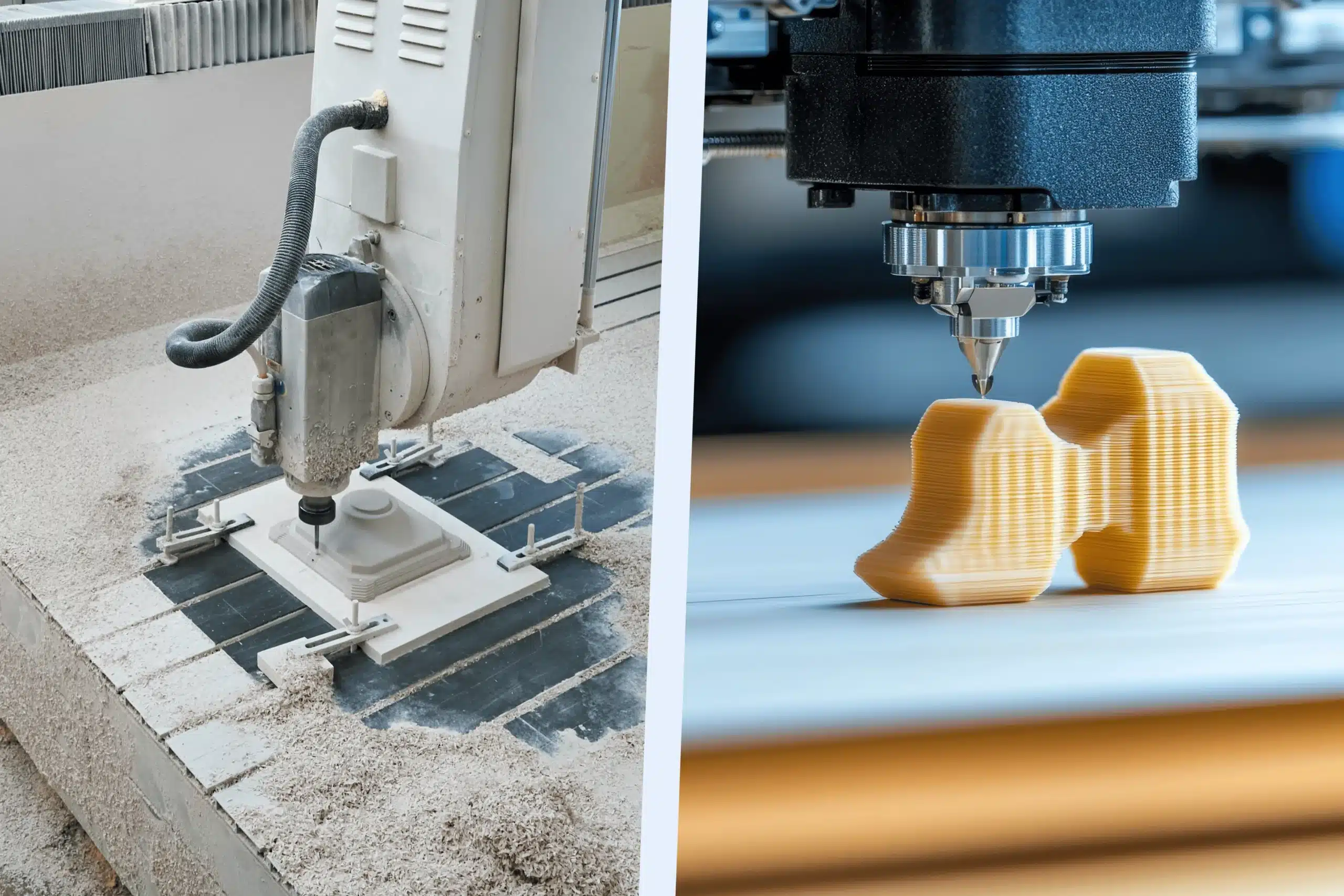
Drilling vs boring (the operations). Drilling creates a hole. Boring enlarges an existing hole for a tighter diameter, better roundness, and a finer finish. Boring includes variations such as line boring, where multiple in-line holes are made concentric, and back boring, which enlarges a hole from the inside.
The quick test: if it holds the part, it is a boring jig. If it is the machine doing the cutting, it is a jig borer. If it is the cutting action itself, it is the boring operation.
Where These Jigs Stand in Modern Manufacturing
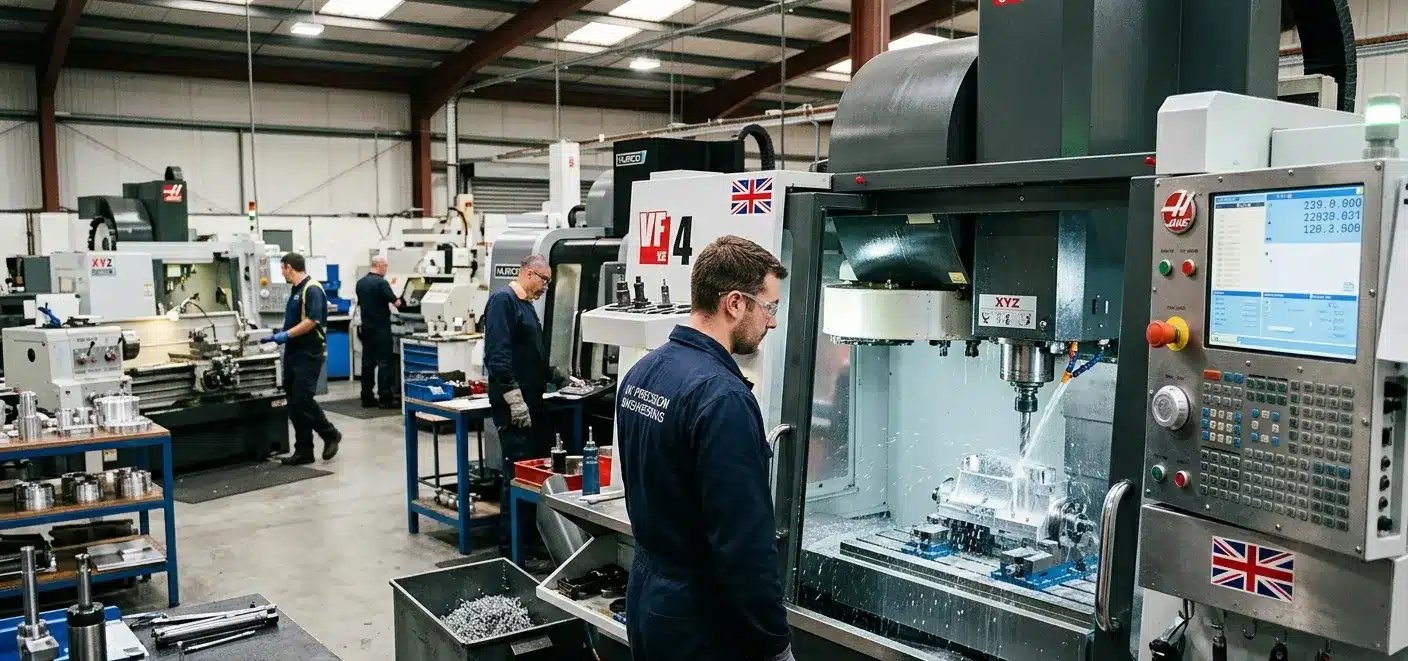
This part deserves an honest answer. CNC machining has replaced drill and boring jigs for most production work. A CNC machining center stores the hole pattern in the program and positions the spindle accurately on its own, so it no longer needs a bushing to steer the tool. That is why you see fewer dedicated drill and boring jigs in high-volume CNC shops than you did decades ago.
They still earn their place in three situations. The first is manual and low-volume work, where buying a few repeatable parts off a jig is cheaper than programming and setting up a CNC job. The second is assembly and field work, where a portable jig drills matching holes in mating parts on site. The third is secondary operations and very specific hole patterns where a simple jig beats a full setup. Plenty of shops, maintenance teams, and fabrication operations still rely on them for exactly these reasons.
For production hole-making at volume and tolerance, CNC is usually the answer, and we handle that through our CNC drilling services and broader Servicios de mecanizado CNC. For repeatable manual or assembly hole-making, a purpose-built jig is still the right tool, and we design those too.
When to Use a Drill Jig vs a Boring Jig
| If you need to… | Use a | Notas |
| Create new holes accurately and repeatably | Drill jig | Also covers reaming, tapping, chamfering |
| Enlarge a hole to a tight diameter and roundness | Boring jig | Larger guided bushings, often two |
| Hold a precise diameter and fine finish | Boring jig | Single-point boring bar plus bushing support |
| Drill matching holes in mating assembly parts | Drill jig | Often portable for field or assembly work |
| Produce a large or odd-size hole that is hard to drill | Boring jig | Boring reaches sizes a standard drill cannot |
| Run high volume at tight tolerance | Neither, use CNC | CNC positions without a bushing |
In a typical part that needs a precise bore, the workflow uses both ideas in sequence: drill the starting hole, then bore it to final size. That is exactly the relationship the two jigs were designed around.
How These Jigs Fit the Broader Family
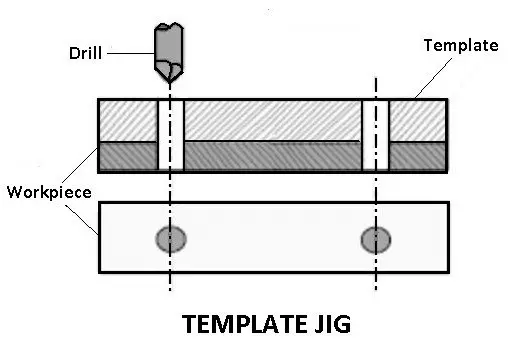
Drill and boring jigs are two members of a larger jig family that also includes template, plate, open, closed, box, leaf, angular, and indexing jigs, each suited to a different part and operation. If you want the full taxonomy and how to choose among them, our Guía sobre los tipos de plantillas y accesorios lays it out, and our guide to designing jigs and fixtures walks through the design process from locating to bushing selection.
Preguntas frecuentes
What is the difference between a drill jig and a boring jig? A drill jig guides a drill to create a new hole, while a boring jig guides and supports a boring bar to enlarge an existing hole to a precise diameter. Boring jigs use larger bushings, often two per hole with internal oil grooves, to support the boring bar.
Is a boring jig the same as jig boring? No. A boring jig is a workholding and tool-guiding device. Jig boring is a process performed on a jig borer, a high-precision machine tool built for micron-level positional accuracy. The names are related historically but refer to different things.
Why do boring jigs have larger bushings? A boring bar is larger and longer than a drill and needs support to avoid deflection and chatter. Boring jigs use larger bushings, frequently two to steady the bar at both ends, with oil grooves to keep it lubricated and protect the finish.
What is the difference between drilling and boring? Drilling creates a hole from solid material. Boring enlarges an existing hole to achieve a tighter diameter, better roundness, and a finer surface finish than drilling alone can produce.
Are drill and boring jigs still used today? Yes, but less than before. CNC machining has replaced them for most production work because it positions the tool accurately without a bushing. Jigs remain useful for manual, low-volume, assembly, and field work where they are faster and cheaper than a CNC setup.
Do I drill or bore first? You usually drill first to create the starting hole, then bore to enlarge it to the final precise diameter. This is why drill jigs and boring jigs are designed as close relatives and are often used in sequence.
Choosing the Right Approach for Your Holes
The difference between a drill jig and a boring jig comes down to the job: one makes the hole, the other perfects it, and the boring jig carries the larger, supported, lubricated bushings that precise boring demands. Keep that separate from jig boring the machine process and from the drilling-versus-boring operation, and the terminology stops tripping you up.
For production hole-making at volume, CNC is almost always the better path than a dedicated jig. For repeatable manual or assembly work, a purpose-built jig still wins. If you are not sure which fits your part, send us your drawings for a quote and our engineering team will recommend the most cost-effective route, whether that is CNC drilling and boring or a custom jig.
 Spanish
  English
  French
  Japanese
  German
  Portuguese