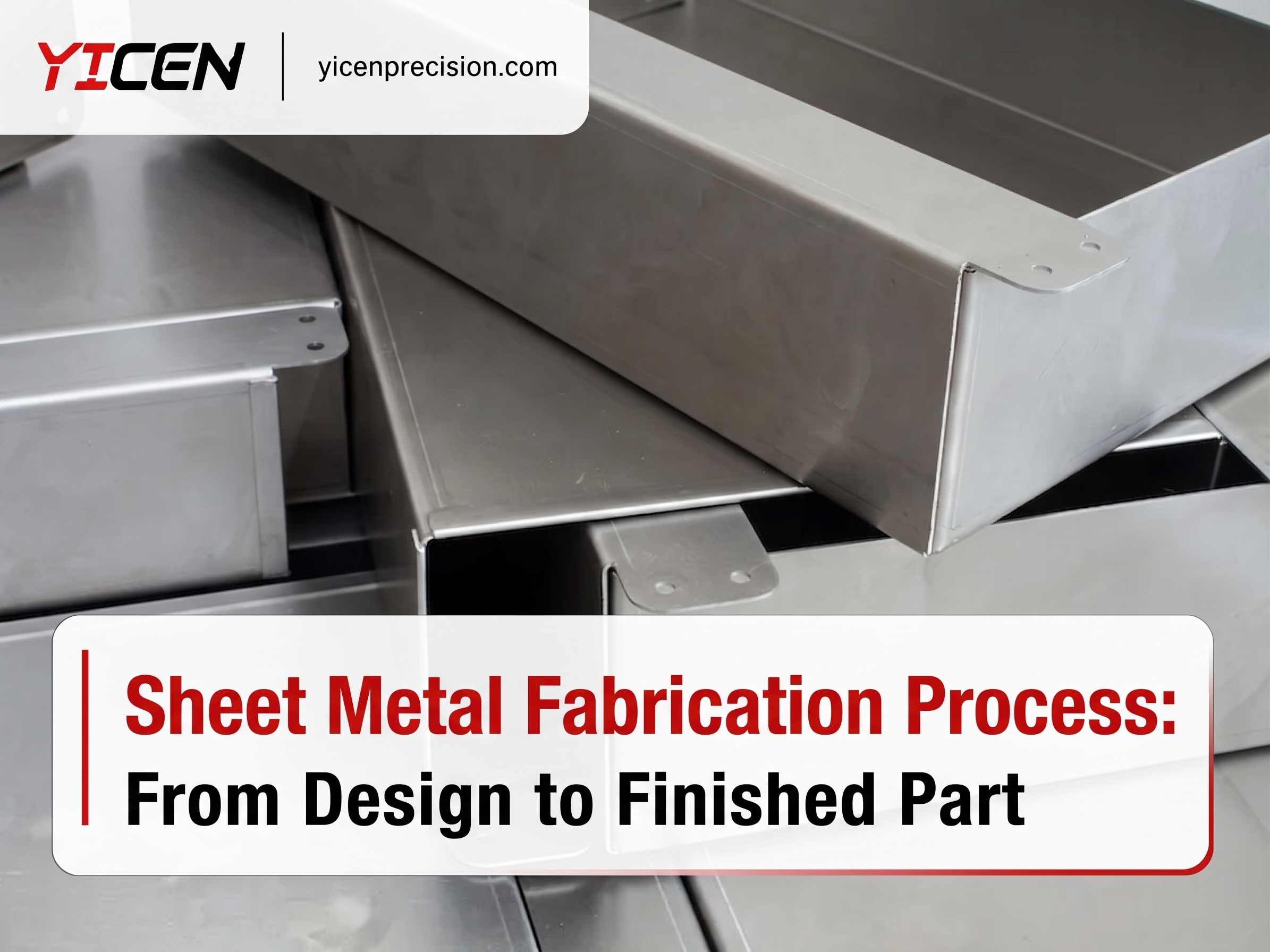
How does the sheet metal fabrication process transform a flat metal sheet into a precise finished component? What are the main sheet metal fabrication steps involved in manufacturing? How does the sheet metal forming process improve part strength, accuracy, and functionality? What happens from the initial design stage until the final product is delivered?
The sheet metal fabrication process is a complete manufacturing workflow that converts flat metal sheets into functional components through design, cutting, bending, forming, joining, finishing, and inspection. The process combines advanced machinery, engineering knowledge, and quality control methods to produce accurate parts for industries such as aerospace, automotive, electronics, medical equipment, and industrial machinery.
From CAD design evaluation to final production, every stage of the sheet metal production process plays an important role in ensuring durability, dimensional accuracy, and cost efficiency.
Understanding the Sheet Metal Fabrication Process
Sheet metal fabrication is a manufacturing method where metal sheets are shaped into specific parts by removing material, applying controlled force, or joining multiple components together. Unlike traditional manufacturing methods that start with solid blocks, sheet metal fabrication begins with thin metal materials such as aluminum, stainless steel, carbon steel, and copper.
Modern manufacturers use advanced technologies including laser cutting, CNC bending, punching, welding, and surface finishing to create complex parts with consistent quality. Companies like Yicen Precision provide custom sheet metal fabrication solutions for prototypes and production components, including cutting, forming, and finishing operations.
The success of a sheet metal production process depends on careful planning, accurate engineering drawings, suitable material selection, and proper manufacturing techniques.
Main Stages of Sheet Metal Fabrication
The complete fabrication workflow follows several important stages. Each step affects the final quality, cost, and performance of the manufactured component.
| Escenario | Descripción | Objetivo |
| Design & Engineering | Creation and review of CAD models and technical drawings | Ensures manufacturability and accuracy |
| Selección de materiales | Choosing suitable metals and thicknesses | Provides required strength and performance |
| Corte | Laser cutting, waterjet cutting, or punching | Creates accurate profiles and shapes |
| Forming | Bending and shaping metal sheets | Produces required geometries |
| Joining | Welding, fastening, or hardware insertion | Combines multiple components |
| Acabado | Coating, polishing, or surface treatment | Improves appearance and durability |
| Inspección | Dimensional and quality checks | Confirms specifications are achieved |
Step 1: Design and CAD Preparation
The sheet metal fabrication process begins with product design. Engineers create detailed CAD models that define dimensions, bends, holes, cutouts, and material requirements.
During this stage, manufacturers analyze whether the design is suitable for fabrication. Factors such as bend radius, material thickness, hole placement, and manufacturing tolerances are reviewed to prevent production issues.
Design optimization is essential because a manufacturing-friendly design can reduce material waste, shorten production time, and lower overall costs.
For projects requiring complex precision components, CNC machining may also be combined with sheet metal fabrication. You can learn more about precision manufacturing approaches through our Servicios de mecanizado CNC.
Step 2: Material Selection
Choosing the correct material is one of the most important sheet metal fabrication steps. Different metals provide different levels of strength, corrosion resistance, weight, and flexibility.
Los materiales más comunes son:
| Material | Propiedades clave | Aplicaciones comunes |
| Aluminio | Lightweight and corrosion resistant | Electronics housings, aerospace parts |
| Acero inoxidable | Strong and corrosion resistant | Medical equipment, industrial components |
| Acero al carbono | Durable and cost-effective | Frames, brackets, machinery parts |
| Cobre | Excelente conductividad eléctrica | Electrical components |
Material thickness also affects the forming process. Thinner sheets are easier to bend, while thicker materials may require specialized equipment and greater forming force.
Step 3: Sheet Metal Cutting
After selecting the material, the next step is cutting the sheet into the required shape. Advanced fabrication facilities use several cutting methods depending on project requirements.
Laser cutting is widely used because it provides high accuracy, clean edges, and excellent repeatability. Waterjet cutting is another option for materials that require minimal heat impact.
The cutting stage creates the basic profile of the part before it moves to forming and assembly operations.
Step 4: Sheet Metal Forming Process
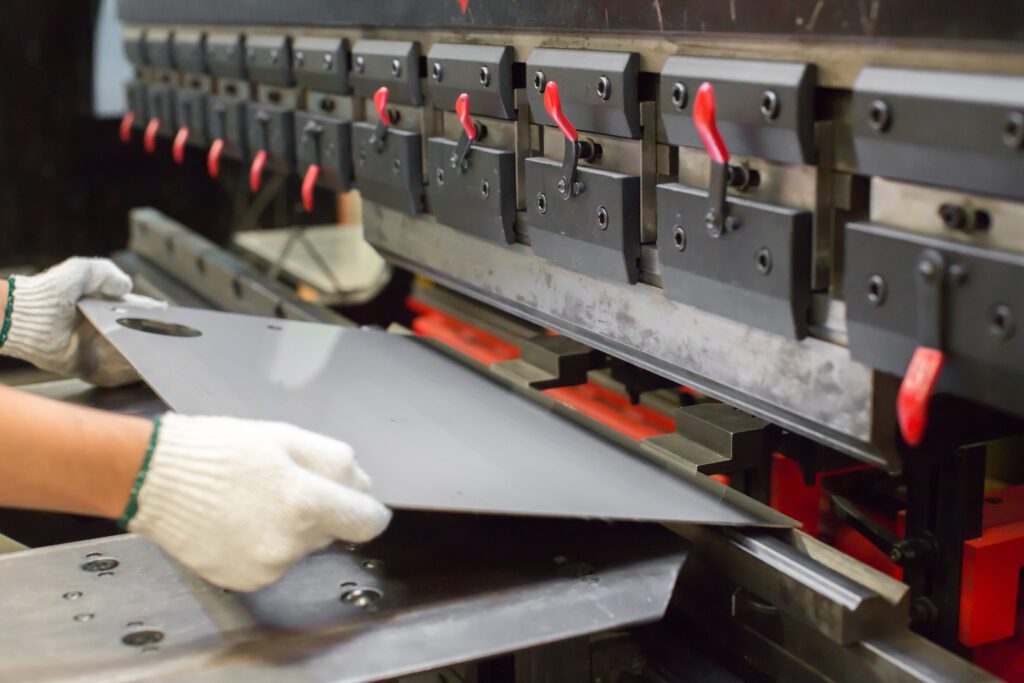
The sheet metal forming process changes the shape of flat metal sheets without removing significant material. This stage creates bends, angles, curves, and complex geometries required for the final component.
Common forming methods include:
- Press brake bending
- Roll forming
- Punch forming
- Deep drawing
Precision bending requires accurate calculations because factors such as material elasticity, bend allowance, and springback can influence final dimensions.
A properly controlled forming process ensures parts maintain structural strength while achieving the required design specifications.
Step 5: Joining and Assembly
After cutting and forming, different components may need to be combined. Joining methods depend on the application, material type, and required strength.
Common joining techniques include welding, riveting, screws, and hardware insertion. Welding is often used for permanent connections, while mechanical fastening allows easier maintenance and replacement.
Manufacturers may also integrate additional operations such as assembly, surface treatment, or finishing services to deliver complete ready-to-use components.
For additional manufacturing support beyond fabrication, explore our servicios de montaje.
Step 6: Surface Finishing
Surface finishing improves both the appearance and performance of fabricated parts. Depending on requirements, manufacturers may apply coatings, polishing, anodizing, electropolishing, or powder coating.
Finishing helps protect components from corrosion, improves wear resistance, and provides the desired visual appearance.
Industries with strict requirements, such as medical and aerospace manufacturing, often require documented finishing and inspection processes.
Step 7: Quality Inspection and Final Delivery
Quality inspection is the final stage of the sheet metal production process. Manufacturers verify dimensions, surface quality, material specifications, and overall functionality before delivery.
Inspection methods may include measurement tools, dimensional reports, and quality documentation.
A strong inspection system reduces defects and ensures every manufactured component meets customer expectations.
Benefits of Professional Sheet Metal Fabrication
Professional sheet metal fabrication provides several advantages for businesses developing prototypes or large production runs.
The process offers excellent design flexibility because manufacturers can create simple brackets as well as complex enclosures and structural components. It also supports scalable production, allowing companies to move from prototype development to higher-volume manufacturing.
Another advantage is cost efficiency. Optimized designs, automated cutting technologies, and repeatable forming processes reduce waste and improve production speed.
Businesses that require both fabricated and machined parts can combine fabrication with other manufacturing methods. Our precision manufacturing services support different production requirements, from prototypes to custom industrial components.
Common Applications of Sheet Metal Fabrication
Sheet metal components are used across many industries because they provide strength, durability, and lightweight performance.
Typical applications include:
- Electrical enclosures
- Machine covers
- Automotive brackets
- Estructuras aeroespaciales
- Medical equipment housings
- Industrial frames
- Consumer product components
As product designs become more advanced, manufacturers continue improving fabrication techniques through automation, digital engineering, and advanced inspection technologies.
Sheet Metal Fabrication vs Other Manufacturing Methods
Sheet metal fabrication is often compared with CNC machining and additive manufacturing. Each process has different advantages depending on project requirements.
| Manufacturing Method | Lo mejor para | Ventaja principal |
| Fabricación de chapas metálicas | Thin metal parts and enclosures | Lightweight and cost-effective production |
| Mecanizado CNC | Complex solid components | High precision and tight tolerances |
| Impresión 3D | Rapid prototypes | Fast design validation |
Choosing the right process depends on factors such as material, geometry, production volume, budget, and required performance.
For companies comparing manufacturing options, our article about CNC machining precision and applications provides additional technical guidance.
How to Improve the Sheet Metal Production Process
Manufacturers can improve efficiency by focusing on design optimization, automation, and quality management.
Early collaboration between engineers and fabrication specialists helps identify potential production challenges before manufacturing begins. Using standardized designs, selecting appropriate materials, and reducing unnecessary operations can also improve cost efficiency.
Modern fabrication facilities combine digital workflows with skilled engineering expertise to achieve reliable results for both prototypes and production orders.
Reflexiones finales
The sheet metal fabrication process is a carefully controlled journey that transforms raw metal sheets into precise finished components. From CAD design and material selection to cutting, forming, finishing, and inspection, every step contributes to product quality.
Understanding the sheet metal fabrication steps helps businesses choose the right manufacturing approach, reduce production challenges, and achieve reliable results.
With advanced equipment, engineering expertise, and quality-focused production methods, professional fabrication partners can support everything from rapid prototypes to large-scale manufacturing projects.
Preguntas frecuentes
What are the main steps in the sheet metal fabrication process?
The main steps include design preparation, material selection, cutting, forming, joining, finishing, and inspection. Each stage contributes to producing accurate and durable metal components.
What materials are commonly used in sheet metal fabrication?
Common materials include aluminum, stainless steel, carbon steel, and copper. The best choice depends on strength requirements, corrosion resistance, weight limitations, and application needs.
What is the difference between sheet metal forming and fabrication?
Sheet metal forming focuses on changing the shape of metal sheets through bending or pressing. Fabrication includes the complete process, including cutting, forming, joining, finishing, and inspection.
How long does the sheet metal fabrication process take?
Production time depends on part complexity, material availability, finishing requirements, and quantity. Simple prototypes may require only a few days, while larger production projects require more planning.
Can sheet metal fabrication support custom designs?
Yes, sheet metal fabrication is highly suitable for custom parts. Engineers can create unique designs based on specific dimensions, materials, and performance requirements.
Escrito por el equipo de ingeniería de precisión de Yicen. Entre todos, llevamos más de diez años dedicados al control de tolerancias y a la ingeniería de calidad, fabricando piezas de precisión para clientes de los sectores de la automoción, médico y de semiconductores. Yicen Precision cuenta con más de 300 máquinas en Shenzhen, posee las certificaciones ISO 9001:2015, ISO 13485, ISO 14001 e IATF 16949, y realiza inspecciones con CMM y XRF. Descubre nuestra Servicios de mecanizado CNC de alta precisión o ponte en contacto con nuestros ingenieros.