 Zum Inhalt springen
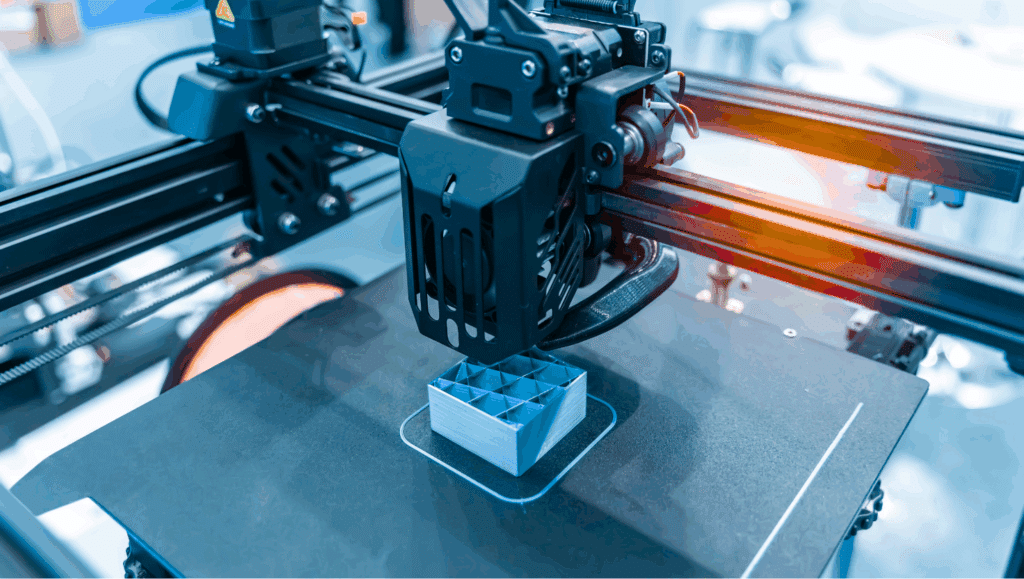
AI is changing CNC machining in ways that directly affect part buyers, not just machine operators. Shops using AI-optimized toolpaths are cutting cycle times by 15–30%, which means faster quotes and lower per-part costs for you. AI-driven quality systems catch defects during the cut, not after inspection, reducing rework and improving first-pass yield. If you’re sourcing precision parts for aerospace, medical, automotive, or electronics, here’s what AI in your supplier’s shop floor means for your next order.
You send a CAD file to your CNC supplier. Two weeks later, you get parts back with three out of fifty failing dimensional inspection. The supplier reruns them, eats the cost, but your timeline just slipped by a week. That scenario is painfully common, and it’s exactly the kind of problem AI is solving inside CNC-Bearbeitung facilities right now.
AI and CNC machining isn’t just a trend for machine operators to worry about. It directly impacts anyone who buys precision parts: product designers specifying tolerances, procurement teams evaluating suppliers, and founders scaling from prototype to production. The global CNC machine tool market is forecast to exceed $110 billion in 2026, and AI integration is a major driver of that growth. For buyers, the question isn’t “how does AI work?” It’s “how does AI make my parts better, cheaper, and faster?”
How Does AI in CNC Machining Affect Part Cost?
AI-powered CAM software generates toolpaths that reduce cycle times by 15–30% compared to manually programmed operations. Shorter cycle times translate directly to lower per-part costs, because CNC machine time is priced by the minute.
Here’s the math. A job shop in Michigan ran aluminum aerospace brackets through both a manually optimized program and an AI-generated one. The manual program machined each part in 14.2 minutes. The AI program did it in 11.1 minutes. That’s a 22% reduction. On a 500-part production run at $125/hour machine rate, the AI path saved $3,225 in spindle time alone.
For buyers, this means two things. First, suppliers using AI-optimized programming can offer more competitive pricing without cutting corners on quality. Second, when you’re comparing quotes from different CNC suppliers, the one using AI-driven CAM may genuinely have lower costs, not because they’re underpricing to win the job, but because their programming is more efficient.
An aerospace components manufacturer achieved a 20% cycle time reduction using AI-optimized milling software while simultaneously improving surface finish and extending tool life. Better surface finish means less post-processing. Longer tool life means fewer tool changes mid-run and more consistent cuts across your entire batch.
The impact is strongest on complex parts. Multi-axis CNC milling operations with deep pockets, thin walls, or compound curves have millions of potential cutter contact points. AI optimizes all of them simultaneously in a way no human programmer can match. If you’re ordering 5-axis parts, this matters.
Shops also report that AI-optimized toolpaths reduce cycle time variation from ±15% down to roughly ±2%. That consistency helps your supplier quote more accurately and deliver more predictably. Fewer surprises on both sides.
What Does AI Predictive Maintenance Mean for Your Delivery Timeline?
When a CNC machine breaks down unexpectedly, the parts on that machine don’t ship on time. Simple as that. Unplanned downtime is the number one reason CNC suppliers miss delivery windows, and it’s the hardest problem for buyers to see coming.
AI-based predictive maintenance changes this by catching equipment problems before they cause failures. IoT sensors mounted on spindles, bearings, and coolant systems monitor vibration, temperature, and current draw continuously. Machine learning models learn what “normal” looks like for each machine and flag deviations that indicate early-stage wear, misalignment, or component degradation.
The data is compelling. Research cited by Dassault Systemes from McKinsey shows AI-powered predictive maintenance can reduce unplanned downtime by 30–40% and lower maintenance costs by up to 25%. Messer Cutting Systems reports that comprehensive programs can cut CNC machine downtime by up to 50%.
For part buyers, this translates to more reliable delivery dates. A supplier running predictive maintenance isn’t guessing whether their equipment will hold up through your production run. They know, because the data tells them which components need service and when.
This is especially critical if you’re ordering parts for Luft- und Raumfahrt oder medical device applications where a missed delivery can halt an entire assembly line or delay a regulatory submission. Ask your CNC supplier whether they use any form of predictive maintenance. It’s a reasonable question, and the answer tells you a lot about how they manage production risk.
Spindles are the most expensive and failure-prone components on a CNC machine. AI monitoring catches bearing wear and imbalance early, preventing rebuild delays that can take a machine offline for days. For tool wear, the system recommends tool changes right before quality would degrade, not after. That means no mid-batch quality drop-off on your parts.
Can AI Actually Improve the Quality of Your CNC Parts?
Yes, and this is arguably where AI matters most to part buyers.
Traditional CNC quality control is reactive. Your supplier machines the part, removes it from the machine, inspects it on a CMM or optical comparator, and discovers whether it’s in spec. If it’s not, the cycle time and material are already wasted. On a production run, one undetected tool wear issue can produce dozens of out-of-spec parts before anyone catches it.
AI-driven quality systems flip this model. Sensors embedded in the machine monitor cutting forces, vibration, temperature, and acoustic emissions during the operation. Algorithms compare real-time data against the expected profile for a good part. When something drifts, the system flags it immediately.
A Deloitte report found that AI-powered quality control systems can reduce defect rates by up to 50%. One CNC shop documented 40% fewer scrapped parts after implementing AI monitoring, with operators reporting more uniformOberflächenveredelungen across entire batches.
For buyers, this means higher first-pass yield, fewer rejected lots, and more consistent part-to-part quality. If you’re running incoming inspection on CNC parts and regularly finding dimensional issues, the problem may not be the machine’s capability. It may be that your supplier’s quality system catches problems too late in the process.
Parts with tight tolerances (±0.005 mm and below) benefit the most. AI doesn’t wait until inspection to find a bad part. It identifies the condition that would make a part bad, like a worn tool edge or thermal drift in the spindle, and intervenes during the cut. For critical-dimension parts in Robotik oderHalbleiter applications, this level of in-process control is a significant quality advantage.
How Does AI Help When You’re Scaling from Prototype to Production?
This is where many product teams hit a wall. Your rapid prototype came out perfect, but when you scale to 500 or 5,000 parts, quality starts drifting, costs climb unexpectedly, or delivery timelines stretch.
AI helps bridge that gap in three specific ways.
Faster programming for new parts. AI-powered CAM tools use automatic feature recognition to identify holes, pockets, slots, and contours in your 3D model and suggest appropriate machining strategies. According to Siemens NX Manufacturing, this dramatically reduces programming time and minimizes human error in translating your design into machine instructions. Less programming time means your supplier can turn your first production order around faster.
Consistent quality at volume. The AI quality monitoring we covered earlier matters even more at scale. A 0.5% defect rate is manageable on 50 prototypes, but on a 10,000-part run, that’s 50 rejected parts. AI-driven in-process monitoring keeps defect rates lower and more stable across long production runs.
Optimized costs that hold at volume. AI-optimized toolpaths don’t just save time on one part. They save time on every part in the run, consistently. The cycle time reduction compounds: a 20% reduction on a 10,000-part order at $125/hour machine rate is a substantial cost difference that flows straight into your unit economics.
If you’re working with a supplier on CNC-Drehen or milling for a product launch, ask whether they use AI-assisted programming and monitoring. It won’t appear on the quote as a line item, but it directly affects the price, quality, and timeline you receive.
What Should You Ask Your CNC Supplier About AI?
Not every CNC shop uses AI tools, and that’s fine for simple, low-volume work. But if you’re ordering precision parts at scale, or parts for regulated industries, AI adoption signals a supplier that invests in efficiency and quality infrastructure.
Here are five questions worth asking.
Do you use AI-optimized CAM software? This tells you whether the supplier is investing in programming efficiency. If they’re hand-programming everything, their cycle times and costs may be higher than competitors using AI-driven CAM.
Do you have any form of predictive maintenance? A “yes” here means fewer surprise delays. Even basic vibration monitoring on critical spindles reduces the risk of unplanned downtime during your production run.
How do you monitor quality during the machining process? “We inspect after machining” is the baseline answer. “We monitor cutting conditions in real time and flag deviations” is the AI-informed answer, and it correlates with lower defect rates.
What’s your typical cycle time variation on production runs? If a shop can hold ±2–3% cycle time consistency, they’re likely using some form of toolpath optimization. If they’re at ±10–15%, there’s room for improvement that would benefit your cost and scheduling.
Can you show me first-pass yield data? Suppliers with AI-driven quality monitoring typically have better data on yield because the system tracks it automatically. Willingness to share this data is a good sign regardless.
These aren’t trick questions. They’re practical ways to evaluate whether a supplier’s technology stack aligns with the quality and delivery standards your project demands.
Is AI Making CNC Machining Too Automated to Trust?
No, and this concern comes up more often than you’d expect from buyers evaluating new suppliers.
AI handles data processing, pattern recognition, and repetitive optimization. It’s excellent at running thousands of toolpath simulations and flagging anomalies in sensor data. But it doesn’t replace the machinist. The experienced operator still sets up the machine, validates programs, selects fixturing strategies, inspects first articles, and makes judgment calls that algorithms can’t.
According to industry analysis, the machinist role is evolving from reactive troubleshooting toward data-informed decision making. They spend less time manually tweaking feeds and speeds, and more time validating AI-generated programs and interpreting process data. The result is better decisions backed by more information.
For buyers, the combination is exactly what you want: human expertise making the critical judgment calls, with AI handling the high-volume optimization and monitoring that humans can’t do as consistently. A supplier that uses AI well isn’t replacing their machinists. They’re giving their best people better tools.
A Deloitte survey found that nearly 70% of manufacturers adopting smart technology intend to deploy AI-enabled automation to increase operational efficiency. The trend is clear, and it benefits buyers through lower costs, better quality, and more reliable delivery.
Schlussfolgerung
AI in CNC machining is already changing the economics and quality of precision parts manufacturing. Three things matter for part buyers:
First, AI-optimized toolpaths reduce cycle times by 15–30%, which directly lowers per-part cost. If your supplier isn’t using AI-driven CAM, you may be paying more than necessary for complex parts.
Second, predictive maintenance and in-process quality monitoring reduce delivery risk and defect rates. These aren’t future capabilities. They’re deployed in production facilities today.
Third, the best suppliers combine AI tools with experienced machinists. The technology amplifies human expertise. It doesn’t replace it.
If you need precision CNC parts with tight tolerances, competitive pricing, and reliable delivery, get an instant quote from Yicen Precision. We operate 300+ machines, work with 50+ Materialien, and deliver from 24-hour schneller Prototypenbau through full-scale production, all backed by ISO 9001, ISO 13485, and IATF 16949 qualitätssicherung.
Häufig gestellte Fragen
What is AI in CNC machining?
AI in CNC machining refers to machine learning algorithms that optimize toolpath programming, predict equipment failures, and monitor part quality in real time. For part buyers, this means faster turnaround, lower defect rates, and more competitive pricing from suppliers who use these tools.
How does AI reduce CNC part costs?
AI-optimized CAM software generates toolpaths that cut cycle times by 15–30%. Since CNC machining is priced per minute of machine time, shorter cycles translate directly to lower per-part costs. One documented case showed $3,225 in savings on a single 500-part production run.
Does AI predictive maintenance affect my delivery timeline?
Yes, positively. AI monitoring catches equipment problems before they cause breakdowns, reducing unplanned downtime by 30–50%. This means your supplier is less likely to miss delivery windows due to unexpected machine failures.
Can AI improve the quality of my CNC parts?
AI-powered quality control systems monitor cutting conditions during machining and flag deviations in real time, not just after inspection. This approach can reduce defect rates by up to 50% and produce more consistent part-to-part quality across production runs.
What should I ask my CNC supplier about AI?
Ask whether they use AI-optimized CAM software, whether they run predictive maintenance on critical equipment, and how they monitor quality during (not just after) machining. These questions reveal how a supplier manages cost, delivery risk, and quality infrastructure.

 German
  English
  French
  Spanish
  Japanese
  Portuguese