Guia de Custos de Anodização 2026 — Preços por Tipo, Volume e Cor
Se é um engenheiro mecânico a definir o acabamento de uma caixa de alumínio, um gestor de NPI a comparar orçamentos de acabamento que variam entre $0,85 e $4,20 por pé quadrado para o que parece ser o mesmo processo, ou um comprador de ferragens a tentar perceber por que razão uma peça anodizada a preto custa mais do que uma transparente — este guia é para si. A anodização é o acabamento mais cotado e menos compreendido na fabricação personalizada de alumínio. A estrutura de preços tem três componentes — tipo de processo, área de superfície e extras — e a maioria dos compradores vê apenas a tarifa principal, não tem em conta a quantidade mínima por lote e orçamenta 30 por cento abaixo do valor real.
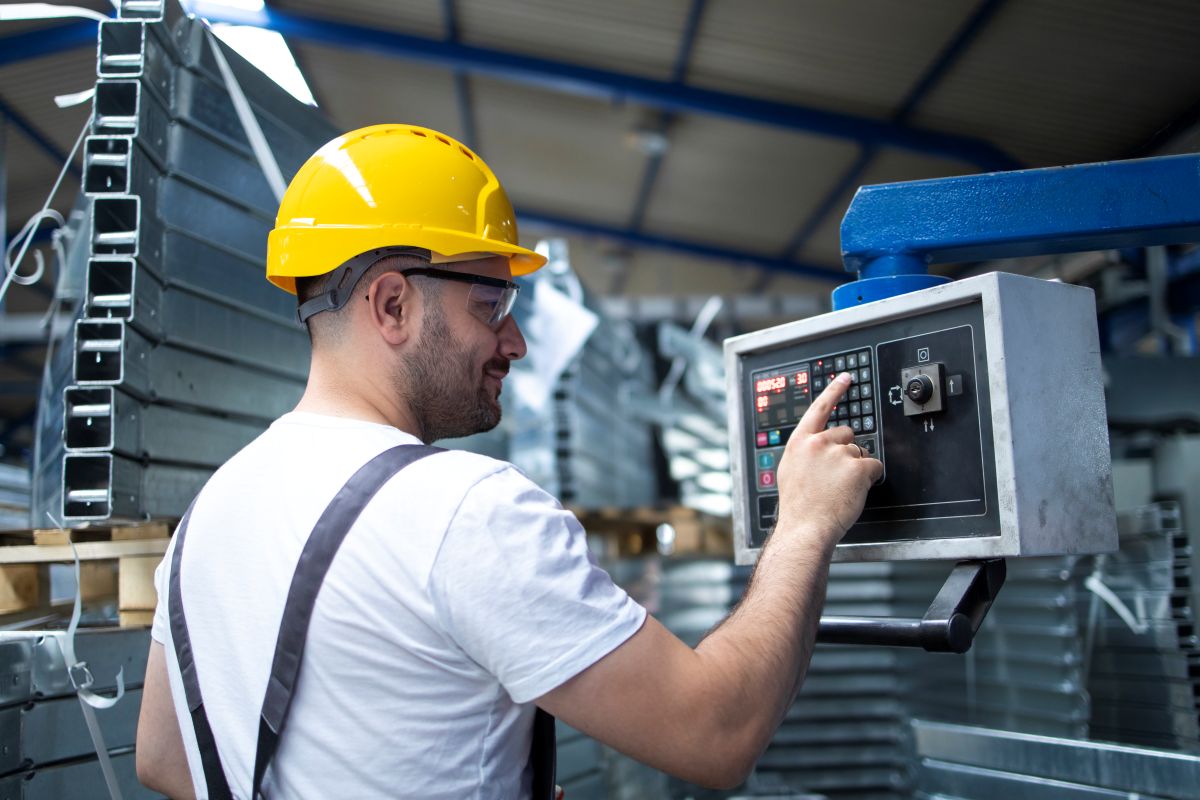
Na Yicen Precision, realizamos o processo de anodização internamente, como parte dos nossos serviços de chaparia e Acabamento CNC capacidade. Cerca de 40 por cento das peças de alumínio que usinamos todos os meses são submetidas a algum tipo de anodização — Tipo II transparente ou preta em caixas de produtos de consumo, Tipo III de revestimento rígido em componentes aeroespaciais e de defesa, e, ocasionalmente, Tipo I cromica em suportes aeroespaciais de encaixe apertado. Este guia apresenta-lhe as faixas de custos reais para 2026 em todos os três tipos, a curva de quantidade que se aplica efetivamente (e não a regra empírica dos números redondos que se vê habitualmente) e as medidas de DFM que, normalmente, reduzem as despesas com anodização em 20 a 35 por cento sem alterar as especificações de acabamento.
A fórmula do custo da anodização
Todos os orçamentos de anodização — quer sejam de uma oficina na Califórnia ou de uma linha de acabamento interna em Shenzhen — são compostos pelos mesmos três elementos. A tarifa principal atrai toda a atenção, mas a taxa de lote e os custos adicionais são os que, discretamente, determinam o valor final da fatura.
Custo da anodização = Taxa de lote + (Área da superfície × Tarifa por ft²) + Suplementos
A taxa de lote é um valor mínimo por lote — que abrange a configuração do tanque, a mão-de-obra de enchimento, a preparação do corante e a inspeção de qualidade. Numa oficina de subcontratação dos EUA, as taxas de lote variam entre $75 e $200 por lote para o Tipo II e entre $150 e $400 para o Tipo III. É por isso que a anodização de uma única peça pequena pode custar mais por peça do que a anodização de 500 peças — quando se trata de uma única peça, paga-se a taxa de lote completa por essa peça.
A tarifa por pé quadrado é a componente variável. Esta varia linearmente em função da área de superfície molhada da peça (a superfície exterior total com a qual o produto químico entra em contacto) e do tipo e espessura de revestimento escolhidos. Os custos adicionais abrangem a vedação, a coloração em cores não padrão, o pré-tratamento, como o jateamento com esferas, e a inspeção para além dos requisitos básicos do lote.
Os três tipos de anodização — Custo e utilização
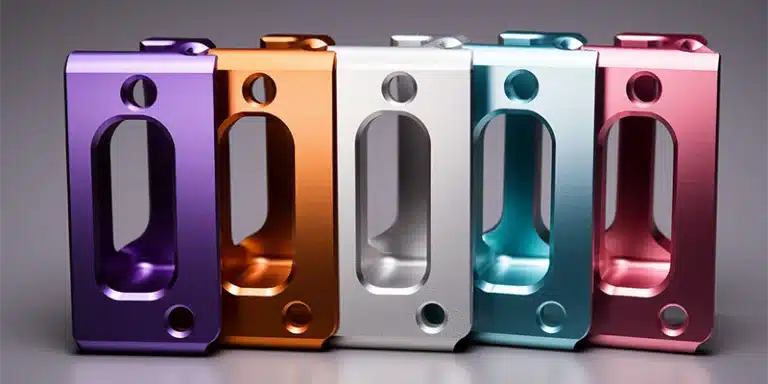
Anodização divide-se em três processos comerciais, cada um com um perfil de custos e uma gama de aplicações diferentes. Escolher o tipo errado é o erro mais dispendioso que observamos nas especificações dos clientes — o Tipo III numa peça que apenas necessita do Tipo II custa cerca de 2,5 vezes mais, sem qualquer ganho funcional.
| Tipo | Nome comum | Espessura do revestimento | Tarifa (USD/pé²) | Utilização típica |
| Tipo I | Ácido crómico | 0,5–7,5 µm | $0,70–$3,00 | Encaixes com tolerâncias apertadas e críticos em termos de fadiga no setor aeroespacial |
| Tipo II | Ácido sulfúrico | 5–25 µm | $0,50–$2,00 | Decoração, eletrónica, produtos de consumo |
| Tipo II, transparente | Padrão transparente | 8–15 µm | $0,50–$1,40 | Caixas para equipamentos eletrónicos de uso geral |
| Preto tipo II | Preto padrão | 10–20 µm | $0,80–$2,00 | Ótica cosmética e antirreflexo |
| Tipo III | Anodização dura | 25–100 µm | $2,00–$5,00 | Resistente ao desgaste, de uso militar, para manuseamento de fluidos |
| Tipo III preto | Revestimento rígido preto | 30–80 µm | $2,50–$5,50 | Setor aeroespacial, componentes de armas de fogo, hidráulica |
Duas observações sobre os preços desta tabela. Em primeiro lugar, a anodização crómica do Tipo I é mais cara do que a do Tipo II, apesar de ser mais fina, devido à química controlada do ácido crómico e ao número limitado de fornecedores que ainda a realizam ao abrigo dos regulamentos da EPA. Em segundo lugar, o Tipo III tem um preço cerca de 2,5 a 3 vezes superior ao do Tipo II — tanto porque o revestimento em si é mais espesso e mais duro, como porque o tempo de imersão é mais longo e é necessária capacidade de refrigeração para manter o banho a uma temperatura entre 0 e 5 °C durante o processo.
O que determina o custo da anodização — para além da tarifa por pé quadrado
Quantidade e custo por lote
É aqui que os compradores ficam mais surpreendidos. Um de 50 cm² alumínio O suporte tem uma área em contacto com o líquido de cerca de 0,5 pés². A uma taxa de Tipo II de $1,20 por pé², o custo variável é de $0,60 por peça. No entanto, a taxa de lote de $120 continua a aplicar-se — pelo que uma peça custa $120,60, dez peças custam $126 e 200 peças custam um total de $240 ($1,20 por peça). O custo unitário desce 99 por cento entre a quantidade 1 e a quantidade 200, e a maior parte dessa redução deve-se apenas à repartição da taxa de lote.
| Quantidade | Custo total (Tipo II transparente) | Custo por peça | vs. Unidade Única |
| 1 | $120.60 | $120.60 | — |
| 10 | $126.00 | $12.60 | −90% |
| 50 | $150.00 | $3.00 | −98% |
| 100 | $180.00 | $1.80 | −98.5% |
| 200 | $240.00 | $1.20 | −99% |
| 500 | $420.00 | $0.84 | −99.3% |
The practical lesson: do not anodise prototypes one at a time if you can batch them. Order three or four design iterations together and anodise them in a single run. The lot charge amortises immediately, and your prototype anodising spend drops by half or more.
Colour Choice
Standard clear and black are the cheapest colours because most anodising shops keep those dye tanks running continuously. Specifying any non-standard colour — red, blue, gold, bronze, custom-mixed — adds $2–$5 per part for the dye batch setup, plus typically 20–40 percent on the base rate because of the slower line throughput. Colour matching between production lots is also harder for custom colours, so expect more variance batch-to-batch.
From our quoting experience: if cosmetic appearance matters more than mechanical performance, specify Type II black or clear. If you absolutely need a specific colour, lock in a single supplier and a master colour standard sample early — switching anodising shops mid-production almost always shifts the colour just enough to be visible.
Surface Area, Not Part Weight
Anodising is priced by wetted surface area, not part weight or volume. A thin-walled enclosure with internal ribbing can have 2–4× the surface area of a solid bar of the same outer dimensions — and will cost 2–4× more to anodise. Designers who calculate finishing cost from part weight consistently underestimate the bill on hollow or finned geometries by 50–70 percent.
Alloy Choice
Different aluminium alloys anodise differently. 6061 and 6063 are the cheapest and most consistent — clean uniform colour, predictable coating thickness. 7075 anodises well but tends to come out slightly yellower than 6061 in clear finishes because of its zinc content. 2024 contains copper and requires special bath chemistry, adding 25–40 percent to the rate. Die-cast aluminium (A356, ADC12) anodises poorly and patchily and typically gets powder coated instead. If you specify anodising on die-cast parts, expect either a refusal or a high quote with a no-warranty disclaimer.
Pre-Treatment Requirements
Bead blasting before anodising is the most common pre-treatment and produces the consistent matte finish you see on Apple products and high-end electronics. Bead blasting adds typically $0.30–$1.00 per ft² and significantly improves cosmetic uniformity. Chemical brightening or polishing before anodising produces a mirror-like finish but adds $1.50–$3.00 per ft² and is only justified for visual-grade decorative work.
Vedação
Hot-water sealing or nickel-acetate sealing improves corrosion resistance and dye fastness but adds $0.25–$1.00 per ft². For outdoor or marine applications, sealing is non-negotiable — the cost is justified by the dramatic reduction in colour fading and corrosion. For interior or short-life parts, sealing can usually be skipped.
US vs China — Real Anodising Cost Comparison
Anodising is one of the few processes where the China cost advantage is smaller than people expect. Chemistry, electricity, and chiller energy are similar costs globally. The gap shows up mostly in labour for racking and inspection, and in tank utilisation. Here is what we see across our customer base.
| Processo / Complemento | EUA | Alemanha / UE | China (Nível 1) | Precisão Yicen |
| Type II clear, per ft² | $0.90–$1.80 | €1.00–€1.85 | $0.50–$1.10 | $0.45–$1.00 |
| Type II black, per ft² | $1.20–$2.10 | €1.30–€2.20 | $0.70–$1.40 | $0.65–$1.30 |
| Type III hard, per ft² | $2.50–$4.80 | €2.60–€4.90 | $1.50–$3.00 | $1,40–$2,80 |
| Lot charge — Type II | $75–$200 | €80–€200 | $30–$80 | $25–$70 |
| Lot charge — Type III | $150–$400 | 160 € – 420 € | $60–$150 | $55–$140 |
| Sealing, per ft² | $0.40–$1.00 | €0.45–€1.00 | $0.20–$0.60 | $0.18–$0.55 |
| Bead blast prep, per ft² | $0.50–$1.00 | €0.55–€1.10 | $0.20–$0.50 | $0.18–$0.45 |
The savings on the per-square-foot rate are roughly 35–45 percent — meaningful but not enormous. The bigger savings come from the lot charges, where Chinese in-house lines typically charge 60–70 percent less than US job shops because the line is co-located with the machine shop and there is no separate freight or batching overhead. For prototype quantities under 50 units, this lot-charge gap is what makes Chinese sourcing genuinely cheaper. Above 500 units, the difference shrinks.
Combined CNC + Anodise Pricing — Real Example
Here is a realistic worked example showing where anodising sits in the total cost of a finished part. The part: a Usinado por CNC 6061 aluminium enclosure, 100 mm × 60 mm × 25 mm, with 2.0 mm walls and internal ribbing, Type II black anodise.
| Palco | Quantity 10 | Quantidade: 100 | Quantidade: 500 |
| Área de superfície molhada | 0.42 ft² each | 0.42 ft² each | 0.42 ft² each |
| CNC machining cost (Yicen) | $22.50 each | $11.80 each | $8,20 cada |
| Bead blast prep | $0.20 each | $0.18 each | $0.18 each |
| Type II black anodise (rate) | $0.45 each | $0.42 each | $0.40 each |
| Lot charge — anodise | $4.50 each (∕10) | $0,45 cada (/100) | $0.10 each (∕500) |
| Vedação | $0.18 each | $0.16 each | $0.16 each |
| Peça totalmente acabada | $27.83 each | $13.01 each | $9.04 each |
| Anodise share of total cost | 19% | 9% | 10% |
Two observations from this example. First, anodising adds roughly 10 percent to the cost of a finished CNC aluminium part at production volumes — not the 30–50 percent that buyers often assume. Second, the anodising share is much higher at prototype quantities (19 percent at qty 10) because of the lot charge. If you are evaluating quotes that quote anodising at 30 percent of CNC cost on a 100-piece order, that is a red flag — either the CNC pricing is too low, the anodising rate is too high, or the supplier is double-billing the lot charge.
DFM Tips That Cut Anodising Cost
- Specify Type II unless functional wear or corrosion absolutely requires Type III. The 2.5–3× premium for hard-coat is wasted on most consumer and electronics parts.
- Use standard clear or black. Custom colours add $2–$5 per part and increase batch-to-batch variance. If colour-matching across production lots matters, lock to one anodising house.
- Reduce wetted surface area where you can. Hollow housings with internal ribbing pay anodising cost on every internal surface — consider whether the interior actually needs to be anodised, and ask for masking if it does not.
- Batch your prototype iterations. Anodise three or four design rounds together rather than one at a time. The lot charge applies once per batch, not once per part.
- Use 6061 or 6063 wherever possible. Other alloys (2024, 7075, die-cast) add 15–40 percent to the rate and produce more colour variation.
- Specify pre-treatment only where it shows. Bead blasting is great for cosmetic surfaces but unnecessary on hidden internal faces — ask for selective masking to save the $0.30–$1.00 per ft² where the customer will never see it.
- Skip sealing on parts that will not see moisture or UV. Sealing is necessary for marine and outdoor use; it is wasted cost on indoor electronics enclosures.
FAQs — Anodising Cost
Quanto custa o anodização por peça?
Depende quase inteiramente da quantidade, da área de superfície e do tipo. Para uma caixa típica de eletrónica de consumo com cerca de 0,4 pés² de superfície molhada em anodização preta do Tipo II: aproximadamente $13–$25 por peça nos EUA para uma quantidade de 10, $1,50–$3,00 por peça para uma quantidade de 200 e $1,00–$1,80 por peça para uma quantidade de 1 000. Na Yicen Precision, essas mesmas quantidades situam-se entre $5–$12, $0,70–$1,40 e $0,50–$1,00, respetivamente.
Em que é que a anodização difere do revestimento a pó?
Anodising is an electrochemical conversion of the aluminium surface into aluminium oxide — the coating is part of the substrate. Powder coating is a sprayed polymer film bonded to the metal by heat. Anodised parts are thinner, harder, more abrasion-resistant, and conduct heat better; powder-coated parts are thicker, better at hiding surface imperfections, and available in more colours including textures. For aluminium, anodising is the more durable finish for most applications; for steel or galvanised steel, powder coating is the only option.
Por que é que a anodização preta custa mais do que a transparente?
Two reasons. First, black dye is the most cost-controlled premium dye and the most quality-controlled because any colour variation is obvious. Second, achieving deep uniform black requires a thicker anodic layer (typically 15–20 µm versus 8–12 µm for clear), which means more tank time and more electrical energy. The premium is usually 15–25 percent over clear.
É possível submeter o aço inoxidável ou o titânio a um processo de anodização?
Stainless steel cannot be anodised in the traditional sense — the chemistry only works on metals with native oxide layers like aluminium, magnesium, titanium, niobium, and tantalum. Titanium can be anodised, but it produces interference colours (gold, blue, purple, green) by varying voltage rather than dye, and costs typically 3–5× per ft² compared to aluminium Type II. For stainless steel, the equivalent process is electropolishing or passivation.
Como é que a Yicen Precision realiza o processo de anodização nas suas próprias instalações?
We operate Type II and Type III anodising lines in our Shenzhen finishing facility, alongside bead blasting, chemical brightening, and sealing. Co-locating finishing with our CNC and chapa metálica shops eliminates freight between processes and lets us batch parts efficiently. Standard lead time for Type II anodising on machined parts is 2–4 days; Type III runs 4–6 days. Full inspection documentation included with every order.
Get a CNC + Anodise Quote from Yicen Precision
If you have aluminium parts that need machining plus anodising, we handle both in-house. Send a STEP file and your finishing spec — type, colour, thickness, sealing requirement — and we will quote the full machine-and-finish cost within 12 working hours.
- Type II clear, black, and standard colours from $0.45 per ft², lot charge from $25
- Type III hard-coat in clear and black from $1.40 per ft², lot charge from $55
- Bead blasting, sealing, and selective masking available as line-item add-ons
- Lead times: 2–4 days Type II, 4–6 days Type III, after machining complete
- ISO 9001:2015 and IATF 16949 certified, full finish inspection report included
Upload your STEP file at yicenprecision.com — tell us your anodising spec and we will quote the complete part.


 Portuguese
  English
  French
  Spanish
  Japanese
  German