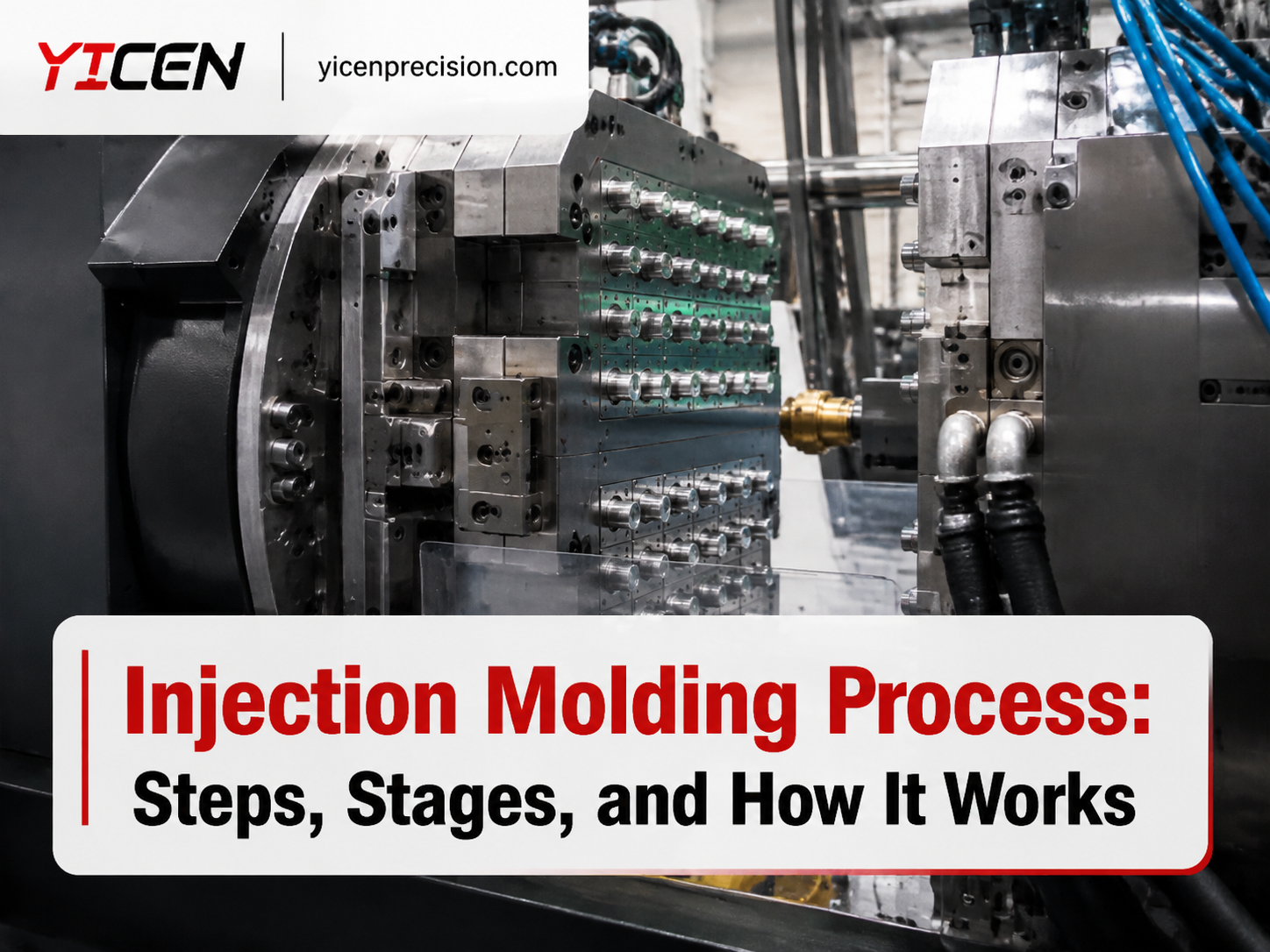
Was ist der Spritzgussprozess? Wie laufen die einzelnen Schritte des Spritzgussverfahrens vom Entwurf bis zur Endfertigung ab? Welche Hauptphasen durchlaufen Hersteller beim Spritzguss? Wie werden im Spritzgussverfahren präzise Kunststoffteile in großen Stückzahlen hergestellt?
Das Spritzgussverfahren ist ein Fertigungsverfahren zur Herstellung von Kunststoffbauteilen, bei dem Polymerwerkstoffe geschmolzen und in einen speziell angefertigten Formhohlraum eingespritzt werden. Das Material kühlt ab, verfestigt sich und nimmt dabei die exakte Form der Form an, wodurch einheitliche und reproduzierbare Bauteile für Branchen wie die Automobilindustrie, die Medizintechnik, die Elektronik, die Robotik und die Konsumgüterindustrie entstehen.
Das Spritzgießen ist eine der effizientesten Lösungen für die Serienfertigung von Kunststoffteilen, da es Schnelligkeit, Präzision und Wirtschaftlichkeit vereint. Hersteller nutzen dieses Verfahren, um alles von kleinen technischen Bauteilen bis hin zu großen Industriegehäusen herzustellen und dabei strenge Maßgenauigkeit zu gewährleisten.
Was ist das Spritzgussverfahren?
Das Spritzgussverfahren ist ein Fertigungsverfahren, bei dem Kunststoffgranulat erhitzt wird, bis es schmilzt, und anschließend unter Druck in eine Form gespritzt wird. In der Form kühlt der Kunststoff ab und härtet in der gewünschten Form aus.
Der Prozess beginnt bereits vor Produktionsbeginn. Ingenieure analysieren die Produktkonstruktion, wählen geeignete Werkstoffe aus, erstellen Werkzeuge und optimieren die Formkonstruktion im Hinblick auf die Fertigungsfähigkeit. Eine gut konstruierte Form verbessert die Teilequalität, reduziert Fehler und steigert die Produktionseffizienz.
Yicen Precision bietet Lösungen für die Präzisionsfertigung, darunter Prototypenbau und Produktionsunterstützung, um Unternehmen dabei zu helfen, Produktkonzepte in fertige Bauteile umzusetzen. Zu den Fertigungskapazitäten des Unternehmens gehören die Präzisionsbearbeitung und Schnellprototyping-Servicedie moderne Arbeitsabläufe in der Produktentwicklung unterstützen.
Schritte beim Spritzgießen: Der gesamte Fertigungsablauf
Auch wenn das Spritzgießen von außen betrachtet einfach erscheint, umfasst der gesamte Fertigungsprozess des Spritzgießens mehrere technische Schritte. Jeder Schritt beeinflusst die endgültige Qualität, Festigkeit, das Aussehen und die Leistungsfähigkeit des fertigen Bauteils.
| Schritt des Spritzgussverfahrens | Beschreibung |
| Analyse des Produktdesigns | Ingenieure prüfen CAD-Modelle, Materialanforderungen, Toleranzen und Produktionsziele. |
| Formenkonstruktion und Werkzeugbau | Auf der Grundlage der Bauteilgeometrie und der Fertigungsanforderungen wird eine maßgeschneiderte Form hergestellt. |
| Vorbereitung des Materials | Die Kunststoffgranulate werden aussortiert, bei Bedarf getrocknet und für die Weiterverarbeitung vorbereitet. |
| Schmelzen und Einspritzen | Der Kunststoff wird erhitzt und unter kontrolliertem Druck in den Formhohlraum eingespritzt. |
| Abkühlung und Erstarrung | Der geschmolzene Kunststoff kühlt ab und nimmt dabei die endgültige Form des Bauteils an. |
| Teileauswurf und Prüfung | Das fertige Teil wird entnommen, geprüft und für die weiteren Arbeitsschritte vorbereitet. |
1. Produktdesign und DFM-Analyse
Die erste Phase des Spritzgussverfahrens beginnt mit der Produktentwicklung. Bevor die Fertigung beginnt, prüfen die Ingenieure den Entwurf, um sicherzustellen, dass er effizient hergestellt werden kann.
Eine DFM-Analyse (Design for Manufacturing) identifiziert potenzielle Probleme wie ungleichmäßige Wandstärken, scharfe Kanten, ungeeignete Entformungsschrägen oder komplexe Geometrien, die zu höheren Fertigungskosten führen können.
In dieser Phase berücksichtigen die Hersteller Folgendes:
- Auswahl des Materials
- Anforderungen an die Festigkeit der Bauteile
- Anforderungen an die Oberflächenbeschaffenheit
- Produktionsvolumen
- Komplexität von Schimmelpilzen
- Vorgeschriebene Toleranzen
Eine solide Konstruktionsgrundlage trägt dazu bei, Produktionsverzögerungen zu vermeiden und die Gesamteffizienz des Spritzguss-Fertigungsprozesses zu verbessern.
Bei komplexen Projekten kombinieren Unternehmen häufig das Spritzgießen mit Rapid Prototyping, um Entwürfe vor der Serienfertigung zu validieren. Die Rapid-Prototyping-Dienstleistungen von Yicen Precision unterstützen Funktionstests und die Produktentwicklung vor der endgültigen Fertigung.
2. Formkonstruktion und Werkzeugbau
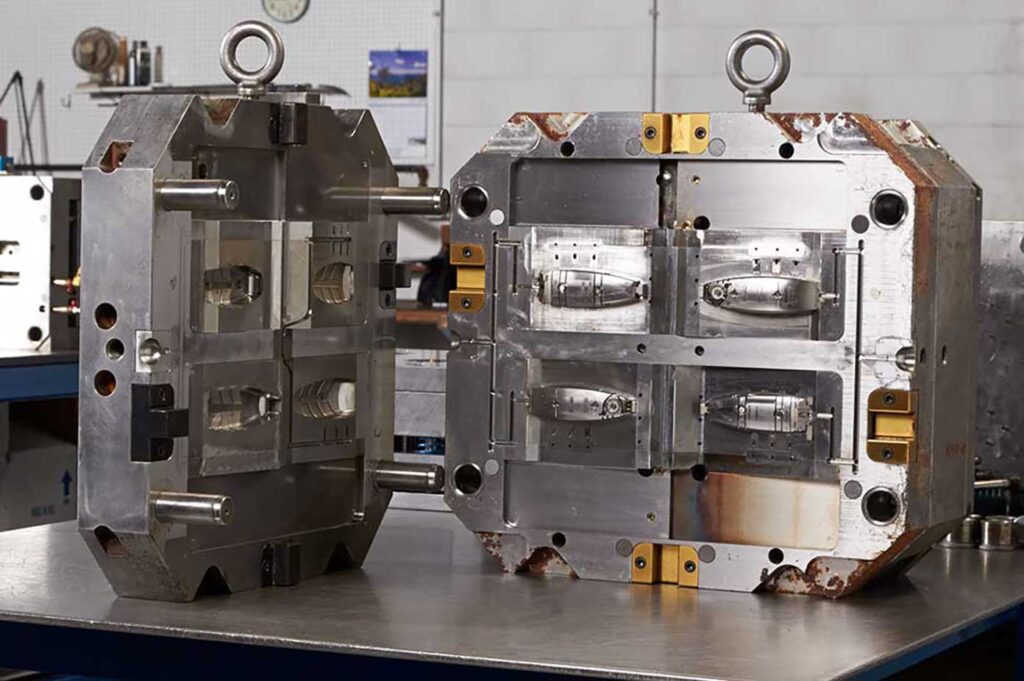
Die Form ist eines der wichtigsten Elemente beim Spritzgießen. Sie bestimmt die endgültige Form, die Abmessungen und die Oberflächenqualität des gefertigten Bauteils.
Ein typischer Spritzgussform besteht aus:
- Formhohlraum
- Kernabschnitt
- Einspritzkanäle
- Kühlsystem
- Auswurfmechanismus
Die Form muss mit äußerster Präzision gefertigt werden, da schon kleinste Fehler Auswirkungen auf Tausende von Fertigungsteilen haben können.
| Formteil | Funktion |
| Hohlraum | Erstellt die äußere Form des Kunststoffbauteils. |
| Kern | Gestaltet interne Merkmale und Details. |
| Laufsystem | Leitet den geschmolzenen Kunststoff in den Formhohlraum. |
| Kühlkanäle | Regelt die Abkühlgeschwindigkeit und die Gleichmäßigkeit der Teile. |
| Auswurfsystem | Entnimmt das fertige Teil sicher aus der Form. |
Präzisionswerkzeuge sind für Branchen, in denen es auf Wiederholgenauigkeit ankommt, wie beispielsweise bei Medizinprodukten, Automobilkomponenten und elektronischen Baugruppen, unverzichtbar.
3. Materialauswahl und -vorbereitung
Die Auswahl des richtigen Kunststoffmaterials ist ein entscheidender Bestandteil des Spritzgussprozesses. Unterschiedliche Anwendungsbereiche erfordern unterschiedliche Materialeigenschaften, darunter Festigkeit, Flexibilität, chemische Beständigkeit, Temperaturbeständigkeit und Optik.
Zu den gängigen Spritzgussmaterialien zählen:
- ABS für langlebige Konsumgüter
- Polypropylen für Leichtbaukomponenten
- Polycarbonat für Schlagfestigkeit
- Nylon für mechanische Anwendungen
- PEEK für Hochleistungs-Konstruktionsteile
Vor der Verarbeitung müssen Kunststoffgranulate unter Umständen getrocknet werden, um Feuchtigkeit zu entfernen. Eine unsachgemäße Vorbereitung kann zu Mängeln wie Blasen, Schwachstellen oder Oberflächenfehlern führen.
4. Schmelz- und Einspritzphase
Während des Einspritzvorgangs gelangen die Kunststoffgranulate in den Maschinenzylinder, wo das Material durch kontrollierte Erwärmung geschmolzen und in einen flüssigen Zustand überführt wird.
Die Spritzeinheit drückt den geschmolzenen Kunststoff anschließend unter hohem Druck in den Formhohlraum. Dieser Druck sorgt dafür, dass das Material jeden noch so kleinen Bereich der Form ausfüllt.
Zu den wichtigen Parametern in dieser Phase gehören:
- Einspritzdruck
- Temperaturregelung
- Einspritzgeschwindigkeit
- Materialdurchsatz
Eine angemessene Steuerung dieser Faktoren gewährleistet eine gleichbleibende Teilequalität und reduziert den Produktionsabfall.
5. Abkühlung und Erstarrung
Nachdem der Formhohlraum gefüllt ist, beginnt die Abkühlphase. Kühlkanäle im Inneren der Form leiten die Wärme aus dem geschmolzenen Kunststoff ab, bis das Bauteil ausgehärtet ist.
Die Abkühlzeit hängt ab von:
- Teilstärke
- Art des Materials
- Formtemperatur
- Komponentendesign
Eine unzureichende Kühlungssteuerung kann zu Mängeln wie Verziehen, Schrumpfen oder Maßabweichungen führen.
6. Entnahme und Qualitätsprüfung
Sobald das Kunststoffbauteil vollständig ausgehärtet ist, öffnet sich die Form, und die Auswerferstifte entnehmen das fertige Teil.
Die gefertigten Teile werden anschließend auf Folgendes geprüft:
- Maßhaltigkeit
- Oberflächenfehler
- Anforderungen an die Festigkeit
- Farbkonsistenz
- Strukturelle Leistungsfähigkeit
Bei anspruchsvollen Anwendungen führen Hersteller unter Umständen zusätzliche Prüfungen und Qualitätskontrollen durch, bevor die Teile ausgeliefert werden.
Wie funktioniert der Spritzgussprozess bei der Massenproduktion?
Der Hauptvorteil des Spritzgussverfahrens liegt in seiner Skalierbarkeit. Sobald die Form erstellt und optimiert wurde, können Hersteller Tausende oder sogar Millionen identischer Teile effizient produzieren.
Im Vergleich zu vielen herkömmlichen Fertigungsverfahren bietet das Spritzgießen folgende Vorteile:
- Hohe Produktionsgeschwindigkeit
- Niedrige Stückkosten bei großen Stückzahlen
- Hervorragende Wiederholgenauigkeit
- Fähigkeit zur Bearbeitung komplexer Teilegeometrien
- Weniger Materialabfall
Allerdings können die anfänglichen Investitionen in Werkzeuge höher ausfallen, da maßgeschneiderte Formen eine technische Entwicklung und Präzisionsfertigung erfordern.
Anwendungen des Spritzgießens in verschiedenen Branchen
Das Spritzgießen ist weit verbreitet, da sich damit leichte, langlebige und sehr detailreiche Bauteile herstellen lassen.
Zu den üblichen Anwendungen gehören:
Automobilindustrie: Innenverkleidungen, Halterungen, Gehäuse und funktionale Kunststoffteile.
Medizinisch: Einwegartikel, Laborkomponenten und Teile für medizinische Geräte.
Elektronik: Geräteabdeckungen, Steckverbinder und Schutzgehäuse.
Konsumgüter: Verpackungen, Haushaltsprodukte und alltägliche Kunststoffartikel.
Industrieausrüstung: Maßgefertigte Komponenten, die Festigkeit und Wiederholgenauigkeit erfordern.
Hersteller kombinieren das Spritzgießen häufig mit anderen Präzisionsdienstleistungen wie beispielsweise CNC-Bearbeitung, Blechbearbeitung und Prototypenbau, je nach Projektanforderungen. Yicen Precision bietet vielfältige Fertigungslösungen für den Prototypenbau und die Serienfertigung an.
Spritzguss vs. CNC-Bearbeitung: Die Wahl des richtigen Verfahrens
Die Wahl des geeigneten Fertigungsverfahrens hängt von Faktoren wie Produktionsvolumen, Materialanforderungen, Geometrie und Budget ab.
| Merkmal | Spritzgießen | CNC-Bearbeitung |
| Am besten für | Kunststoffteile in Großserie | Präzisionsteile aus Metall und Kunststoff |
| Anschaffungskosten | Höhere Werkzeugkosten | Geringere Einrichtungskosten |
| Produktionsgeschwindigkeit | Extrem schnell nach der Einrichtung | Hängt von der Komplexität der Bearbeitung ab |
| Material-Optionen | Vorwiegend Polymere | Metalle und Kunststoffe |
| Ideales Volumen | Mittlere bis sehr hohe Produktionsmenge | Prototypen und kleine bis mittlere Serien |
Bei Projekten, die enge Toleranzen und komplexe Werkstoffe erfordern, kann die CNC-Bearbeitung eine effektive Alternative oder ein ergänzendes Verfahren darstellen. Yicen Precision bietet CNC-Bearbeitungsdienstleistungen für Prototypen und Serienbauteile.
So verbessern Sie die Qualität im Spritzguss
Hersteller können die Ergebnisse beim Spritzgießen verbessern, indem sie sich auf folgende Aspekte konzentrieren:
- Optimierte Formkonstruktion
- Richtige Materialauswahl
- Präzise Temperaturregelung
- Konstanter Einspritzdruck
- Regelmäßige Wartung der Werkzeuge
- Detaillierte Qualitätsprüfung
Die Zusammenarbeit mit erfahrenen Fertigungspartnern trägt dazu bei, Fehler zu reduzieren und die Produktionszuverlässigkeit zu verbessern.
Abschließende Überlegungen
Das Spritzgussverfahren ist nach wie vor eines der wichtigsten Fertigungsverfahren zur Herstellung zuverlässiger Kunststoffbauteile in großen Stückzahlen. Das Verständnis der einzelnen Schritte und Phasen des Spritzgussverfahrens hilft Unternehmen dabei, die richtige Produktionsstrategie zu wählen und die Ergebnisse der Produktentwicklung zu verbessern.
Von der ersten Konstruktionsprüfung über die Formenbau, die Materialauswahl bis hin zur Endkontrolle – jede Phase wirkt sich auf die Qualität des fertigen Bauteils aus. Die Zusammenarbeit mit einem erfahrenen Präzisionshersteller kann Unternehmen dabei helfen, schnellere Entwicklungszyklen, gleichbleibende Qualität und eine kosteneffiziente Produktion zu erreichen.
Für Projekte, bei denen es um die Validierung von Prototypen, Präzisionsfertigung oder Unterstützung bei der skalierbaren Produktion geht, informieren Sie sich hier Yicen Präzision’… Fertigungslösungen, darunter Rapid-Prototyping und CNC-Bearbeitung.
Häufig gestellte Fragen
Was sind die wichtigsten Schritte beim Spritzgießen?
Zu den wichtigsten Schritten beim Spritzgießen gehören die Produktkonstruktion, die Herstellung der Form, die Materialvorbereitung, das Einspritzen, das Abkühlen, das Auswerfen und die Prüfung. Jede dieser Phasen trägt dazu bei, präzise und gleichbleibende Kunststoffbauteile herzustellen.
Wie lange dauert der Spritzgussprozess?
Die Produktionszeit hängt von der Komplexität des Teils, der Formkonstruktion, dem Material und der Stückzahl ab. Nach Fertigstellung des Werkzeugs dauern einzelne Formzyklen oft nur Sekunden bis Minuten.
Welche Materialien werden beim Spritzgießen verwendet?
Beim Spritzgießen kommen üblicherweise Kunststoffe wie ABS, Polypropylen, Polycarbonat, Nylon und technische Kunststoffe zum Einsatz. Die Materialauswahl hängt von der erforderlichen Festigkeit, der Haltbarkeit und den Umgebungsbedingungen ab.
Eignet sich das Spritzgießen für kleine Serien?
Das Spritzgießen ist in der Regel bei mittleren und großen Stückzahlen am kostengünstigsten. Bei kleinen Stückzahlen können Rapid Prototyping oder alternative Fertigungsverfahren wirtschaftlicher sein.
Was sind die Ursachen für Fehler an Spritzgussteilen?
Zu den häufigsten Fehlern zählen Verformungen, Einfallstellen, Luftblasen, Füllmängel und Oberflächenfehler. Eine korrekte Formkonstruktion, die richtigen Maschineneinstellungen und die richtige Materialvorbereitung tragen dazu bei, diese Probleme zu vermeiden.
Verfasst vom Yicen Precision Engineering-Team. Zusammen verfügen wir über mehr als zehn Jahre Erfahrung in den Bereichen Toleranzkontrolle und Qualitätssicherung sowie in der Bearbeitung von Präzisionsteilen für Kunden aus der Automobil-, Medizin- und Halbleiterbranche. Yicen Precision betreibt in Shenzhen mehr als 300 Maschinen, ist nach ISO 9001:2015, ISO 13485, ISO 14001 und IATF 16949 zertifiziert und führt Prüfungen mit Koordinatenmessgeräten (CMM) und Röntgenfluoreszenzspektrometern (XRF) durch. Entdecken Sie unser Hochpräzise CNC-Bearbeitung oder Wenden Sie sich an unsere Ingenieure.