Why Surface Finish Choice Affects More Than Looks
Surface finish is treated like a cosmetic decision on most drawings. It is not. The right finish controls corrosion resistance, friction, wear, electrical conductivity, paint adhesion, fatigue life, and how well the part bonds to its mating components. The wrong finish causes parts to seize, gaskets to leak, paint to flake, and electronics to corrode.
This guide covers two related concepts that engineers sometimes confuse: surface roughness (the texture of the bare machined surface, measured in Ra) and surface finish (the coating, plating, or treatment applied after machining). Both matter; they answer different questions. Yicen offers 30+ surface finishes across our facility, so we see the consequences of every choice across thousands of production parts.
Surface Roughness: What Ra Values Actually Mean
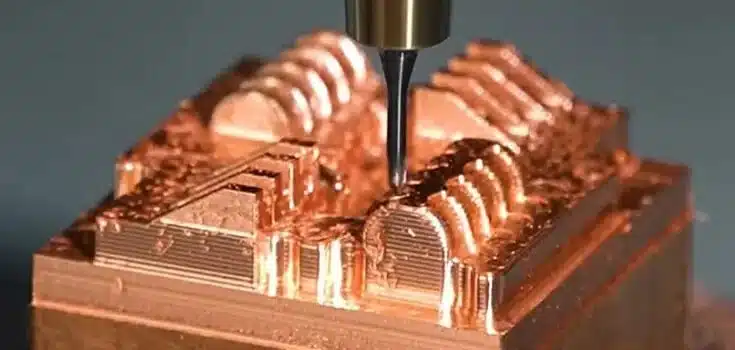
Ra (arithmetic average roughness) is the standard measurement for machined surface texture. Lower Ra means smoother surface. The values that show up on most drawings cluster around five common tiers, each tied to a manufacturing process.
| Ra Value | Beschreibung | How to Achieve It | Typische Verwendung |
| Ra 12.5 µm | Rough | Heavy turning, rough milling | Non-functional surfaces, casting cleanup |
| Ra 3.2 µm | Standard machined | Normal turning or milling | General mechanical surfaces |
| Ra 1.6 µm | Smooth machined | Sharp tool, finish pass | Most CNC parts, default if no callout |
| Ra 0.8 µm | Gut | Finish pass with sharp tool | Sealing surfaces, sliding fits |
| Ra 0.4 µm | Sehr gut | Grinding or polishing | Bearing seats, hydraulic seals |
| Ra 0.2 µm | Mirror | Lapping, super-finishing | Optical, precision sealing |
| Ra 0.05 µm | Optical mirror | Diamond turning, lapping | Mold cores, optical mirrors |
Going one tier finer typically doubles cost. Going from Ra 1.6 µm to Ra 0.4 µm often quadruples it because grinding becomes necessary. Specify the finest Ra only on surfaces where it actually matters — sealing faces, sliding fits, optical surfaces. Everything else can run at Ra 1.6 µm or 3.2 µm without functional impact.
Surface Finish Choices: A Decision Framework
After machining, most parts get a surface finish — paint, anodize, plating, or other coating. The decision tree below covers 90% of real-world cases.
Step 1: What is the Functional Requirement?
- Corrosion resistance only → galvanizing, zinc plating, or stainless steel substrate (no coating)
- Corrosion + cosmetic → powder coat or wet paint
- Hardness and wear → hard anodize (aluminum), hard chrome (steel), or nitriding
- Electrical conductivity → bare aluminum, bright nickel, or selective gold plating
- Decorative + corrosion → bright nickel, chrome plating, or brushed stainless
- Food contact → electropolished stainless, FDA-compliant powder coat
Step 2: What is the Substrate?
Material narrows the options. Anodizing only works on aluminum. Hot-dip galvanizing only works on steel. Some finishes (powder coat, paint) work on almost anything. The substrate-to-finish mapping below covers the most common combinations.
Surface Finishes by Substrate
Aluminium
| Finish | Kostenindex | Eigenschaften | Common Use |
| Bare (machined) | 1.0× | Soft, oxide layer self-forms | Internal parts, prototypes |
| Bead blast | 1.2× | Uniform matte texture | Aesthetic, hides tool marks |
| Clear anodize (Type II) | 1.4× | Hard surface, corrosion resistance | Electronics, consumer goods |
| Color anodize (Type II) | 1.6× | Decorative, durable | Branded products, aerospace ID |
| Hard anodize (Type III) | 2.2× | Very hard (60 HRC+), thick | Wear surfaces, military |
| Powder coat | 1.8× | Thick, durable, many colors | Outdoor enclosures |
| Chromate conversion | 1.3× | Conductive, corrosion barrier | Electronics with grounding |
Steel and Stainless Steel
| Finish | Kostenindex | Eigenschaften | Common Use |
| Schwarzes Oxid | 1.2× | Mild corrosion resistance, dark | Tools, fasteners, firearms |
| Zinc plating | 1.3× | Sacrificial corrosion barrier | Hardware, brackets, fasteners |
| Galvanizing (hot-dip) | 1.4× | Heavy zinc layer, outdoor durable | Structural steel, outdoor |
| Powder coat | 1.8× | Thick, durable, many colors | Industrial enclosures |
| Hard chrome | 3.5× | Extreme wear resistance | Hydraulic rods, dies |
| Electropolish | 2.5× | Smooth, contamination-free | Medical, pharma, food |
| Brushed (mechanical) | 1.4× | Decorative grain pattern | Stainless appliances, signage |
Anodizing vs Powder Coating: A Direct Comparison
Anodizing and powder coating are the two most common finishes on aluminum parts — and they solve different problems. Picking the wrong one wastes money or fails the application.
| Eigentum | Eloxieren | Pulverbeschichtung |
| Substrat | Aluminum only | Almost any metal |
| Coating thickness | 5–25 µm | 50–150 µm |
| Leitfähigkeit | Isolierend | Isolierend |
| Hardness | High (especially Type III) | Mäßig |
| Color range | Limited (mostly black, gold, blue) | Virtually unlimited |
| Edge coverage | Ausgezeichnet | Tends to thin at sharp edges |
| Repairability | Difficult — re-anodize required | Easy — patch and re-cure |
| Cost (relative) | 1.4–2.2x bare aluminum | 1.6–1.8x bare metal |
| Am besten für | Precision parts, electronics | Outdoor enclosures, large parts |
Anodizing wins when you need a thin, hard, dimensionally stable surface. Pulverbeschichtung wins when you need a thick, colorful, easily-repairable surface. They are complementary, not competing — they don’t even apply to the same parts most of the time.
Common Surface Finish Mistakes That Cost Real Money
Mistake 1: Specifying Ra 0.4 µm When Ra 1.6 µm Would Work
Tightening Ra two tiers doubles or triples cost. The most common offender is sealing surfaces — most o-ring grooves work fine at Ra 1.6 µm with proper compression.
Mistake 2: Powder Coating Surfaces That Need Electrical Continuity
Powder coat is a near-perfect insulator. Any surface that needs to ground to the chassis must be masked during coating. This adds cost but is essential for EMI compliance.
Mistake 3: Anodizing Parts with Critical Threaded Holes
Anodizing builds up 5–25 µm of oxide. A tapped M4 hole loses 10–50 µm of internal diameter, which can prevent fastener engagement. Always plug critical threaded holes during anodize.
Mistake 4: Mixing Galvanic Pairs Without Insulation
Aluminum bolted directly to stainless steel in a marine environment corrodes quickly. The dissimilar metals form a battery that consumes the aluminum. Either avoid the pairing or use isolating washers and dielectric coatings.
How to Specify Surface Finish on a Drawing
A complete finish callout has four parts: substrate preparation, finish process, finish thickness or color, and any masking instructions. A vague callout like “powder coat” leaves the supplier guessing — which usually means a quote padded with risk margin.
Example of a Complete Callout
“Substrate: aluminum 6061-T6. Finish: Type II anodize, MIL-A-8625 Class 2, color black per RAL 9005, thickness 15–25 µm. Mask: all M4 threaded holes; mounting face datum A. Acceptance: visual per supplier standard, no scratches > 5 mm.”
That callout leaves no ambiguity. The shop knows exactly what to do, what to mask, and what acceptance criteria to follow. Quotes against complete callouts are 5–15% lower than quotes against vague ones.
Frequently Asked Questions About CNC Surface Finish
What is the standard surface finish for a CNC machined part?
Ra 1.6 µm. It is the natural finish off a sharp end mill or turning tool, requires no extra operation, and is suitable for the vast majority of mechanical surfaces. Specify finer only when function requires it.
How much does anodizing add to part cost?
Type II clear anodize typically adds 25–45% to the bare aluminum part cost. Color anodize adds 35–60%. Hard anodize (Type III) adds 80–120%. Cost scales with the surface area being anodized, not the volume of the part.
Can I anodize a part after assembly?
Generally no. Anodizing is an electrochemical bath process — the part is submerged. Steel hardware in an aluminum assembly will corrode, and assembled parts often have hidden cavities that trap chemicals. Anodize before assembly.
What is the most durable outdoor finish for steel?
Hot-dip galvanizing followed by powder coat (“duplex coating”) is the most durable outdoor system. The galvanized layer protects the steel; the powder coat protects the galvanized layer from white rust and adds color. Lifetime in coastal environments exceeds 30 years.
How do I know if my surface finish callout is too tight?
Ask whether the function would still work at the next-rougher tier. If a sealing face works at Ra 1.6 µm with proper o-ring compression, specifying Ra 0.4 µm is wasted money. If a bearing seat genuinely needs Ra 0.4 µm to prevent wear, the spec is justified.
Specify the Right Finish with Yicen Precision
Yicen Precision bietet 30+ surface finishes in-house, from bead blast and brushing to hard anodize, electropolish, and decorative plating. Our engineers help match finish to function before the part is quoted, which prevents the most common cost surprise — a finish callout that quietly doubles the unit price. Send us a CAD file with your finish requirements, or describe the application and we will recommend the most cost-effective finish that meets the spec.

 German
  English
  French
  Spanish
  Japanese
  Portuguese