Révisé par l'équipe d'ingénierie de précision de Yicen | Dernière mise à jour : juin 2026
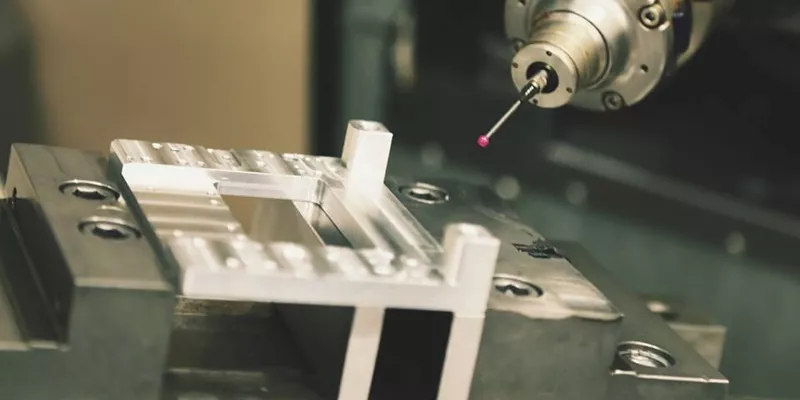
Le serrage CNC désigne l'ensemble des dispositifs et des méthodes utilisés pour positionner et serrer une pièce sur la table de la machine afin qu'elle reste exactement à l'endroit voulu pendant que l'outil effectue son travail. Il s'agit du lien entre la machine et la matière première, et c'est le seul facteur qui détermine si un outil bien affûté et une machine précise permettent réellement d'obtenir une pièce de précision. Si la pièce bouge, se soulève ou vibre, le programme et l'outillage n'ont plus aucune importance.
La plupart des guides sur les dispositifs de serrage s'adressent aux amateurs d'usinage ou constituent des catalogues de produits pour une seule marque d'étau. Celui-ci est destiné à faciliter la prise de décision en matière de production : quelle méthode convient à votre pièce, à votre opération et à votre volume de production, et à quel moment vaut-il mieux renoncer aux dispositifs de serrage standard et investir dans un dispositif sur mesure ? Nous abordons cette question avec nos clients chaque semaine dans le cadre de notre Services d'usinage CNC, et le cadre présenté ci-dessous illustre notre approche.
Pourquoi le serrage détermine la précision des pièces
Les forces de coupe en fraisage sont importantes et changent constamment de direction, car chaque dent de la fraise entre en contact avec la pièce et s'en détache plusieurs fois par seconde. Le perçage exerce une pression vers le bas sur la pièce et tente de la faire tourner. Le tournage projette la matière vers l'extérieur. Chaque opération tend à déplacer la pièce, et c'est le système de serrage qui l'empêche de bouger.
Lorsqu’un système de serrage est défaillant, cela se traduit par un mauvais état de surface, des pièces hors tolérance, une usure prématurée des outils et des rebuts dus au glissement. Lorsqu’il est bien conçu, la machine atteint les tolérances et l’état de surface dont elle est capable, les réglages s’effectuent plus rapidement et un plus grand nombre d’opérateurs peut réaliser le travail avec la même qualité. Le coût d'un bon serrage est presque toujours inférieur au coût des rebuts et des retouches engendrés par un mauvais serrage.
Les principes fondamentaux qui sous-tendent chaque configuration
Quel que soit l'appareil que vous choisissez, les mêmes principes techniques s'appliquent.
Appliquez le principe 3-2-1. Trois points déterminent le plan principal, deux le plan secondaire et un le plan tertiaire, ce qui, ensemble, élimine les six degrés de liberté. Notre décomposition de la Principe de localisation 3-2-1 explique pourquoi cela constitue la base d'un positionnement reproductible.
Appuyez fermement l'outil contre un support solide. La force de coupe doit s'exercer sur les butées ou le corps du dispositif de fixation, et en aucun cas sur les pinces. Les pinces servent à maintenir la pièce en place. Elles ne sont pas conçues pour supporter les charges d'usinage.
Fixez le dispositif de serrage sur le support, en direction des butées. Une pince qui exerce une pression sur une section non soutenue provoque une déformation de la pièce, qui reprend sa forme initiale et sort des tolérances lorsqu'on la relâche.
Veillez à ce que la structure soit rigide et basse. La hauteur réduit la rigidité et favorise les vibrations. Fixer la pièce près de la table est l'un des moyens les plus économiques d'améliorer la finition.
Assurez-vous que le chargement est bien arrimé. Une goupille ou un rebord empêchant tout mauvais positionnement de la pièce permet d'éviter davantage de rebuts au cours d'un cycle de production que n'importe quelle étape de contrôle.
Garantir la reproductibilité. Le principe même du serrage est que la pièce n° 500 se trouve exactement à la place de la pièce n° 1. Nettoyez les copeaux sur les surfaces de positionnement, utilisez des goupilles et des butées fixes, et concevez le dispositif de manière à ce que la pièce ne puisse pas glisser.
Types de dispositifs de serrage pour l'usinage CNC
Les solutions de serrage vont du simple étau au dispositif de fixation entièrement automatisé. Voici un aperçu pratique, avec les applications pour lesquelles chaque option est la plus adaptée.
Étau de machine
La solution standard pour les pièces prismatiques et l'équipement le plus utilisé dans tout atelier de fraisage. Un bon étau à meule, doté d'un mécanisme à coin qui abaisse la mâchoire mobile, associé à un jeu de parallèles, permet de réaliser une grande partie du travail sans avoir recours à des outillages sur mesure. Les étaux à centrage automatique positionnent les pièces sur leur axe central, tandis que les étaux à vis sinusoïdale maintiennent la pièce à des angles précis.
Meilleur pour : pièces moulées, de la fabrication de prototypes à la production en série.
Mâchoires souples
Des mâchoires usinables montées sur un étau et découpées sur mesure pour s'adapter à une pièce spécifique. Elles vous permettent d'obtenir un profil de positionnement sur mesure en quelques minutes pour le prix d'un bloc d'aluminium, ce qui en fait la solution la plus économique pour un montage semi-dédié destiné aux petites et moyennes séries.
Meilleur pour : mise en place répétable d'une pièce spécifique sans avoir à construire un dispositif de fixation complet.
Pinces à rainure en T et à crans
Des serre-joints qui se fixent à l'aide de vis dans les rainures en T de la table ou sur une plaque d'outillage pour maintenir directement des pièces volumineuses ou de forme irrégulière. Les serre-joints à crans utilisent des crans usinés et un bloc à crans pour régler la hauteur de serrage. Simples, flexibles et lents à régler, ils conviennent donc aux pièces volumineuses et aux petits volumes.
Meilleur pour : les pièces volumineuses ou de forme irrégulière qui ne rentrent pas dans un étau.
Mandrins et pinces de serrage
Les mandrins de serrage permettent de saisir des pièces rondes et de forme irrégulière, notamment lors d'opérations de tournage et de fraisage, tandis que les pinces de serrage maintiennent les barres rondes et les petites pièces avec une grande concentricité. Les deux sont de série sur Tournage CNC ainsi que sur les installations de fraisage rotatif.
Meilleur pour : pièces rondes et petites pièces à haute concentricité.
Plaque de fixation (outillage)
Une plaque plane dotée d'un quadrillage de précision composé de trous pour goujons et de trous taraudés, qui se fixe à la table et sert de base pour les étaux, les éléments modulaires ou les dispositifs de positionnement spécifiques. Les goujons permettent un positionnement reproductible à environ un demi-millième près, ce qui uniformise les réglages d'une tâche à l'autre.
Meilleur pour : une couche de base reproductible sous d'autres dispositifs de serrage.
Systèmes de fixation modulaires
Des kits modulables composés de socles, de dispositifs de positionnement et de pinces qui s'assemblent par vis pour former une configuration sur mesure, puis se démontent pour le projet suivant. Les systèmes modulaires offrent la plupart des avantages d'un dispositif de fixation dédié, sans les coûts ni les délais associés à ce type de solution, ce qui explique pourquoi ils conviennent si bien à la fabrication de prototypes et aux séries de petite à moyenne taille.
Meilleur pour : des missions variées et des volumes imprévisibles, où la flexibilité est essentielle.
Serrage par aspiration
Utilise la ventouse pour maintenir des pièces fines, plates ou non ferreuses que des pinces risqueraient de déformer, telles que des plaques, des panneaux et des pièces fragiles. L'absence de pinces garantit l'absence de marques et un accès total à la face supérieure. Les matériaux fins, d'une épaisseur de quelques millièmes seulement, peuvent être maintenus en quelques secondes.
Meilleur pour : les pièces fines, plates ou fragiles et un soutien sur toute la surface.
Serrage magnétique
Les mandrins magnétiques maintiennent les pièces ferreuses tout en offrant un accès total au dessus et aux côtés, sans que les pinces ne gênent. Plus courants en rectification, ils sont également utilisés en fraisage pour les pièces en acier plates où les pinces seraient gênantes.
Meilleur pour : pièces ferreuses plates nécessitant un accès libre.
Éclairages sur mesure
Outillage sur mesure conçu pour une seule pièce ou une seule opération, avec un positionnement et un serrage optimisés pour un chargement rapide et infaillible. Les montages spécialisés garantissent des temps de cycle ultra-rapides et une répétabilité optimale, et s'avèrent rentables sur les volumes élevés. C'est dans cette catégorie que nous concevons et fabriquons nos services de conception de gabarits et de montages sur mesure.
Meilleur pour : les pièces produites en grande série, à tolérances serrées ou de forme irrégulière, pour lesquelles les systèmes de serrage standard s'avèrent trop lents ou peu fiables.
Les dispositifs sont également désignés par la fonction qu'ils remplissent, par exemple dispositifs de fraisage, les dispositifs de tournage et les dispositifs de perçage. Nos Guide des types de gabarits et de montages couvre toute la famille.
Comparaison des types de serrage
| Méthode | Meilleur pour | Vitesse d'installation | Flexibilité | Coût relatif |
| Étau de machine | Pièces moulées, travaux généraux | Rapide | Haut | Faible |
| Mâchoires souples | Pièces spécifiques reproductibles | Une fois coupé, il sèche rapidement | Moyen | Faible |
| Pinces à rainure en T / à crans | Pièces volumineuses ou de forme irrégulière | Lenteur | Haut | Faible |
| Mandrins / pinces de serrage | Pièces rondes et petites | Rapide | Moyen | Faible à moyen |
| Plaque de fixation | Couche de base réutilisable | Moyen | Haut | Moyen |
| Systèmes de fixation modulaires | Des missions variées, un volume d'activité incertain | Moyen | Haut | Moyen |
| Sous vide | Pièces fines, plates et délicates | Rapide | Moyen | Moyen |
| Magnétique | Pièces plates en métal ferreux | Rapide | Moyen | Moyen |
| Dispositif de fixation spécifique | Volume élevé, tolérances serrées | Le plus rapide sur la piste | Aucune, spécifique à la pièce | Coût initial élevé |
Adapter le dispositif de serrage à l'opération
Chaque opération exerce une contrainte différente sur la pièce ; le dispositif de serrage doit donc être adapté à la force spécifique qu'elle génère.
| Fonctionnement | Force principale exercée sur la pièce | Meilleure réponse en matière de serrage |
| Fraisage | Charges latérales importantes et variables | Étaux, plaques de fixation, serre-joints latéraux avec support solide |
| Forage | Poussée vers le bas et tendance à tourner | Pinces de serrage avec support ou panneau de protection |
| Tournage | Force centrifuge vers l'extérieur | Mandrins et pinces de serrage à fixation centrale |
| Gravure et travaux de finition | Faible force mais sensible aux vibrations | Fixation par ventouse, adhésive ou sur toute la surface |
Dans la plupart des cas concrets, on combine plusieurs méthodes, car une même pièce peut être fraisée, percée et finie en un seul serrage.
Systèmes de serrage pour l'usinage 3 axes et l'usinage multiaxial
Sur une machine à 3 axes, l'outil s'approche essentiellement dans une seule direction ; le système de serrage doit donc principalement résister aux charges latérales et vers le bas, tout en restant à l'écart de la trajectoire de l'outil. Sur les machines à 4 et 5 axes, la pièce tourne pour présenter de nouvelles faces à l'outil, ce qui complique la tâche du système de serrage de deux façons : le dispositif de serrage doit maintenir la pièce fermement dans toutes les orientations, et il ne doit pas gêner l'outil lorsque la pièce tourne.
L'usinage multiaxial fait souvent appel à des supports en « tombstone » et à des dispositifs de fixation spécifiques pour les 4e et 5e axes, ce qui permet d'accéder à plusieurs faces ou à plusieurs pièces en un seul serrage. Cela réduit le nombre d'opérations et les manipulations entre celles-ci, sources de nombreux coûts et d'erreurs. Nous abordons ce sujet en détail dans notre guide consacré à Dispositifs de fixation pour l'usinage 5 axes, et vous pouvez découvrir les capacités multi-axes sur notre Page sur le fraisage CNC.
Solution standard, modulaire ou dédiée : le choix d'investissement
C'est ce choix qui détermine le coût et les délais de livraison.
| Facteur | Standard (étau, serre-joints) | Modulaire | Dédié (sur mesure) |
| Coût initial | Le plus bas | Moyen | Le plus élevé |
| Délai d'exécution | Immédiat | De quelques heures à plusieurs jours | De quelques jours à plusieurs semaines |
| Vitesse de réglage en production | Moyen | Moyen | Le plus rapide |
| Répétabilité | Bon | Bon | Le meilleur |
| Flexibilité entre les postes | Haut | Haut | Aucun |
| Meilleure plage de volume | Du prototype au petit série | Faible à moyen | Moyen à élevé |
Le raisonnement est simple. Les prototypes et les petites séries se prêtent mieux aux dispositifs de serrage standard et aux mâchoires souples, car le coût de l'outillage ne serait jamais rentabilisé. Les grandes séries, en revanche, justifient l'utilisation de dispositifs de serrage dédiés, car les gains en termes de temps de chargement et la réduction des rebuts se répercutent sur des milliers de pièces. La solution modulaire se situe entre les deux et constitue le choix par défaut le plus judicieux lorsque l'on ne sait pas encore comment un programme va évoluer.
Systèmes de serrage adaptés à l'automatisation
À mesure que les usines évoluent vers une production automatisée et sans surveillance, les systèmes de serrage doivent s'adapter à cette évolution. Les systèmes de serrage à changement rapide et à point zéro permettent de retirer et de replacer un dispositif de fixation ou une pièce dans une position connue en quelques secondes, de sorte qu'un robot ou un système de palettes puisse échanger les pièces sans avoir à les repositionner. Les pinces pneumatiques et hydrauliques appliquent une force constante et reproductible sans intervention d'un opérateur. L'avantage est un positionnement constant tout au long des cycles sans surveillance et une intervention manuelle nettement réduite. Si l'automatisation figure dans votre plan d'action, il vaut mieux concevoir dès maintenant un système de serrage adapté plutôt que de le moderniser plus tard.
Fabriquer ou acheter : quand un luminaire sur mesure s'avère rentable
Un dispositif sur mesure implique des coûts initiaux importants en termes de conception, de matériaux, d'usinage et de validation. Il permet de rentabiliser cet investissement grâce à trois leviers.
Durée du cycle. Un chargement plus rapide et sans faille permet de gagner quelques secondes sur chaque pièce, et ces quelques secondes se traduisent par des heures de temps machine sur une production de longue durée.
Réduction des déchets. Une localisation fiable et des mesures de prévention des erreurs permettent de réduire les erreurs qui se traduisent par des rebuts en termes de matériaux et d'heures-machine.
Répétabilité et flexibilité du personnel. Un bon dispositif de fixation permet à plusieurs opérateurs, ou à une cellule automatisée, d'exécuter la tâche avec la même qualité.
En règle générale, lorsque le volume de production est élevé, les tolérances sont serrées ou la pièce est de forme complexe, il est souvent préférable d'opter rapidement pour un dispositif de fixation dédié ou modulaire. Les prototypes uniques sont presque toujours réalisés à l'aide de dispositifs de serrage standard et de mâchoires souples. Lorsque les chiffres se situent entre les deux, le dispositif de fixation modulaire constitue la solution intermédiaire la moins risquée.
Si votre pièce ne s'adapte pas aux systèmes de serrage standard, ou si vous souhaitez optimiser un programme et réduire la durée du cycle, notre équipe concevra un système de serrage sur mesure, adapté à votre pièce, à votre volume de production et à vos tolérances. Envoyez-nous les fichiers de vos pièces pour obtenir un devis et nous vous proposerons la solution la plus économique, en vous indiquant notamment quand un système de serrage standard constitue déjà la solution la plus adaptée.
Questions fréquemment posées
Qu'est-ce que le serrage CNC ? Le serrage CNC désigne les dispositifs et les méthodes utilisés pour positionner et serrer une pièce sur la table d'une machine afin qu'elle reste immobile pendant l'usinage. Il assure la liaison stable entre la machine et la matière première, condition indispensable à un usinage de précision.
Quels sont les principaux types de dispositifs de serrage pour l'usinage CNC ? Parmi les types courants, on trouve les étaux mécaniques, les mâchoires souples, les serre-joints à rainure en T et à gradins, les mandrins et les pinces de serrage, les plaques de fixation, les systèmes de fixation modulaires, les dispositifs de serrage par aspiration et magnétiques, ainsi que les dispositifs de fixation sur mesure conçus pour une pièce spécifique.
Quelle est la différence entre un dispositif de serrage et un gabarit ? Le serrage désigne l'ensemble des dispositifs et méthodes permettant de maintenir une pièce en place. Un gabarit est un dispositif de serrage spécifique, souvent fabriqué sur mesure, conçu pour positionner et serrer une pièce donnée en vue d'une opération particulière, avec une grande répétabilité.
Quel est le dispositif de serrage le plus courant en CNC ? L'étau de machine est le dispositif de serrage le plus utilisé en fraisage, car il est rapide, précis et suffisamment polyvalent pour traiter une grande partie des pièces de forme cubique sans nécessiter d'outillage spécifique.
Comment choisir le bon dispositif de serrage ? Commencez par définir la forme de la pièce, l'opération à réaliser et les forces de coupe associées, la tolérance requise, ainsi que le volume de production. Les dispositifs de serrage standard conviennent aux petits volumes et aux prototypes, tandis que les montages spécialisés ou modulaires sont adaptés aux volumes plus importants et aux tolérances serrées.
Quand est-il judicieux d'investir dans un luminaire sur mesure ? Un dispositif de serrage sur mesure s'avère rentable lorsque la pièce est produite en grande série, présente des tolérances serrées ou est difficile à maintenir dans un dispositif de serrage standard, car la rapidité de chargement et la réduction du taux de rebut justifient le coût initial de l'outillage sur l'ensemble de la série.
Assurer un serrage optimal de vos pièces
Le serrage des pièces est un choix discret qui détermine la précision des pièces, la durée des cycles et le taux de rebut. Respectez le principe 3-2-1 : appliquez les forces de coupe sur un métal solide, serrez par-dessus un support et adaptez la méthode à votre opération et à votre volume de production. Utilisez un système de serrage standard pour les prototypes et les petites séries, un système modulaire lorsque les volumes sont incertains, et des montages dédiés lorsque les quantités le justifient.
Si l'une de vos pièces de production a tendance à glisser, à vibrer ou à tourner au ralenti dans un dispositif de serrage standard, c'est le signe qu'un dispositif de serrage sur mesure sera tout à fait justifié. Envoyez-nous les fichiers de vos pièces pour obtenir un devis et notre équipe d'ingénieurs concevra une solution de serrage adaptée à votre processus de fabrication.