What is the CNC machining process? How does a digital CAD design become a precise finished component? What are the main CNC machining steps used in modern manufacturing? How does the CNC manufacturing process ensure accuracy, quality, and repeatability?
The CNC machining process starts with a digital CAD model that is converted into machine instructions through CAM programming. The CNC machine then removes material from a workpiece using automated cutting tools until the final part reaches the required shape, size, and tolerance.
CNC machining has become one of the most important manufacturing methods for industries that need accurate and reliable components. From aerospace and automotive parts to medical devices and industrial equipment, companies depend on CNC technology to produce complex designs with consistent results. At Yicen Precision, CNC machining solutions help manufacturers turn engineering ideas into high quality finished products.
What Is the CNC Machining Process?
The CNC machining process is a computer controlled manufacturing method where machines use programmed instructions to cut, drill, mill, or shape raw materials into finished components. CNC stands for Computer Numerical Control, meaning the movement of the machine tools is controlled by computer software instead of manual operation.
Unlike traditional machining, CNC manufacturing offers better accuracy, faster production, and improved repeatability. Once a program is created, the same design can be produced many times with minimal variation.
The process works with different materials including aluminum, stainless steel, titanium, brass, plastics, and engineering-grade materials. The correct machining method depends on the part design, material properties, tolerance requirements, and production volume.
CNC Machining Workflow From Design to Final Part
The CNC machining workflow follows several important stages. Each step plays a role in achieving the final quality of the manufactured component.
| CNC Machining Stage | Main Purpose | Output |
| CAD Design | Create a 3D digital model of the part | Engineering design file |
| CAMプログラミング | Convert design into machine instructions | CNC program or G-code |
| 材料の準備 | Select and secure raw material | Ready machining setup |
| CNC加工 | Remove material using cutting tools | Machined component |
| 検査 | Check dimensions and quality | Approved finished part |
Step 1: Creating the CAD Design
The first stage of the CNC machining process begins with Computer Aided Design (CAD). Engineers create a detailed 2D drawing or 3D model that defines the shape, dimensions, holes, surfaces, and tolerances of the required part.
Modern CAD software allows designers to test part geometry before manufacturing begins. This reduces errors and helps identify possible machining challenges early.
A complete CAD file usually includes:
- Part dimensions
- Material specifications
- Surface requirements
- Tolerance information
- Assembly details
A well prepared CAD model is essential because every following stage depends on the accuracy of the original design.
Step 2: CAD File Conversion Through CAM Programming
Efficient programming plays an important role in reducing machining time and improving accuracy. Learn more about how professional CNCプロトタイプ加工 helps engineers test and improve designs before full production.
During this stage, programmers decide:
- Cutting tool selection
- Machining sequence
- Cutting speed
- 送り速度
- Tool movement paths
The CAM software generates G-code, which tells the CNC machine exactly how to move and perform operations.
This stage is important because efficient programming reduces machining time while maintaining part accuracy.
Step 3: Material Selection and Machine Setup
Before machining begins, the correct raw material must be selected. Material choice depends on the final application of the component.
For example:
- Aluminum is popular for lightweight parts.
- Stainless steel is used where strength and corrosion resistance are needed.
- Titanium is preferred for high performance applications.
- Plastics are used for lightweight prototypes and special applications.
The machinist then prepares the CNC machine by installing cutting tools, fixing the material securely, and setting machine parameters.
Proper setup prevents vibration, reduces tool wear, and improves final surface quality.
Step 4: CNC Machining Operations
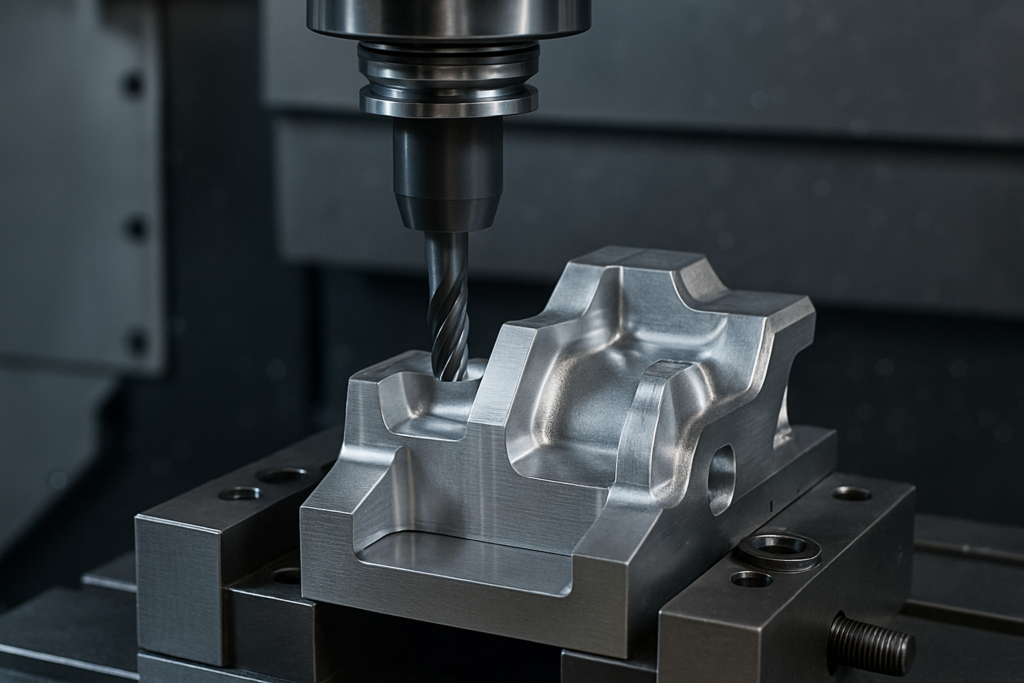
This is the main production stage of the CNC machining process. The CNC machine follows programmed instructions and removes material from the workpiece.
Common CNC operations include:
| Machining Operation | 説明 | 一般的な用途 |
| CNCフライス加工 | Uses rotating cutting tools to remove material | 複雑な形状、スロット、ポケット |
| CNC旋盤加工 | Rotates the workpiece against a cutting tool | Cylindrical components |
| CNCドリル | Creates accurate holes | Fasteners and assemblies |
| CNC研削 | Improves surface finish | High precision components |
Manufacturers may use different machines depending on the part requirements. For example, CNC milling is suitable for complex geometries, while turning is ideal for round components.
ワイセン・プレシジョンは高度な技術を提供する。 CNC加工サービス for businesses requiring accurate prototypes and production parts.
Step 5: Quality Inspection and Testing
Advanced inspection methods help manufacturers maintain strict quality standards. Companies can also review our precision machining solutions to understand how accuracy is maintained throughout the production process.
Quality control may include:
- Dimensional measurement
- 表面仕上げ試験
- Tolerance verification
- Visual inspection
- 機能テスト
Advanced inspection equipment such as coordinate measuring machines (CMM) helps manufacturers verify extremely precise measurements.
Inspection ensures that finished parts perform correctly before delivery.
Step 6: Surface Finishing and Final Processing
Some CNC machined parts require additional finishing processes after machining. Surface treatment improves appearance, durability, corrosion resistance, or performance.
Common finishing options include:
- 陽極酸化処理
- パウダーコーティング
- 研磨
- Plating
- 熱処理
The correct finishing method depends on the material and application requirements.
For example, aluminum components may receive anodizing for better protection, while steel parts may require coating to prevent corrosion.
Benefits of CNC Manufacturing Process
CNC manufacturing provides better accuracy and repeatability compared with traditional methods. For more information about different production methods, read our guide on CNC machining capabilities and applications.
High Accuracy
CNC machines follow programmed instructions with exceptional precision. This makes them suitable for industries where small measurement differences can affect performance.
Consistent Production Quality
Once a CNC program is created, manufacturers can produce identical parts repeatedly. This is especially useful for large production orders.
Complex Part Production
CNC technology allows manufacturers to create detailed designs that would be difficult or impossible to produce manually.
Reduced Human Error
Automation reduces mistakes caused by manual machining and improves overall production reliability.
Factors That Affect CNC Machining Quality
Several factors influence the final quality of CNC machined parts.
材料特性
Different materials react differently during machining. Hard materials may require slower cutting speeds and specialized tools.
Machine Condition
Regular machine maintenance helps maintain accuracy and prevents production issues.
ツール選択
The right cutting tools improve surface finish, machining speed, and tool life.
Programming Accuracy
Poor programming can lead to incorrect dimensions, longer production times, or damaged components.
CNC Machining Process Timeline
The production timeline depends on part complexity, material, quantity, and finishing requirements.
| Production Stage | Estimated Time Factors |
| CAD Design | Depends on design complexity |
| CAMプログラミング | Based on machining requirements |
| マシンセットアップ | Depends on tooling and material |
| 機械加工 | Depends on part size and operations |
| Inspection and Finishing | Depends on quality requirements |
A simple prototype may take a short time, while complex production parts require more planning and testing.
様々な産業におけるCNC加工の応用
CNC machining is widely used across aerospace, automotive, medical, and electronics industries. Businesses interested in custom component production can learn more about our custom CNC parts manufacturing services.
航空宇宙産業
Aircraft manufacturers use CNC machining for lightweight and strong components that require strict tolerances.
自動車産業
Automotive companies use CNC manufacturing for engine parts, transmission components, and prototypes.
Medical Industry
Medical equipment manufacturers rely on CNC machining for precise surgical tools and device components.
エレクトロニクス産業
CNC processes help produce housings, connectors, and precision components for electronic products.
You can also read more about related manufacturing topics through Yicen Precision’s CNC machining guides to improve your understanding of modern production methods.
How Yicen Precision Supports CNC Manufacturing Projects
Choosing the right manufacturing partner is important for achieving reliable results. Yicen Precision combines advanced CNC equipment, skilled engineers, and quality control processes to support prototype development and production manufacturing.
The company helps customers with:
- CNCフライス加工
- CNC旋盤加工
- 試作加工
- 受注生産
- Quality inspection
From initial design review to final production, professional CNC support helps reduce manufacturing challenges and improve product quality.
CNC Machining Process vs Traditional Machining
CNC machining provides several improvements compared with manual machining methods.
| 特徴 | CNC加工 | 伝統的な機械加工 |
| 精度 | Very high precision | Depends on operator skill |
| 再現性 | Excellent consistency | More variation |
| 生産スピード | Faster for repeated jobs | 遅い |
| Complex Designs | Suitable for advanced shapes | Limited by manual control |
結論
The CNC machining process connects digital engineering designs with real-world manufactured components. From CAD modeling and CAM programming to machining, inspection, and finishing, every stage affects the final quality of a part.
A reliable CNC machining workflow helps businesses produce accurate, durable, and consistent components for different applications. With advanced technology and professional manufacturing support, companies can transform complex designs into high quality finished products.
Yicen Precision provides complete CNC machining solutions for businesses looking for precision manufacturing, prototypes, and production-ready components.
よくある質問
What are the main CNC machining steps?
The main CNC machining steps include CAD design, CAM programming, material preparation, machine setup, machining, inspection, and finishing. Each stage helps create accurate finished components.
How long does the CNC machining process take?
The production time depends on part complexity, material, quantity, and finishing requirements. Simple parts may be completed quickly, while complex components need more programming and inspection time.
What materials can be used in CNC machining?
CNC machines can process many materials including aluminum, stainless steel, titanium, brass, plastics, and other engineering materials based on project needs.
Why is CNC machining used in manufacturing?
CNC machining is used because it provides high accuracy, repeatable results, faster production, and the ability to create complex parts for different industries.
What is the difference between CAD and CAM in CNC machining?
CAD is used to create the digital design of a part, while CAM converts that design into machine instructions that control CNC equipment during manufacturing.
Yicen精密エンジニアリングチームによる執筆。. 当社は、自動車、医療、半導体分野のお客様向けに精密部品を加工し、公差管理と品質工学に10年以上にわたり取り組んできました。 Yicen Precisionは深センで300台以上の工作機械を稼働させており、ISO 9001:2015、ISO 13485、ISO 14001、およびIATF 16949の認証を取得しています。また、CMMおよびXRFを用いた検査を実施しています。当社の 高精度CNC加工サービス または 当社のエンジニアまでお問い合わせください.