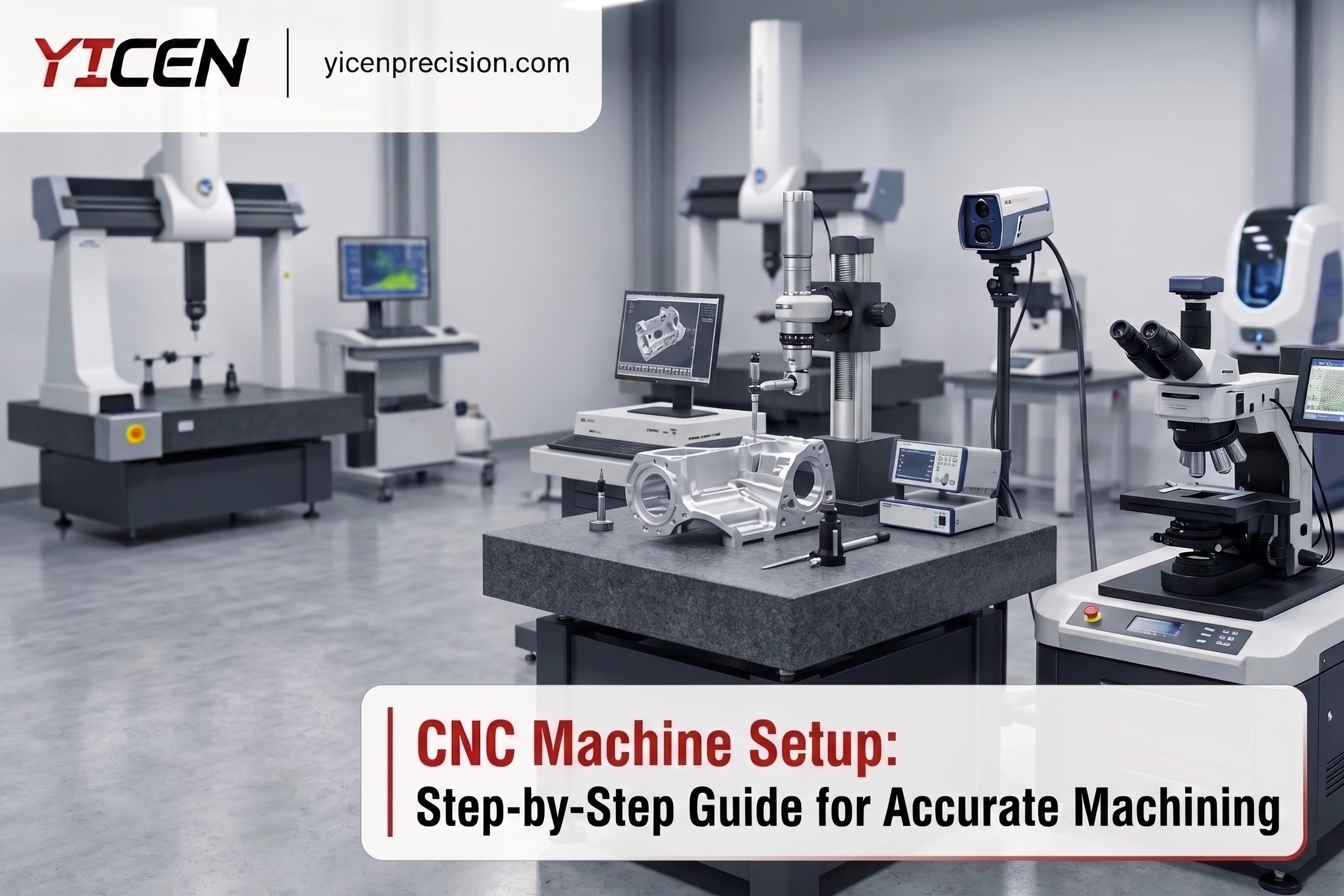
CNC Machine Setup: Step-by-Step Guide for Accurate Machining

あらゆる規模の企業にとってシンプルで簡単にご利用いただけるよう設計された専用サービスにより、業務効率の改善、コストの最適化、ブランド・エンゲージメントの向上を実現します。

目次

I want to create the same image with different title and different bckgroung are you do that Title: CNC Machine Setup: Step-by-Step Guide for Accurate Machining

What is CNC machine setup and why is it important? What are the main steps involved in the CNC setup process? How do machinists prepare CNC machines before production? What tools, fixtures, and measurements are required for proper CNC machine preparation? How does correct setup improve machining accuracy and reduce errors?

CNC machine setup is the process of preparing a CNC machine, workholding equipment, cutting tools, programs, and material before machining begins. A proper CNC setup process ensures that the machine produces accurate parts, maintains consistent quality, reduces material waste, and improves production efficiency. From selecting the correct tools to verifying machine coordinates, every setup step directly affects the final machining result.

CNC machining depends heavily on precision. Even a small setup mistake, such as incorrect tool offsets or improper fixture alignment, can create dimensional errors, surface finish problems, or production delays. Professional manufacturers follow structured CNC setup steps to achieve reliable results for prototypes, small batches, and high-volume manufacturing.

What Is CNC Machine Setup?

CNC machine setup is the preparation stage before a machining operation starts. During this process, machinists configure the machine according to the requirements of a specific part design. The setup includes loading the CNC program, installing cutting tools, securing raw material, setting work coordinates, and verifying machining parameters.

At Yicen Precision, accurate preparation is an essential part of delivering reliable CNC manufacturing solutions. Their machining expertise combines advanced equipment, skilled operators, and quality control procedures to maintain consistent part accuracy.

For businesses looking for professional manufacturing support, CNC加工サービス provide a complete solution from design review to precision production.

Why Proper CNC Setup Matters

A well-planned CNC machine setup provides several advantages:

  • Improved dimensional accuracy
  • Reduced machining errors
  • Better surface finishes
  • Lower material waste
  • Faster production cycles
  • Increased tool life
  • Safer machine operation

A poorly prepared CNC machine can cause tool breakage, incorrect cuts, machine downtime, and expensive rework. Professional machinists focus on setup accuracy because it creates the foundation for successful machining.

CNC Setup Process: Step-by-Step Guide

The CNC setup process follows a structured workflow. While exact procedures may vary depending on the machine type, material, and part design, most professional operations follow similar preparation methods.

CNC Setup Step目的Key Considerations
Review CAD/CAM programUnderstand machining requirementsConfirm dimensions, tolerances, and tool paths
Prepare raw materialEnsure correct workpiece positioningCheck size, quality, and surface condition
Install fixturesSecure the material properlyMaintain stability and alignment
Load cutting toolsPrepare machining equipmentVerify tool type, size, and condition
Set machine coordinatesEstablish accurate reference pointsCheck work offsets and zero positions
Run test operationVerify machining accuracyDetect programming or setup issues

Step 1: Review the CNC Program and Part Requirements

Before starting the machine, machinists review the CNC program generated from CAD/CAM software. This includes checking tool paths, cutting speeds, feed rates, machining operations, and required tolerances.

The operator must confirm that the program matches the engineering drawing and manufacturing requirements. Any programming mistake discovered during this stage can prevent costly errors during production.

For complex components, manufacturers often combine CNC machining knowledge with advanced production methods such as precision CNC milling services to achieve detailed geometries and tight tolerances.

Step 2: Prepare the CNC Machine and Work Area

CNC machine preparation begins with inspecting the machine condition. Operators check:

  • Machine cleanliness
  • Lubrication levels
  • Coolant supply
  • Tool holders
  • Work area safety

The machine table and fixtures must be clean because even small particles can affect alignment. Proper preparation helps maintain repeatable accuracy throughout the machining process.

Step 3: Install and Secure the Workpiece

Workholding is one of the most important parts of CNC setup. The raw material must be positioned securely using fixtures, clamps, vises, or specialized holding systems.

Incorrect positioning can cause vibration, movement, and inaccurate cuts. The machinist must ensure that the workpiece is firmly held while still allowing proper tool access.

For projects requiring different materials and production requirements, manufacturers may combine CNC capabilities with custom manufacturing solutions to achieve the required results.

Step 4: Select and Install Cutting Tools

The correct cutting tools are selected based on material type, machining operation, and required surface quality.

Common CNC cutting tools include:

  • エンドミル
  • ドリル
  • Inserts
  • フェイスミル
  • リーマー

Each tool must be installed correctly and measured accurately. Tool length offsets and diameter measurements are entered into the CNC controller to ensure the machine follows the programmed tool path correctly.

Step 5: Set Work Coordinates and Machine Offsets

Coordinate setup allows the CNC machine to understand the exact location of the workpiece. Operators establish the work zero point and configure offsets before machining begins.

Accurate coordinate setting is critical because CNC machines rely on programmed coordinates to control movement. Incorrect offsets can result in damaged tools, incorrect dimensions, or rejected parts.

Step 6: Perform a Test Run

Before full production begins, machinists often perform a dry run or test cut. This allows them to confirm:

  • Tool movement
  • Program accuracy
  • Clearance areas
  • Cutting sequence
  • Machine response

Testing reduces risks and ensures that the final machining operation runs smoothly.

CNC Machine Preparation Checklist for Better Results

Professional CNC operators follow detailed preparation routines to maintain quality and efficiency.

Preparation AreaInspection Details
Machine conditionCheck lubrication, coolant, and cleanliness
ツールConfirm tool type, sharpness, and measurements
素材Verify dimensions and correct positioning
ProgramReview code and machining parameters
Setup verificationConfirm offsets and test operation

Factors That Affect CNC Setup Accuracy

Several factors influence the quality of a CNC machine setup.

Machine Calibration

Regular calibration ensures that machine movements remain accurate. Over time, mechanical wear can affect positioning precision, making calibration necessary.

Tool Measurement Accuracy

Incorrect tool measurements are one of the most common causes of machining errors. Professional manufacturers use precise measuring equipment to verify tool dimensions.

Fixture Stability

A stable fixture prevents movement during cutting operations. The stronger and more accurate the workholding system, the better the machining results.

Operator Experience

Experienced machinists understand how different materials, tools, and machine settings affect production. Human expertise remains an important part of achieving high-quality CNC results.

CNC Machine Setup for Different Machining Applications

Different CNC operations require different setup approaches.

CNC milling setups typically focus on multi-axis movement, fixture positioning, and tool selection. CNC turning setups require proper chuck alignment, cutting insert selection, and workpiece balancing.

Manufacturers producing prototypes may require flexible setups that allow quick changes, while mass production environments focus on repeatability and efficiency.

Businesses requiring prototype development can benefit from CNC prototyping services because these services allow designs to be tested before large-scale production.

How CNC Setup Improves Manufacturing Quality

A reliable CNC setup process improves every stage of production. It helps manufacturers maintain consistent dimensions, reduce defects, and achieve better surface finishes.

Modern CNC manufacturers also combine setup accuracy with inspection processes, including dimensional testing and quality verification. This approach ensures that finished components meet engineering specifications.

Common CNC Setup Mistakes to Avoid

Some frequent CNC setup problems include:

  • Incorrect work zero positioning
  • Using unsuitable cutting tools
  • Poor fixture installation
  • Skipping test runs
  • Incorrect speed and feed settings
  • Ignoring tool wear

Avoiding these mistakes improves productivity and reduces unnecessary production costs.

最終的な感想

CNC machine setup is the foundation of accurate and efficient machining. A successful setup requires careful preparation, correct tooling, precise measurements, and proper verification before production begins.

By following professional CNC setup steps, manufacturers can achieve better accuracy, reduce machining problems, and produce high-quality components consistently. Whether producing prototypes or complex production parts, a reliable CNC preparation process plays a major role in machining success.

よくある質問

What is CNC machine setup?

CNC machine setup is the process of preparing a CNC machine before machining begins. It includes installing tools, securing materials, setting coordinates, loading programs, and verifying machine accuracy. A proper setup ensures reliable and precise manufacturing results.

How long does CNC machine setup take?

The setup time depends on the part complexity, machine type, tooling requirements, and production volume. Simple jobs may require minutes, while complex multi-axis machining setups can take several hours.

What are the main CNC setup steps?

The main CNC setup steps include reviewing the program, preparing the machine, installing fixtures, loading tools, setting work offsets, and performing a test run. These steps help ensure accurate machining performance.

Why is CNC setup important for machining accuracy?

CNC setup directly affects part quality because incorrect positioning, tool measurements, or machine settings can create errors. Proper preparation reduces defects and improves consistency during production.

Can CNC setup reduce manufacturing costs?

Yes, an efficient CNC setup reduces waste, prevents tool damage, minimizes rework, and improves production speed. Better preparation helps manufacturers achieve higher productivity with fewer errors.

私たちとつながる

コンセプトを精密部品に変える

私たちは、お客様のアイデアを比類のないスピードと精度で、高品質で機能的な部品に変換することを専門としています。高度な技術と熟練した職人技で、最も複雑な仕様を満たす部品を作り出します。

お問い合わせ
12時間以内の迅速な対応を保証
🔐 すべてのアップロードは安全かつ機密です。
私たちとつながる

コンセプトを精密部品に変える

私たちは、お客様のアイデアを比類のないスピードと精度で、高品質で機能的な部品に変換することを専門としています。高度な技術と熟練した職人技で、最も複雑な仕様を満たす部品を作り出します。

お問い合わせ
12時間以内の迅速な対応を保証
🔐 すべてのアップロードは安全かつ機密です。
イーセン精密のブログ

洞察&記事

エクスペリエンス 機械加工サービス ブログでは、CNC加工、業界動向、製造のヒント、技術の最新情報など、専門家の見識をご紹介しています。
jaJapanese