 コンテンツにスキップ
Aerospace and defense CNC machining operates under requirements that are fundamentally stricter than commercial manufacturing. Tolerances tighten to ±0.005 mm (±0.0002”) on critical features. Materials include titanium, Inconel, and high-strength aluminum alloys that are difficult to machine. Every part requires full traceability, first article inspection (FAI), and compliance with standards like AS9100, ISO 9001, and often ITAR. This guide covers what makes aerospace machining different, which materials and tolerances are involved, the certifications that matter, and how to evaluate CNC suppliers for aerospace and defense work.
A standard aluminum bracket costs $15 to machine at commercial tolerances. The same bracket, machined to aerospace specifications from 7075-T6 with AS9100 documentation, FAI reports, material certification traceability, and surface finish callouts to Ra 0.8 µm, costs $85 or more. The part looks identical. The difference is everything underneath: the process controls, the inspection regime, and the paperwork trail that proves every dimension on every part in every batch.
That cost difference isn’t waste. It’s the cost of certainty. In aerospace and defense, a $15 bracket that’s 0.02 mm out of tolerance can ground a fleet or compromise a weapons system. The aerospace industry consumes approximately 35% of global precision machining capacity for exactly this reason: the consequences of failure justify the investment in precision.
If you’re sourcing CNC machined parts for aerospace or defense applications, this guide explains what your supplier must deliver, and how to verify that they can.
What Makes Aerospace and Defense CNC Machining Different from Commercial Machining?
Aerospace and defense CNC machining differs from commercial work in three fundamental ways: tighter tolerances, more difficult materials, and exponentially more documentation.
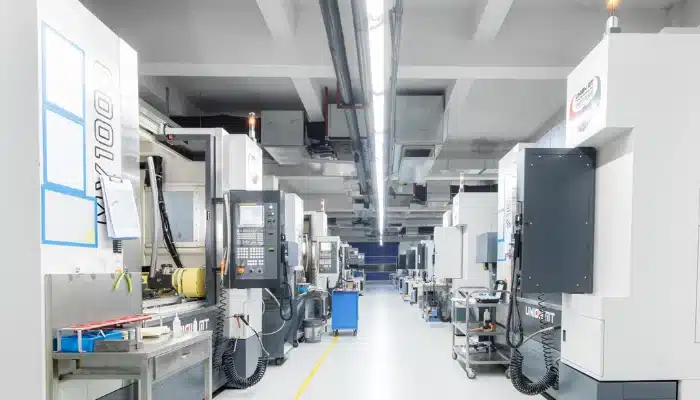
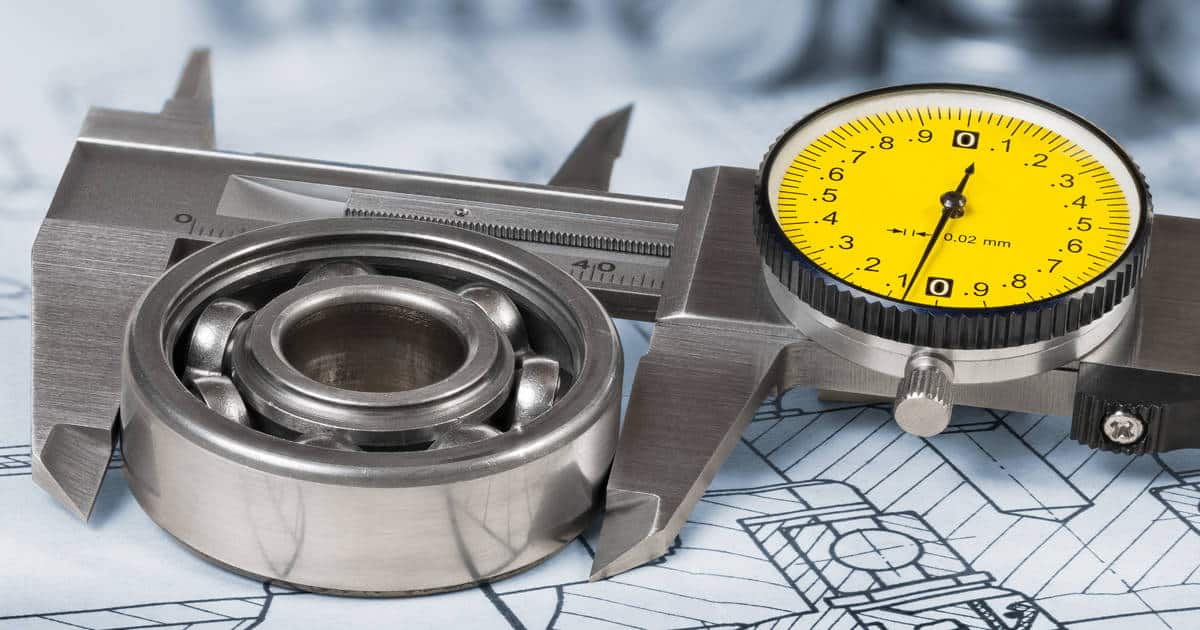
Tolerances are an order of magnitude tighter. Standard commercial CNC加工 typically holds ±0.05 mm (±0.002”) on milled features and ±0.025 mm (±0.001”) on turned diameters. Aerospace applications routinely specify: ±0.0127 mm (±0.0005”) true position for critical fastener hole patterns, ±0.005 mm (±0.0002”) on bearing bore diameters, and ±0.025 mm flatness over 300 mm spans for structural mating interfaces. These requirements demand climate-controlled machining environments, because a 3°C temperature swing causes a 300 mm aluminum part to expand or contract enough to push dimensions out of spec.
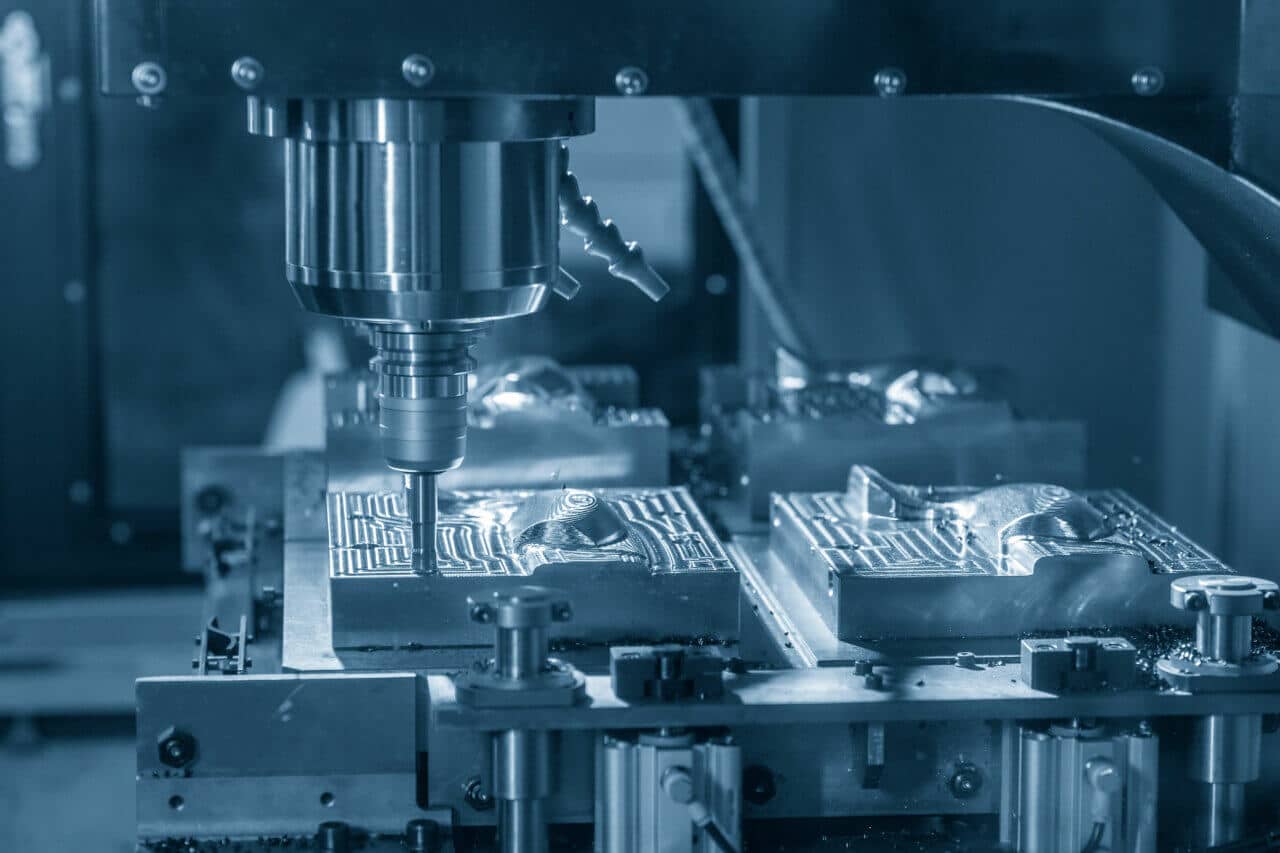
Materials are harder to machine. While commercial work is dominated by aluminum 6061 and mild steel, aerospace parts use titanium alloys (Ti-6Al-4V), nickel-based superalloys (Inconel 718, Hastelloy), high-strength aluminum (7075-T6, 2024-T3), and stainless steels (15-5PH, 17-4PH). These materials require rigid machine setups, coated carbide or ceramic tooling, high-pressure coolant systems, and significantly lower cutting speeds, all of which increase cycle time and cost.
Documentation requirements expand exponentially. Every aerospace part requires material certification traceable to the mill, first article inspection per AS9102, dimensional inspection reports on every critical feature, and quality records that survive for the life of the aircraft (often 30+ years). According to industry analysis, about 25% of on-time aerospace deliveries fail to meet quality standards because the supplier couldn’t deliver both the parts and the documentation to the required standard.
What Certifications Do Aerospace and Defense CNC Suppliers Need?
Certifications aren’t logos on a website. They’re audited quality management systems that directly affect whether your parts will be accepted by prime contractors, military programs, and regulatory bodies.
AS9100D is the foundational quality management standard for aviation, space, and defense. It builds on ISO 9001:2015 with over 100 additional aerospace-specific requirements covering product safety, counterfeit parts prevention, risk management, and configuration control. If your CNC supplier doesn’t hold AS9100D, they cannot supply flight-critical components to any major aerospace OEM.
ISO 9001:2015 is the baseline quality management standard. Every legitimate CNC supplier should hold this certification. It ensures tracked quality processes, calibrated equipment, and documented procedures. For aerospace work, ISO 9001 alone is insufficient; AS9100D is the requirement.
ISO 13485 covers 医療機器 manufacturing. While not aerospace-specific, many defense programs for medical evacuation systems, field hospital equipment, and combat medical devices require suppliers certified to both AS9100 and ISO 13485.
IATF 16949 covers 自動車 quality management. Defense vehicle programs (armored vehicles, military trucks, drone ground control systems) often require IATF 16949 compliance for mechanical components.
NADCAP (National Aerospace and Defense Contractors Accreditation Program) certifies special processes: heat treatment, non-destructive testing (NDT), chemical processing, and coatings. If your parts require any post-machining processing, your supplier’s finishing vendors should hold NADCAP accreditation.
ITAR (International Traffic in Arms Regulations) is required for defense articles and technical data with military application. ITAR-registered suppliers can handle controlled technical data and produce defense components. Non-ITAR suppliers cannot legally receive certain defense drawings.
For buyers evaluating suppliers: ask for certification numbers and expiration dates, not just certification claims. Verify AS9100D through the OASIS database. Check ITAR registration through the DDTC.
What Materials Are Used in Aerospace and Defense CNC Machining?
Material selection in aerospace is driven by strength-to-weight ratio, temperature resistance, corrosion resistance, and fatigue performance. Each material presents specific machining challenges.
Aluminum alloys (7075-T6, 2024-T3, 6061-T6): Aluminum comprises approximately 50% of aircraft structural components due to its excellent strength-to-weight ratio. 7075-T6 is the workhorse for structural brackets, ribs, and frames. 2024-T3 handles fatigue-critical applications. These alloys machine well at high speeds, making them cost-effective compared to titanium and superalloys.
Titanium alloys (Ti-6Al-4V, Ti-6Al-2Sn-4Zr-2Mo): Used for engine components, landing gear, and fasteners where high strength, low weight, and temperature resistance are required. Ti-6Al-4V is the most widely used titanium alloy in aerospace. It’s difficult to machine: low thermal conductivity causes heat to concentrate at the tool tip, work hardening occurs if feed rates are too low, and tool life is 3–5x shorter than on aluminum.
Nickel-based superalloys (Inconel 718, Hastelloy X, Waspaloy): Used in turbine sections where temperatures exceed 600°C. These alloys maintain strength at extreme temperatures but are among the most challenging materials to machine. Tool wear is severe. Machining costs are 5–10x higher than aluminum for similar geometries.
Stainless steels (15-5PH, 17-4PH, 304L, 316L): Used for structural fittings, hydraulic components, and corrosion-resistant applications. Precipitation-hardened grades (15-5PH, 17-4PH) provide high strength with good machinability after heat treatment.
Engineering plastics and composites (PEEK, Ultem, CFRP): Used for electrical insulators, radome structures, and weight-critical interior components. PEEK handles continuous service temperatures up to 250°C. CFRP composites require specialized tooling and dust extraction (see our composite machining guide).
For suppliers, demonstrating material expertise means more than listing alloys on a website. Ask for evidence of recent work in your specific alloy grade, including inspection data and tool wear management strategies.
What Tolerances Does Aerospace CNC Machining Require?
Aerospace tolerances vary by feature criticality. Not every dimension on an aerospace part requires micron-level precision, but the critical ones absolutely do.
Flight-critical features: Hole positions to ±0.0127 mm (±0.0005”) true position. Bearing bores to ±0.005 mm with surface finish Ra 0.4 µm or better. Sealing surfaces to Ra 0.2 µm. These features are verified with CMM inspection and often require statistical process control (SPC) data.
Structural features: ±0.025 mm (±0.001”) on mating surfaces. Wall thickness to ±0.25 mm on thin-walled structures where minimum thickness drives structural integrity. Flatness to ±0.025 mm over 300 mm for assembly interfaces.
General features: ±0.05 mm (±0.002”) for non-critical dimensions. ±0.127 mm (±0.005”) for clearance holes and non-functional features. These use standard CNCフライス加工 そして CNC旋盤加工 tolerances.
Surface finish requirements affect fatigue life, corrosion resistance, and aerodynamic performance. Aerospace surface finishes range from Ra 3.2 µm for non-critical surfaces to Ra 0.4 µm for bearing and sealing surfaces. Lay direction (the orientation of machining marks) is sometimes specified relative to stress fields to prevent crack propagation.
GD&T (Geometric Dimensioning and Tolerancing) per ASME Y14.5 is standard on aerospace drawings. True position, concentricity, perpendicularity, and profile callouts define the functional relationships between features. Your CNC supplier must understand GD&T, not just bilateral tolerances.
5軸CNC加工 is essential for many aerospace parts because it machines complex geometries (airfoils, thin webs, compound-angle features) in a single setup, eliminating the re-fixturing errors that would violate inter-feature tolerances.
What Inspection and Documentation Does Aerospace Machining Require?
The part is only half the deliverable. The documentation package is the other half.
First Article Inspection (FAI) per AS9102 verifies that the production process can consistently produce parts meeting every design requirement. FAI includes complete dimensional reports, material certifications, process verification records, and inspection of every characteristic called out on the drawing. FAI is required on the first production run and any time the process changes.
CMM (Coordinate Measuring Machine) inspection is standard for verifying critical dimensions and GD&T callouts. CMM reports provide 3D measurement data that proves each feature meets its tolerance. Non-contact measurement (optical, laser scanning) supplements CMM for surface profile verification.
Material certification traceability requires a documented chain from raw material mill certificate to finished part. Every piece of material must be traceable to its heat lot, chemistry analysis, and mechanical test data. This traceability must survive for the life of the aircraft.
Non-destructive testing (NDT) may be required for flight-critical components: fluorescent penetrant inspection (FPI) for surface cracks, ultrasonic testing (UT) for internal defects, X-ray for castings and weldments.
Statistical Process Control (SPC) data demonstrates manufacturing stability over production runs. SPC monitors critical dimensions across batches to detect drift before parts go out of tolerance.
How to Choose the Right CNC Supplier for Aerospace and Defense Work
Selecting an aerospace CNC supplier requires evaluating capabilities that go far beyond “we can hold tight tolerances.”
Verify certifications independently. Check AS9100D status in the OASIS database. Confirm ISO 9001 and ISO 13485 through accredited registrar records. Don’t accept self-declarations.
Review their material experience. Ask which titanium or superalloy grades they’ve machined in the past 12 months. Request sample inspection reports for parts in your specific material. A shop that machines aluminum all day may struggle with Ti-6Al-4V despite having the right certifications.
Evaluate their inspection infrastructure. CMM equipment, surface finish measurement, optical comparators, and controlled-environment inspection rooms are baseline requirements. Ask whether inspection is in-house or outsourced.
Assess their documentation capability. Request a sample FAI package. If the supplier can’t produce a clean, complete AS9102 report quickly, they’ll struggle with your production documentation.
Check their machining capability. Multi-axis CNC (4-axis and 5-axis milling) is essential for most aerospace geometries. ワイヤー放電加工機 capability matters for thin-wall and internal-corner features. CNC旋盤加工 with live tooling handles rotational aerospace components.
Consider factory-direct vs. broker models. When you’re sending a $50,000 titanium forging to a supplier, you want to know exactly who is cutting it. Factory-direct manufacturers provide single-point accountability. Brokers introduce communication layers that increase risk on high-value aerospace work.
Yicen Precision for Aerospace and Defense CNC Machining
Yicen Precision operates 300+ CNC machines including multi-axis milling centers, CNC turning, Wire EDM, precision grinding, and CNC drilling in Shenzhen. Factory-direct model with no broker layer.
Certifications: ISO 9001:2015, ISO 13485, ISO 14001, and IATF 16949. Tolerances to ±0.005 mm. 50+ materials including aerospace-grade aluminum, stainless steel, titanium, brass, copper, and engineering plastics. 30+ surface finish options. CMM inspection with FAI reports and full material traceability standard on every order.
Aerospace industry parts are a core capability, alongside automotive, robotics, semiconductor, and medical device components.
結論
Aerospace and defense CNC machining demands more from every link in the supply chain: tighter tolerances, harder materials, stricter documentation, and verified certifications. The suppliers who deliver reliably are the ones with the process controls, inspection infrastructure, and material expertise to back up their claims.
When evaluating a CNC supplier for aerospace work, verify certifications independently, review material-specific experience, assess documentation capability, and confirm inspection infrastructure. The cheapest quote is rarely the best value when a scrapped titanium forging costs more than the entire machining contract.
即時見積もり from Yicen Precision for aerospace and defense CNC machining. 300+ machines, 50+ materials, tolerances to ±0.005 mm, CMM inspection with FAI reports standard. ISO 9001, ISO 13485, IATF 16949 certified. Factory-direct, no middlemen.
よくある質問
What certifications are required for aerospace CNC machining?
AS9100D is the foundational quality management standard for aviation, space, and defense. It builds on ISO 9001:2015 with over 100 additional aerospace requirements. ITAR registration is required for defense articles. NADCAP accreditation covers special processes like heat treatment and NDT. Your supplier should provide certification numbers and expiration dates for independent verification.
What tolerances does aerospace CNC machining require?
Tolerances vary by feature criticality. Flight-critical hole positions require ±0.0127 mm (±0.0005”) true position. Bearing bores require ±0.005 mm with surface finish Ra 0.4 µm. Structural mating surfaces require ±0.025 mm flatness. General non-critical features allow ±0.05 mm to ±0.127 mm.
What materials are most common in aerospace CNC machining?
Aluminum alloys (7075-T6, 2024-T3) comprise about 50% of aircraft structural components. Titanium alloys (Ti-6Al-4V) serve engine and landing gear applications. Nickel superalloys (Inconel 718) handle turbine-section temperatures exceeding 600°C. Stainless steels (15-5PH, 17-4PH) cover hydraulic and structural fittings.
Why does aerospace CNC machining cost more than commercial machining?
Tighter tolerances require climate-controlled environments and more inspection. Difficult-to-machine materials (titanium, Inconel) wear tools 3–10x faster. Comprehensive documentation (FAI, material traceability, SPC data) adds labor. Quality system compliance (AS9100D, NADCAP) requires infrastructure investment. The total cost reflects the certainty that every part meets specification.
How do I verify an aerospace CNC supplier’s certifications?
Check AS9100D status through the OASIS (Online Aerospace Supplier Information System) database. Verify ISO certifications through accredited registrar websites. Confirm ITAR registration through the U.S. State Department’s DDTC. Request physical copies of certificates with registration numbers and expiration dates.

 Japanese
  English
  French
  Spanish
  German
  Portuguese