 Zum Inhalt springen
Introduction to Drilling Jigs
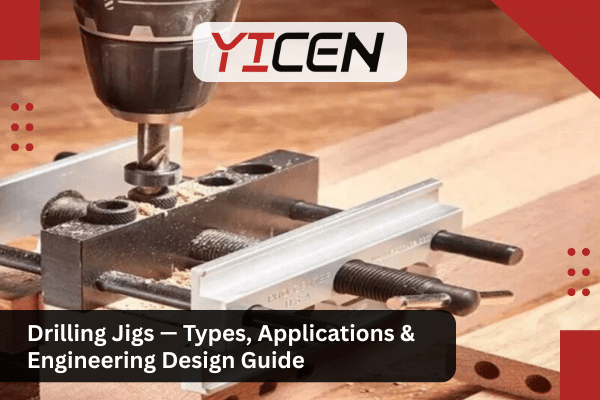
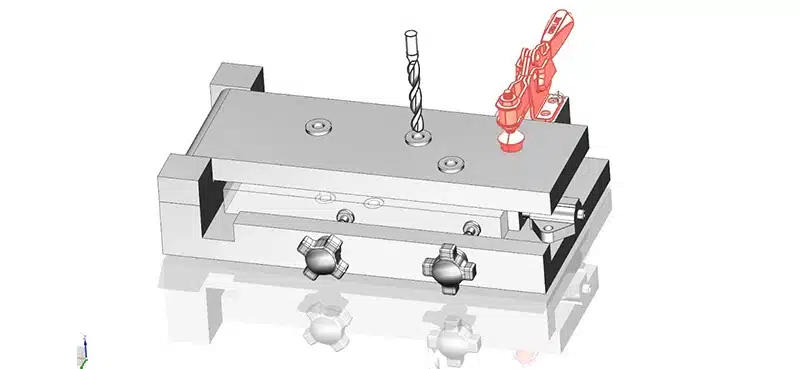
A drilling jig is a specialized tool used to guide the drill bit during drilling operations, ensuring precise hole placement, alignment, and diameter. It holds the workpiece in a fixed position while providing guidance to the cutting tool. Drilling Jigs are designed for applications that require high accuracy, repeatability, and consistency, especially in industries like automotive, aerospace, and electronics manufacturing.
Purpose in Machining
The primary purpose of a drilling jig is to ensure that the tool follows a predetermined path, preventing misalignment and ensuring holes are drilled at the exact location, depth, and angle. This accuracy is crucial in high-precision manufacturing processes where even the slightest variation could lead to part failure or rework.
How It Differs from General Jigs & Fixtures
While general jigs & fixtures guide the tool and hold the workpiece, a drilling jig is specialized for guiding the drill bit, ensuring it stays aligned with the workpiece and drills precisely at the required spots. Unlike fixtures that simply hold the part in place, drilling jigs actively guide the cutting tool to achieve exact hole patterns, making them essential in operations like drilling, reaming, and tapping.
Jig & Fixture for Drilling Machine — Key Differences
- Jig guides the tool
A drilling jig includes drill bushings or other guiding features that directly influence the movement of the tool. It ensures that the cutting tool follows the correct path, ensuring precision during the drilling process. - Fixture only holds the workpiece
In contrast, a fixture serves only to secure the workpiece. It does not guide the tool, but ensures the part remains stable in the correct orientation during machining. Fixtures are often used for operations like milling, Drehen, or grinding, where the tool is guided by the machine rather than the fixture itself.
Why Drilling Requires Special Jigs
- Hole accuracy
A drilling jig ensures that the drill bit remains in the precise position required to create accurate holes. This level of precision is critical, especially in industries where parts must meet tight tolerance specifications. - Positional repeatability
In manufacturing environments where identical parts need to be produced in high volumes, drilling jigs ensure that each hole is drilled in exactly the same location every time, ensuring consistency across the production run. - Tool alignment
Drilling jigs help maintain proper tool alignment, which is especially important when working with multi-axis machines or complex geometries. Proper tool alignment reduces the risk of errors, tool wear, and part distortion. - High-volume production consistency
For mass production environments, drilling jigs are essential for ensuring that the drilling process is repeatable, reducing setup time and increasing production speed without compromising quality.
Essential Elements of Drilling Jigs
Jig Body
The body of a drilling jig is typically made of durable materials like steel, aluminum, or cast iron and serves as the framework for all other components. The jig body is designed to securely hold the workpiece in place and maintain stability during the drilling process.
Locating Devices (3-2-1 for Drilling Setups)
Locating devices are used to position the workpiece within the jig. The 3-2-1-Prinzip is often applied, where three points control the part’s position in space. This principle ensures that the workpiece is held in the correct position without unnecessary movement during the drilling operation.
Clamping Devices
Clamping devices securely hold the workpiece in place, preventing any movement or deformation during the drilling process. These clamps can be toggle clamps, screw clamps, or pneumatic/hydraulic clamps, depending on the application and the volume of production.
Drill Bushings (Tool Guides)
- Types
Drill bushings are the most important element of a drilling jig. They guide the drill bit to the precise location of the hole, ensuring accuracy. There are several types of drill bushings:
- Standard bushing systems
These are the most commonly used bushings and are often made from hardened steel to resist wear. - Press-fit bushings
These bushings are pressed into the jig body and are used when a more permanent solution is required. - Renewable bushings
Renewable bushings allow for the replacement of worn bushings without needing to replace the entire jig, offering a cost-effective solution for high-volume operations.
- Standard bushing systems
Indexing & Positioning Elements
These elements are used to position the workpiece at different angles or locations for drilling multiple holes on the same part. Indexing systems in jigs can be mechanical or automated, ensuring precise part rotation for multiple-hole drilling operations.
Chip Clearance & Cooling Paths
For efficient drilling operations, it is crucial to have adequate chip clearance and coolant paths. These features prevent clogging from metal chips and help maintain a cool cutting environment, extending tool life and improving machining efficiency.
Types of Drilling Jigs
1. Template Jig
- Simple layout
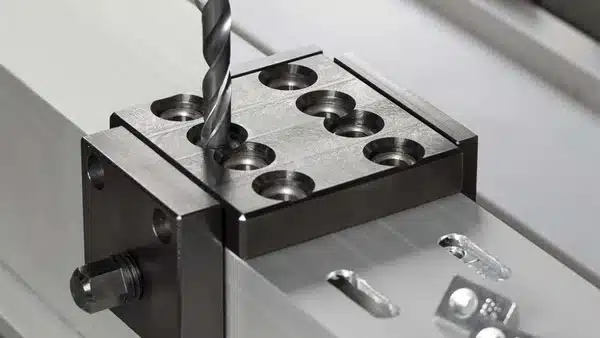
A template jig is one of the simplest types of jigs, consisting of a flat plate with holes where the tool guides through. It is best suited for light drilling operations where the holes need to be drilled in specific, repeatable locations.
2. Plate Jig
- Most common
A plate jig includes a base plate with drill bushings mounted to guide the tool. It is widely used for drilling holes in large parts, ensuring precise hole spacing and alignment.
3. Channel Jig
- U-shaped body
This jig has a U-shaped body that holds long or rectangular parts securely. The tool is guided through a bush within the channel, ensuring accuracy when drilling along the length of the part.
4. Leaf Jig
- Hinged leaf for loading/unloading
The leaf jig includes a hinged part that allows for easy loading and unloading of workpieces. It is often used in assembly lines or environments where quick changeovers are required.
5. Box Jig
- Encloses the workpiece
A box jig completely encloses the workpiece, providing multiple points of contact for clamping. This jig is used for multi-sided drilling or when the workpiece needs to be drilled at different angles.
6. Modifiable / Universal Jigs
- Adjustable guides
These jigs are designed for flexibility, with adjustable guides that make them suitable for different workpieces. They are ideal for low-volume Bearbeitung where quick adjustments are needed.
7. Indexing Jigs
- For drilling in multiple angular positions
Indexing jigs allow for precise part rotation, enabling the drilling of multiple holes at different angles on the same part. These jigs are essential when drilling complex hole patterns on a single workpiece.
8. Trunnion Jigs
- Rotatable
Used for large or complex components, trunnion jigs allow the workpiece to rotate, making it easier to access different surfaces during the drilling process.
9. Drill Bush Jig (For Precision Tooling)
- Präzisionswerkzeuge
These jigs are designed for high-precision drilling applications where exact tool guidance is necessary. They are used for tooling operations that require extreme accuracy.
Applications of Drilling Jigs
Automotive Component Drilling
Drilling jigs are essential in the automotive industry for creating precise hole patterns in components such as engine blocks, suspension parts, and chassis.
Aerospace Hole Patterns
In aerospace manufacturing, drilling jigs ensure that critical parts like wing spars, fuselage sections, and engine mounts have the correct hole patterns for assembly and performance.
Electronics & Small Parts
Drilling jigs are used for precise hole drilling in small components like circuit boards, connectors, and other electronic devices.
Structural Fabrication
In the construction and heavy machinery sectors, drilling jigs are used for drilling holes in structural components, ensuring proper alignment for bolting and welding.
Batch Production of Mechanical Parts
For batch production runs, drilling jigs provide the consistency and accuracy needed for high-quality parts, making them ideal for mass production environments.
CNC + Manual Drilling Machines
Drilling jigs are employed in both CNC and manual drilling machines to ensure that parts are held securely and that the drill bit follows the correct path.
High-Volume Repetitive Hole Drilling
Drilling jigs are indispensable in industries where parts are produced in high volumes with identical drilling patterns, such as automotive manufacturing or aerospace production.
Design Considerations for Drilling Jigs (Engineer-Level)
Determine Hole Requirements
- Size, Tolerance, True Position, Hole Depth
The first step in designing a drilling jig is to clearly define the hole specifications. This includes determining the required hole diameter, tolerance, exact position, and depth to ensure that the drilling operation meets the manufacturing requirements.
Analyze Drilling Forces
- Axial Force, Radial Force
Understanding the Schneiden forces at play during drilling is essential. Axial and radial forces affect the positioning and clamping of the workpiece. Properly designing for these forces ensures the jig can maintain stability and prevent workpiece movement.
Anwendung des 3-2-1-Ortungsprinzips
- Workpiece Stability
The 3-2-1 principle is used to position the workpiece in a jig to prevent any movement during the operation. This principle ensures that the workpiece is securely held and accurately aligned.
Select Clamping Devices
- Toggle, Swing, Screw, Hydraulic/Pneumatic Clamps
Selecting the correct clamping devices is critical to ensure the workpiece is securely held during the operation. Options include toggle clamps for quick and easy setups, or hydraulic and pneumatic clamps for high-volume operations.
Bushing Selection
- Fixed, Renewable, Slip, Liner Bushings
Choosing the appropriate bushings for guiding the tool through the workpiece is vital. Fixed bushings are permanent, renewable bushings can be replaced after wear, and slip bushings offer additional flexibility in tool guidance.
Provide Chip Removal
- Holes, Slots, Coolant Paths
Effective chip removal is critical to maintaining a clean work environment and ensuring that the cutting tool performs at its best. Coolant paths help reduce tool wear and prevent overheating during drilling.
Ease of Loading/Unloading
- Ergonomics, Operator Safety
Jigs should be designed with easy loading and unloading in mind, reducing operator fatigue and increasing productivity. Safety features such as guards and ergonomic designs also play a significant role in reducing workplace accidents.
Drill Bushings — Complete Guide
Purpose of Drill Bushings
Drill bushings guide the drill bit to the exact location on the workpiece. They are inserted into the jig body and provide a precise drilling path, ensuring the drill bit does not wander or misalign during the drilling operation.
Types of Bushings
- Press-fit, Slip/Renewable, Liner, Screw-in, Quick-change
Each type of bushing is designed for different applications. Press-fit bushings are permanent, while renewable and slip bushings allow for easy replacement. Quick-change bushings are used when rapid tool changes are required.
Bushing Materials
- Hardened Steel, Carbide, Sleeve Inserts
Bushings are made from Materialien like hardened steel or carbide to withstand the wear and tear of high-speed drilling operations. Sleeve inserts offer a cost-effective way to replace worn bushings without replacing the entire jig.
Bushing Tolerances & Fit
The tolerance and fit of the bushing are crucial to ensuring accurate hole placement. Loose bushings can cause tool misalignment, while overly tight bushings can lead to tool binding.
Drilling Jig Examples (with Use Cases)
Plate Jig for Automotive Bracket
A plate jig holds an automotive bracket in place while drilling precise holes for mounting. The plate features multiple bushings for precise hole placement on large, flat parts.
Box Jig for Gear Housing
A box jig encloses the workpiece and allows drilling from multiple angles, ensuring that all holes in a gear housing are drilled with consistent depth and positioning.
Channel Jig for Long Shafts
A channel jig holds long, cylindrical parts like shafts securely in place while the drill bit is guided along the length of the part, ensuring precise hole placement.
Leaf Jig for Assembly Line
The leaf jig design allows for easy loading and unloading of parts on an assembly line. It is hinged, providing quick access to the workpiece.
Indexing Jig for Angular Hole Patterns
An indexing jig rotates the workpiece to drill holes at multiple angular positions. It ensures uniformity when drilling holes on cylindrical parts or parts with multiple surfaces to be drilled.
Materials for Drilling Jig Construction
Baustahl
Mild steel is a common material for jigs due to its availability and ease of machining. It is often used for low-cost, low-volume drilling jigs.
Werkzeugstahl
Tool steel is used for high-performance jigs where durability and wear resistance are essential. It is commonly used in high-volume production settings.
Gusseisen
Cast iron offers excellent vibration damping properties, making it suitable for jigs that need to resist machining forces.
Aluminum (for Lightweight Jigs)
Aluminum is used for lightweight jigs, especially in applications where portability and ease of handling are necessary.
Composite/Polymer (3D Printed Jigs)
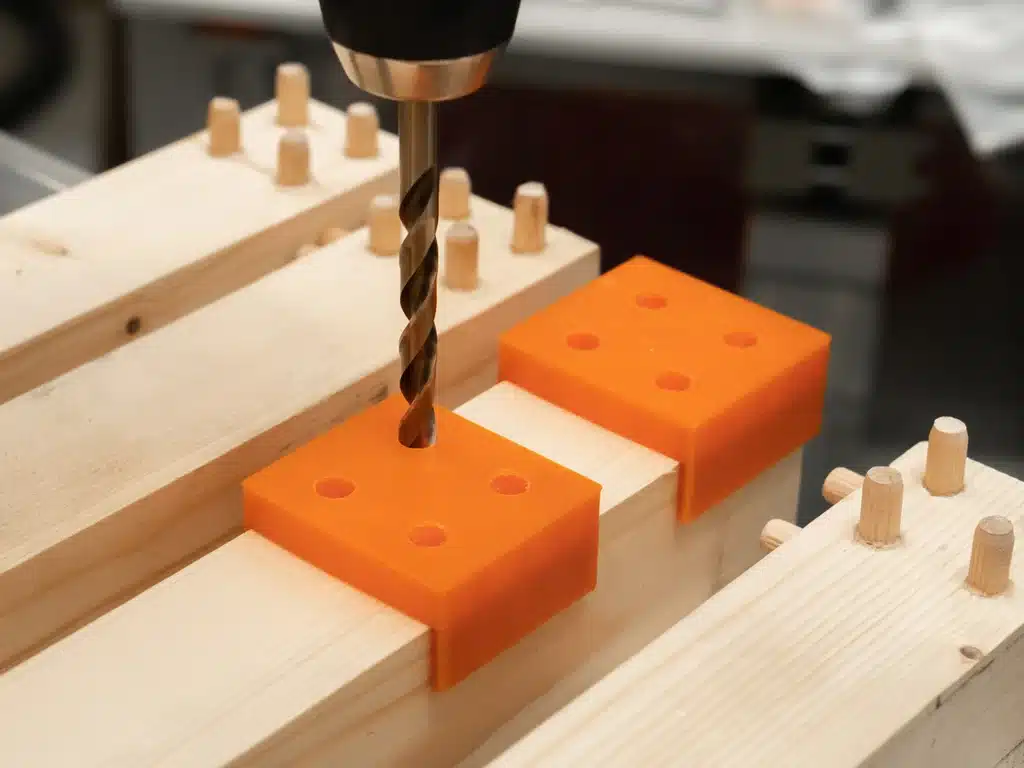
3D-printed composite or polymer materials are increasingly used for low-volume or custom-designed jigs, offering flexibility and rapid prototyping capabilities.
Advantages of Drilling Jigs
Accuracy & Repeatability
Drilling jigs ensure high accuracy and repeatability by securely holding the workpiece and guiding the tool along the correct path.
Faster Production
By reducing the need for manual alignment and tool adjustment, drilling jigs speed up the production process, especially in high-volume environments.
Reduced Skill Requirement
With a jig, even semi-skilled workers can produce parts with high precision, reducing the need for highly skilled machinists.
Multi-Hole Precision
Jigs enable multiple holes to be drilled with precision, reducing errors and ensuring uniformity across a batch of parts.
Better Tool Life (Guided Drilling)
By guiding the tool along the correct path, drilling jigs reduce tool wear and improve tool life, leading to cost savings in the long term.
Drilling Jigs vs Drilling Fixtures
When to Use a Drilling Jig
Drilling jigs are essential when high precision, repeatability, and tool guidance are required, especially for drilling operations involving multiple holes or tight tolerances.
When a Fixture Is Enough
A fixture is sufficient when the focus is on holding the workpiece stable, but tool guidance is not needed. Fixtures are typically used for operations where the tool path is determined by the machine, such as fräsen or turning.
Cost vs Accuracy Consideration
While jigs offer superior accuracy, they come with a higher cost due to their complexity and the need for specific tool guidance systems. Fixtures, on the other hand, are simpler and less costly but offer less precision for tool placement.
Modern Innovations in Drilling Jigs
3D Printed Drilling Jigs (SLA/SLS)
3D printing technologies, such as SLA and SLS, allow for rapid prototyping and the production of custom drilling jigs with intricate designs, reducing lead times and costs.
Modular Quick-Change Jig Systems
Modular jigs allow for fast reconfiguration, making them ideal for high-mix, low-volume manufacturing where different parts require different jig setups.
Smart Jigs with Sensors
Smart jigs equipped with sensors can monitor tool wear, part alignment, and force distribution, providing real-time feedback to improve accuracy and efficiency.
CNC-Integrated Jigs with Positioning Pins
CNC-Maschinen can now integrate jigs with automated positioning pins, enabling faster and more accurate setups without manual intervention.
Common Problems in Drilling Jigs & Fixes
Misalignment
To fix misalignment, ensure that the locating devices are accurately positioned and that the jig body is rigid enough to resist deformation during drilling.
Bushing Wear
Replace worn bushings regularly to maintain tool guidance accuracy. Renewable and slip bushings can extend the life of the jig.
Burr Accumulation
Design jigs with proper chip clearance to prevent burrs from interfering with the drilling process.
Workpiece Slippage
Use reliable clamping devices and check for proper workpiece seating to prevent slippage during drilling.
Jamming During Drill Operation
Ensure that the drill bit and bushings are properly aligned and lubricated to prevent jamming during operation.
Maintenance & Inspection Practices
Bushing Replacement Intervals
Regularly check bushings for wear and replace them when necessary to ensure continued precision during drilling operations.
Surface Cleaning
Clean the jig surfaces regularly to remove debris and prevent it from affecting part accuracy.
Checking Clamp Wear
Inspect clamping devices for signs of wear and ensure they apply consistent force to hold the workpiece securely.
Schmierungspunkte
Proper lubrication of moving parts, such as bushings and clamps, is essential for maintaining smooth operation and extending jig life.
Calibration for High-Precision Drilling
Regularly calibrate jigs to ensure continued accuracy and performance, especially in high-precision drilling operations.
Schlussfolgerung
Drilling jigs are essential for ensuring precise hole placement, tool alignment, and repeatability in drilling operations. They play a crucial role in manufacturing high-quality parts, particularly in high-volume and precision-critical environments.
Jigs are indispensable in modern machining, providing accurate and repeatable drilling patterns that drive efficiency, reduce errors, and improve overall product quality.
Properly designed drilling jigs not only reduce production costs by streamlining operations and minimizing errors but also enhance the overall quality of the finished product.
FAQs
What is the purpose of drilling jigs?
Drilling jigs guide the tool, ensuring accurate hole placement, alignment, and diameter, and hold the workpiece securely during the drilling operation.
How do drill bushings work?
Drill bushings are inserted into the jig and guide the drill bit along a predefined path, ensuring the tool remains on track during the drilling process.
Which jig is best for multi-hole drilling?
The best jig for multi-hole drilling is the plate jig oder indexing jig, which allows for precise drilling at multiple locations on the same part.
Can drilling jigs be used on CNC machines?
Yes, drilling jigs can be used on CNC machines, where they provide precise tool guidance, improving accuracy and reducing setup time.
What materials are best for making drilling jigs?
The best materials for making drilling jigs include Stahl, Aluminium, Werkzeugstahlund composite materials for lightweight, custom-designed jigs.
 German
  English
  French
  Spanish
  Japanese
  Portuguese