
特大サイズの部品の製造は、常に課題を伴ってきました。従来の方法では、大規模な金型製作や長いリードタイムが必要となり、多くの場合、組み立てが必要な部品が出来上がってしまいます。. 大規模3Dプリントサービス 単一のビルドで十分な規模のコンポーネントを生成することで、この方程式を変更する。.
技術は急速に進化し続けています。IMARC Groupによると、世界の3Dプリンティング市場は $ 2024年は285億 また、成長見通しは 1TP4 2033年までに1259億. 。この拡大の主因は産業分野での応用であり、 大判3Dプリンター 航空宇宙、自動車、製造の各分野で、広く導入が進んでいる。.
このガイドでは、企業が大規模な積層造形技術を従来の製造手法とどのように統合しているかについて解説します。 CNC加工サービス 最適な結果を得るための機能。.
大判3Dプリンティング技術の理解
大判3Dプリンター デスクトップ型とは大きく異なります。標準的なマシンが約12インチ立方体の物体を処理するのに対し、産業用システムは各辺が数フィートにも及ぶ部品を製造します。造形可能サイズは通常、 36インチ × 24インチ × 36インチ ~ 10フィート 専用機器用。.
この技術には、それぞれ異なる用途があります。一部のメーカーは、ラピッドプロトタイピングにこの技術を活用しています。また、従来の機械加工では経済的に製造できない最終用途の部品を生産するメーカーもあります。多くの企業では、これらを組み合わせて 大規模3Dプリントサービス と CNC加工サービス 両技術の強みを活かした取り組み。.
Precedence Researchの市場データによると、産業用3Dプリンターは 2024年の市場シェアは77%. 。この優位性は、精度と材料の多様性が求められる過酷な用途にも対応できる同社の能力を反映している。.
大規模印刷における主要技術

ニーズによって適したプロセスは異なります。ここでは、本番環境で実際に効果を発揮する手法をご紹介します。.
溶融堆積モデリング(FDM)
多重伝送装置 依然としてプラスチック部品の主力製造法である。このプロセスでは、 熱可塑性フィラメント 層を重ねていきます。多くの産業用システムでは、最大造形サイズは36インチ×24インチ×36インチに達します。使用される材料には、 ABS、ナイロン、ポリカーボネートそして 炭素繊維複合材料.
FDMは、その簡便さとコスト効率の良さから、企業から高く評価されています。部品は、手の込んだ後処理を必要とせず、そのまま機能試験に使える状態で完成します。これを組み合わせると CNC加工サービス 仕上げ加工を施すことで、FDM部品は驚くほど厳しい公差を実現します。.
ステレオリソグラフィー(SLA)
エスエルエー UVレーザーを用いて液体樹脂を硬化させます。ストラタシス社は、 Neo800+ 2025年3月に発売され、800×800×600 mmの造形領域を備えています。このシステムの印刷速度は 50%の方が速い 従来のモデルよりも、かつ以下の点における精度を維持しつつ 航空宇宙および自動車分野での用途.
その表面仕上げの品質の高さから、SLAは視覚的なプロトタイプや原型製作に広く利用されています。この技術を用いれば、機械から取り出した直後から、量産品として使用できるような仕上がりになる部品を製造できます。.
選択的レーザー焼結(SLS)
SLS サポート構造を必要とせずに粉末を融合させます。この利点により、他の方法では実現不可能な複雑な形状の造形が可能になります。造形プロセス中、部品は周囲の粉末によって完全に支えられた状態で形成されます。.
サポート材の除去が不要なため、人件費の削減と納期の短縮につながります。内部の通路、格子構造、はめ込み式アセンブリも、他の技術で生じがちな制約を受けることなく印刷できます。.
ダイレクトメタルレーザー焼結(DMLS)
DMLSは、高性能用途向けの金属部品を製造しています。米国空軍は3D Systems社に $765万の契約 2025年8月、GEN-IIDMP-1000については、 大判3Dプリンター 軍事用途向けに特別に設計されたものです。.
Metal printing opens possibilities traditional machining cannot touch. Complex cooling channels inside tooling, lightweight aerospace brackets with organic shapes, and patient-specific medical implants all leverage DMLS capabilities.
Binder Jetting
Binder Jetting offers the largest build volumes, reaching 72″ x 48″ x 24″ in some systems. The technology works well for sand casting molds and prototypes requiring massive size. Speed represents another advantage—multiple parts print simultaneously across the build platform.
Industry Applications Driving Growth

Real-world adoption tells the story better than predictions. Let’s look at where 大規模3Dプリントサービス actually make business sense.
航空宇宙製造
について 航空宇宙 3D printing market totaled $3.53 billion in 2024, according to Fortune Business Insights. Projections show growth to $14.53 billion by 2032.
SpaceX established an $8 million licensing agreement with Velo3D in September 2024. The partnership focuses on metal additive manufacturing for rocket components. SpaceX already prints the SuperDraco engine entirely through additive processes—something unthinkable a decade ago.
Weight reduction drives adoption. Large 3Dプリントサービス enable part consolidation that cuts component weight 40-60% compared to traditional manufacturing. GE Aerospace’s LEAP fuel nozzle merges 20 separate pieces into one printed part. That consolidation means fewer potential failure points and simpler assembly.
自動車部門
Automotive manufacturers leverage 大判3Dプリンター for both prototyping and production tooling. The technology accelerates development cycles while reducing costs—two priorities that rarely align in manufacturing.
Fortune Business Insights reports the automotive segment held 25% of the industrial 3D printing market in 2024. Custom tooling, jigs, fixtures, and low-volume production parts represent primary applications.
Integration with CNC加工サービス capabilities proves valuable here. Printed parts often receive CNC machining for critical mounting surfaces and tight-tolerance features. This hybrid approach delivers results faster and cheaper than either technology alone.
Medical and Healthcare
Healthcare applications focus on patient-specific devices and surgical planning models. Anatomical models printed at full scale help surgeons prepare for complex procedures, reducing operating time.
The medical segment shows robust growth projections at 25.33% CAGR through 2030, per Markets and Markets data. Customization drives this growth—every patient’s anatomy differs, making mass production irrelevant for many applications.
Materials for Large Format Production

Material choice determines whether a part succeeds or fails. Engineers need to match material properties to application requirements.
| 材料区分 | Common Types | 代表的なアプリケーション | Price Range per kg |
| エンジニアリングプラスチック | ABS, Nylon, PC, PETG | Functional prototypes, tooling | $50-$200 |
| High-Performance Polymers | PEEK, Ultem | Aerospace, medical devices | $300-$600 |
| 金属合金 | Aluminum, Titanium, Stainless Steel | Aerospace, automotive components | $200-$500 |
| 複合材料 | Carbon Fiber reinforced | Structural parts, high-strength applications | $100-$300 |
Metal materials dominate aerospace applications. Mordor Intelligence reports metal alloys captured 60.5% of aerospace 3D printing revenue in 2024. チタン remains essential for high-temperature applications like combustor liners and turbine blades. The material’s strength-to-weight ratio outperforms alternatives, justifying higher costs.
When Large Format Printing Makes Sense
Not every large part belongs in an additive machine. Understanding the boundaries saves time and money.
Good candidates for large 3D printing services:
- Complex geometries with internal features
- Low to medium volume production (1-500 units)
- Parts requiring rapid iteration during development
- Components where weight reduction justifies higher material costs
- Designs that consolidate multiple assemblies
Better suited for traditional manufacturing:
- Simple geometric shapes
- High volume production (10,000+ units)
- Parts requiring extremely tight tolerances throughout (under ±0.1mm)
- Applications where material cost drives total economics
- Designs already optimized for conventional machining
Sometimes the answer involves both. Print the complex internal structure, then machine the precision mounting surfaces. 易岑精密の integrated capabilities support exactly this workflow.
Common Mistakes That Cost Money
Experience reveals patterns in what goes wrong. Avoiding these issues saves both time and budget.
Underestimating Post-Processing Requirements
Raw printed parts rarely meet final specifications directly. Support removal takes time. Surface smoothing adds labor. Post-processing typically adds 20-40% to base printing costs—yet many budget estimates ignore this reality.
Plan for finishing from the start. Include sanding, tumbling, painting, or CNC加工サービス in both timeline and cost projections. Parts that look complete in the slicer software still need human attention afterward.
Ignoring Print Orientation Effects
Orientation affects everything. Strength can vary 30-50% depending on how layers align relative to loading direction. Surface finish differs dramatically between vertical and horizontal faces. Support structures leave marks that require removal.
Work with your service provider on orientation strategy before committing to production. Sometimes rotating a part 45 degrees eliminates support structures entirely, saving hours of labor and improving final quality.
Selecting Materials Based on Price Alone
Cheapest material rarely delivers best value. A part printed in standard ABS might cost $300, while the same part in carbon fiber nylon runs $800. Yet if the ABS part fails in service and requires redesign, those savings evaporate quickly.
Match material properties to actual application requirements. Thermal resistance, chemical compatibility, UV stability, and mechanical strength all matter depending on use case. Spending more upfront often costs less overall.
コストに関する考慮事項
大規模3Dプリントサービス pricing depends on multiple factors that interact in non-obvious ways.
A typical 12″ x 12″ x 12″ FDM part in engineering plastic runs $300-$500. The same size in DMLS aluminum costs $2,500-$4,000. Post-processing adds 20-40% to base printing costs. These numbers vary based on geometry complexity, material choice, and required finish quality.
Combining technologies often reduces total costs. Printing a near-net shape part then CNC加工 critical features can save 30-60% versus full CNC fabrication from solid stock. The math works because you eliminate massive material waste while maintaining precision where it matters.
Volume economics shift the equation. Single prototypes favor additive manufacturing. Production runs exceeding 1,000 units often justify tooling investment for traditional processes. The crossover point depends on part complexity and design requirements.
Integrating with CNC Machining Services
Hybrid manufacturing leverages both additive and subtractive processes. Real production environments increasingly blend technologies rather than choosing one exclusively.
When to combine technologies:
- Complex internal geometries requiring tight-tolerance external features
- Large parts needing precise mounting surfaces
- Reducing material waste on oversized components
- Achieving surface finishes finer than printing produces
The process typically involves printing parts 1-2mm oversized, then CNC加工 final dimensions and critical surfaces. Companies report 40-60% cost savings versus full CNC machining for large components. That’s not theoretical—those numbers come from actual production data.
易岑精密の integrated capabilities support this hybrid approach. CNC加工サービス options complement additive manufacturing for complete manufacturing solutions. One vendor, one timeline, consistent quality management across processes.
Design Guidelines for Success
Proper design prevents costly failures. These aren’t theoretical recommendations—they’re lessons learned from thousands of builds.
Wall Thickness Parameters
Maintain 1.0-1.5mm minimum for FDM plastics. Metal parts require 0.4-0.8mm minimums. Avoid walls exceeding 10mm to prevent warping—thick sections cool unevenly, inducing internal stresses that manifest as dimensional problems.
Uniform wall thickness works better than varying profiles. When thickness changes are necessary, transition gradually over several centimeters rather than creating sharp steps.
サポート体制戦略
FDM and SLA need supports for overhangs beyond 45 degrees. Orient parts strategically to minimize support material and reduce post-processing time. Every support contact point leaves a mark requiring cleanup.
Design self-supporting features where possible. Chamfers replace vertical walls. Gradual angles avoid support entirely. These adjustments during CAD work save hours during finishing.
Tolerance Expectations
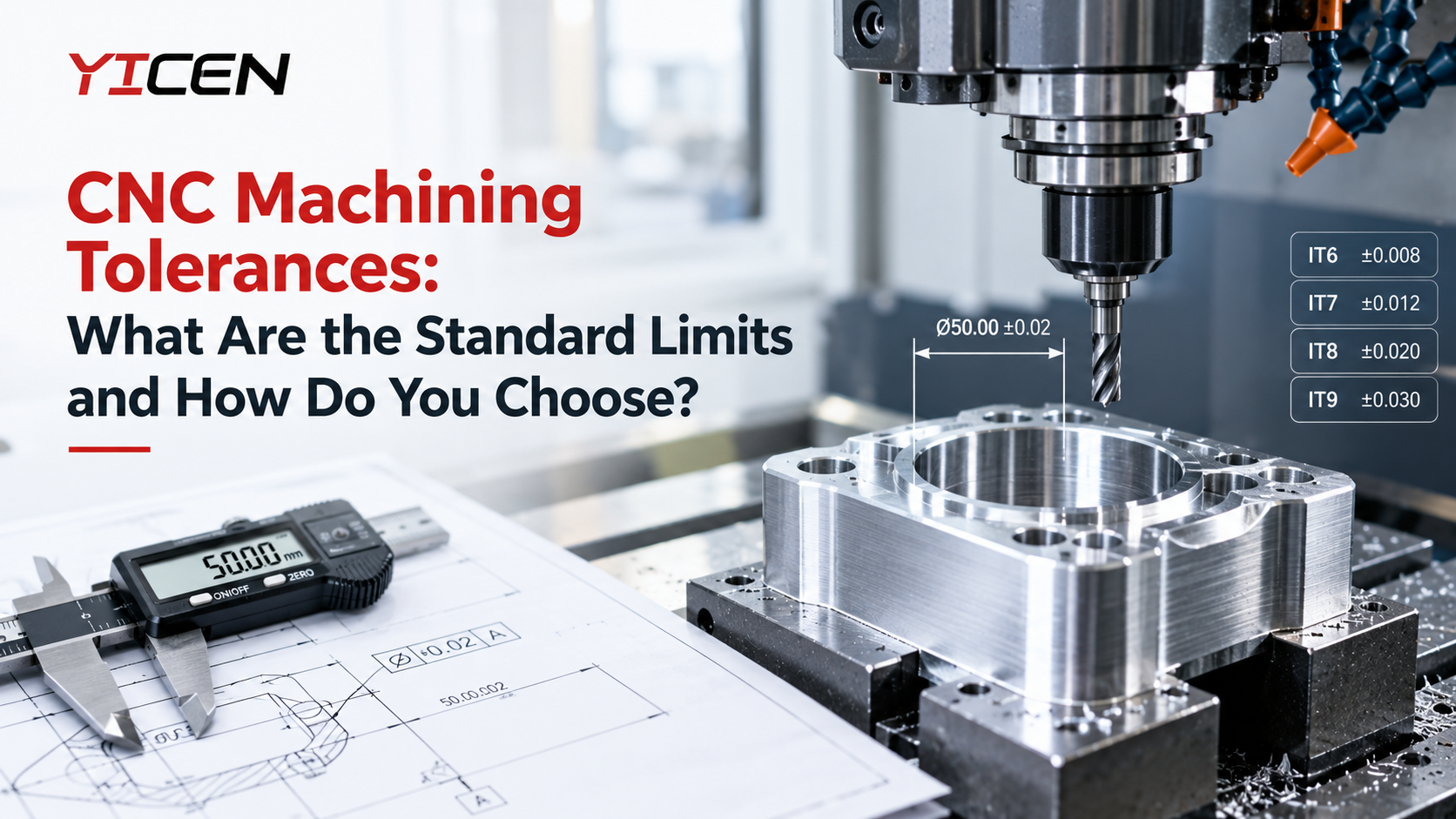
Expect ±0.5mm for FDM, ±0.3mm for SLS, ±0.2mm for SLAそして ±0.1mm for DMLS. CNC加工サービス post-processing tightens tolerances to ±0.05mm or better where specifications demand precision.
Apply tight tolerances selectively. Machining every surface drives costs up unnecessarily. Identify critical dimensions requiring precision, then specify economical tolerances elsewhere.
Strength Considerations
Print orientation affects strength by 30-50%. Parts loaded perpendicular to layer lines show reduced strength. Design accordingly or add ribbing for reinforcement.
Solid infill increases strength but also weight and cost. Strategic infill placement—dense in stressed areas, sparse elsewhere—optimizes the strength-to-weight ratio while controlling material consumption.
Material Selection Deep Dive
Choosing the right material requires understanding how properties translate to real-world performance.
Engineering plastics ような ABSとナイロン handle most prototyping needs. They’re forgiving during printing, reasonably priced, and deliver adequate mechanical properties for testing. PETG offers better chemical resistance when parts contact solvents or oils.
High-performance polymers enter when conditions get extreme. 覗き見 withstands continuous temperatures up to 260°C and resists nearly every chemical. Medical applications favor it for biocompatibility. Ultem brings similar performance with added flame resistance—critical for aerospace interiors.
Metal alloys dominate when strength, stiffness, or thermal properties exceed polymer capabilities. アルミニウム合金 deliver excellent strength-to-weight ratios with good thermal conductivity. チタン costs more but offers superior strength and corrosion resistance. ステンレス balances cost, strength, and environmental resistance.
複合材料 blend characteristics. Carbon fiber reinforced nylon delivers steel-like stiffness at plastic weight. These materials typically cost $100-300 per kg and require specialized print heads, but the performance advantages justify costs in demanding applications.
品質保証基準
Industrial applications demand consistent quality. Certifications indicate established processes rather than marketing claims.
ISO 9001:2015 certification indicates established quality management systems. Aerospace suppliers require AS9100D certification. Medical device manufacturers need ISO 13485 compliance. These aren’t optional for regulated industries—they’re entry requirements.
イーセン精密 maintains ISO 9001:2015, ISO 13485, ISO 14001, and IATF 16949 certifications, ensuring quality across diverse industries. These certifications mean documented processes, regular audits, and continuous improvement programs.
First Article Inspection reports, material certifications, and dimensional inspection data should accompany production parts. This documentation proves compliance and supports traceability requirements in regulated industries.
主な選考基準
Choosing appropriate 大規模3Dプリントサービス requires evaluating several factors that interact in complex ways.
Build volume requirements set the starting point. Measure maximum part dimensions including any supports. Parts exceeding available build volume require segmentation and assembly—possible but adding complexity.
Material properties needed narrow options quickly. Mechanical strength, temperature resistance, and chemical compatibility eliminate unsuitable processes. Match requirements to material datasheets rather than making optimistic assumptions.
Quantity and timeline influence technology choice. Single prototypes tolerate longer print times. Production runs need faster processes. Rush projects pay premium pricing—factor that into decision economics.
表面仕上げに関する要件 determine post-processing scope. As-printed finishes vary dramatically between technologies. エスエルエー delivers smooth surfaces. 多重伝送装置 shows visible layer lines. Budget time and money accordingly.
公差要件 determine if post-machining becomes necessary. Additive processes achieve certain precision limits. Tighter specifications require CNC加工サービス intervention.
Budget constraints ultimately limit options. Balance cost against performance needs. Sometimes good enough delivers better value than perfect.
Service providers offering multiple technologies provide flexibility. Access to both additive and CNC加工サービス capabilities under one roof streamlines production and simplifies project management.
Future Technology Trends
Markets and Markets forecasts continued innovation through 2030. Several developments show genuine promise rather than hype.
Multi-material printing enables simultaneous printing with different materials in single builds. Imagine printing rigid structural elements and flexible hinges in one operation. Early systems demonstrate the concept; broader adoption awaits material development and software refinement.
Increased automation through robotics integration reduces operator involvement. Automated part removal, support breakaway, and quality inspection accelerate throughput while improving consistency. Labor costs drive this trend—machines work continuously without fatigue.
AI-driven optimization applies machine learning to improve print quality and speed. Algorithms predict and prevent failures before they occur. Software suggests optimal orientations and support strategies. These tools evolve rapidly as training datasets expand.
Sustainable materials including recycled and biodegradable filaments gain adoption. Environmental concerns push development, while performance improvements make green materials competitive. The construction sector shows remarkable growth here—the 3D printing construction market reached $53.9 million in 2024, expanding at 111.3% annually according to industry analysis.
結論
大規模3Dプリントサービス continue transforming industrial manufacturing. The technology excels at producing complex geometries, reducing part counts, and accelerating development cycles. Market growth from $ 2024年は285億 toward 1TP4 2033年までに1259億 reflects expanding adoption across industries.
Success requires matching technology to application requirements rather than forcing square pegs into round holes. 大判3Dプリンター offer distinct advantages for specific use cases. Integration with CNC加工サービス capabilities often delivers optimal results, combining additive manufacturing’s design freedom with subtractive precision.
Manufacturers evaluating these technologies should consider build volume needs, material requirements, quality standards, and whether hybrid approaches suit their applications. The right combination of additive and traditional manufacturing creates competitive advantages in today’s fast-paced markets.
大判3Dプリンターでは、最大でどのくらいの大きさのものを造形できますか?
Build volumes vary by technology. FDM systems commonly reach 36″ x 24″ x 36″, with some industrial units printing up to 10 feet in length. Metal DMLS printers typically max out around 9″ x 9″ x 9″ per build. Larger parts require bonding multiple printed sections together.
3DプリントとCNC加工のコストは、どのように異なるのでしょうか?
少量生産(1~100個)の場合、金型費用を含めると、大規模な3Dプリントサービスのコストは、従来の製造方法に比べて40~70%安くなります。大量生産の場合は、従来の方法が有利です。両方の技術を組み合わせたハイブリッドなアプローチは、複雑な部品において最適なコストパフォーマンスを実現することがよくあります。.
3Dプリントされた部品は、従来の製造方法で製造された部品と同等の強度を持つことができるのでしょうか?
はい、適切に設計されていれば可能です。プリントの向きは強度に極めて大きな影響を与えます。層の線に垂直な方向から荷重がかかると、部品の強度は30~50%低下する可能性があります。炭素繊維ナイロンやDMLS用金属などの材料は、適切な向きで正しく設計されていれば、従来の製造方法と同等かそれ以上の強度を発揮します。.
大判印刷の恩恵を最も受けている業界はどこですか?
航空宇宙分野が導入を牽引しており、同分野の市場規模は2024年に$3.53億に達する見込みです。自動車製造業界は25%の市場シェアを占めています。医療、建設、船舶業界では力強い成長が見られます。大型の特注部品や迅速な試作を必要とするあらゆる分野において、大きなメリットが得られます。.
Ready to explore large format 3D printing for your manufacturing needs? Yicen Precision offers comprehensive additive manufacturing combined with precision CNC machining services, providing complete solutions from prototype to production.
参考文献
[1] IMARC Group. (2024). “3D Printing Market: Global Industry Trends, Share, Size, Growth, Opportunity and Forecast 2025-2033.” Retrieved from https://www.imarcgroup.com/3d-printing-market
[2] Fortune Business Insights. (2024). “Aerospace 3D Printing Market Size, Share & Industry Analysis, By Offerings (Printers, Materials, Software and Services), By Printer Technology, By Application, and Regional Forecast, 2024-2032.” Retrieved from https://www.fortunebusinessinsights.com/industry-reports/aerospace-3d-printing-market-101613
[3] Precedence Research. (2025). “3D Printing Market Size, Share, and Trends 2025 to 2034.” Retrieved from https://www.precedenceresearch.com/3d-printing-market
[4] MarketsandMarkets. (2024). “3D Printing Market by Offering (Printer, Material, Software, Service), Process (Binder Jetting, Direct Energy Deposition, Material Extrusion, Material Jetting, Powder Bed Fusion), Application, Technology, Vertical and Region – Global Forecast to 2030.” Retrieved from https://www.marketsandmarkets.com/Market-Reports/3d-printing-market-1276.html
[5] Mordor Intelligence. (2025). “Aerospace 3D Printing Market – Forecasts from 2025 to 2030.” Retrieved from https://www.mordorintelligence.com/industry-reports/3d-printing-in-aerospace-and-defense-market