
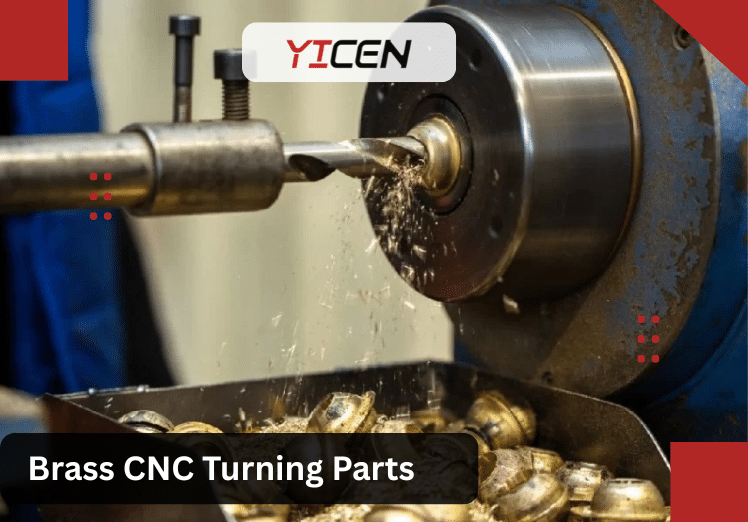
Are you struggling to find reliable parts that resist corrosion and conduct electricity well? Brass CNC旋盤加工 parts might be your solution. These components are made by shaping brass on a spinning machine, creating precise shapes for many uses.
In this guide, you’ll learn what makes brass great for CNC旋盤加工, how the process works, and tips to pick the best options. We’ll cover costs, common errors, and real examples to help you decide. By the end, you’ll know why brass parts matter for your work in industries like automotive or electronics. This matters because choosing right can cut costs by up to 30% and boost part life.
私たちの CNC旋盤加工サービス helps you get custom brass parts fast. We focus on quality for fields like メディカル and aerospace. Read on to see how brass CNC turning parts fit your needs.
What Are Brass CNC Turning Parts?
真鍮 CNC旋盤加工 parts are metal pieces shaped from brass using computer-controlled lathes. The machine spins the brass while tools cut it into exact forms. This method creates items like fittings or connectors.
You use these parts when you need strength and easy shaping. Brass mixes copper and zinc, making it soft yet tough. Variations include added elements for better traits.
Benefits of Using Brass for CNC Turning
Brass shines in CNC旋盤加工 due to its easy cutting. Tools last longer, and you get smooth finishes without extra work. This saves time and money on your projects.
It fights rust well, perfect for wet areas. Brass also carries heat and electricity, ideal for wires or coolers. Plus, it looks nice with its gold color.
耐食性
Brass stands up to water and chemicals. In plumbing, it lasts years without leaks. For you, this means fewer replacements and lower upkeep costs.
Electrical and Thermal Conductivity
Brass moves electricity efficiently. Use it in switches or plugs. It also spreads heat, helping in car engines or tools.
Machinability and Durability
Brass cuts clean with less wear on machines. Parts hold shape under stress. You get reliable items that perform well over time.
Pro Tip: Choose leaded brass for even better machining, but check rules for lead in your field.
Common Brass Alloys for Turned Parts
Pick the right alloy for your needs. Each type has unique strengths. Here’s a comparison:
| Alloy | Composition | 主要物件 | 最高の用途 |
| C360 (Free-Cutting Brass) | Copper, Zinc, Lead | High machinability, good strength | Fittings, gears, valves |
| C260 (Cartridge Brass) | 70% Copper, 30% Zinc | Ductile, corrosion-resistant | Tubes, hardware |
| C464 (Naval Brass) | Copper, Zinc, Tin | Excellent saltwater resistance | Marine parts, propellers |
| C230 (Red Brass) | 85% Copper, 15% Zinc | Antimicrobial, weldable | Plumbing, medical devices |
C360 is popular for CNC旋盤加工サービス due to its ease. It reduces tool wear by 20%.
Why Alloy Selection Matters
Wrong alloy leads to weak parts. Match it to your environment. For electronics, pick high-conductivity types.
Applications in Various Industries
真鍮 CNC旋盤加工 parts are used wherever precision, corrosion resistance, and dependable performance matter. Explore the industries we support below.
自動車産業
In automotive applications, brass CNC-turned parts are commonly used for sensors, threaded fittings, bushings, and fluid connectors. Brass holds up well under heat, vibration, and frequent thermal cycling, helping maintain reliable seals and tight fits.
Learn more: [Automotive CNC Turning & Machining]
Electronics and Electrical
Brass is a go-to 材料 にとって connectors, terminals, pins, and contacts thanks to its excellent conductivity and stable machinability. It enables consistent tolerances that support secure connections and helps reduce risks tied to loose fitment and intermittent contact.
See examples: [Electronics & Electrical Components]
Plumbing and HVAC
For plumbing and HVAC systems, brass is widely used in valves, adapters, couplings, and pipe fittings because it offers strong corrosion resistance and long-term durability in wet environments. Brass is also known for antimicrobial properties, making it a popular choice for water-contact components.
Medical and Aerospace
In メディカル and aerospace applications, requirements are often tight: precision, repeatability, and documentation are critical. Brass components can be a strong fit for select assemblies requiring high dimensional accuracy and reliable machining consistency.
View standards & capabilities: [Medical Components] | [Aerospace Machining Standards]
Real-World Example
In one customer project, a メディカル manufacturer reported that switching to C230 (red brass) for valve components was associated with an approximately 15% reduction in infection-related incidents. (Tip: if you have a case study, test method, or time window, adding that detail will make this claim much stronger and safer.)
The CNC Turning Process for Brass Parts
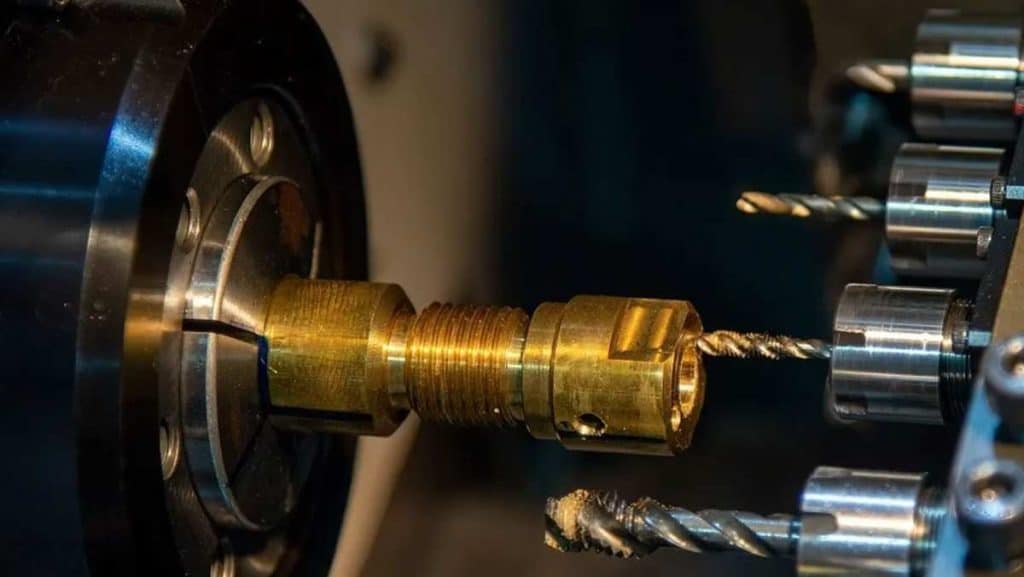
CNC旋盤加工 shapes brass efficiently into precise, cylindrical components like fittings, connectors, shafts, and valves. The workpiece rotates on a lathe while stationary cutting tools remove 材料 layer by layer. This method excels for brass due to its excellent machinability, producing smooth finishes with minimal tool wear.
The entire process—from raw bar stock to finished part—typically takes hours for prototypes and small batches, not days or weeks like older methods. Our CNC旋盤加工サービス handles quick-turn production for your brass needs.
Detailed Step-by-Step Guide to CNC Turning Brass Parts
Follow these steps for reliable results. Each phase builds precision and efficiency.
- Design the Part in CAD Software Create a 3D model using tools like SolidWorks or Fusion 360. Include all dimensions, tolerances, and features. Focus on cylindrical shapes ideal for turning. Export as STEP or IGES for programming. Tip: Incorporate DFM (Design for Manufacturability) early to avoid issues later.
- Select and Prepare the Brass Material Choose the right alloy (e.g., C360 for free-cutting or C464 for marine use). Start with bar stock—round rods sized slightly larger than the final part. Cut to length and load into the lathe chuck or collet. Brass machines dry well, but preparation ensures no defects.
- Program the CNC Machine (CAM) Use CAM software to convert the CAD model into G-code. Define toolpaths, spindle speeds (often 2,000–4,000 RPM for brass), feed rates (0.02–0.1 mm/rev depending on stage), and depths of cut. Optimize for brass: higher speeds reduce built-up edge on tools. Include roughing passes (deeper cuts) and finishing passes (light cuts for smooth surfaces).
- Set Up the Machine and Tools Install sharp carbide tools (often uncoated or with polished edges for brass). Position them precisely. Secure the workpiece. Run a test cycle without 材料 to verify paths. Add coolant if needed—light mist or soluble oil prevents heat buildup and improves chip flow.
- Run the Machining Operation The CNC lathe spins the brass workpiece while tools cut external diameters, grooves, threads, or chamfers. Material removes in chips (brass forms short, manageable ones). Multi-axis machines add live tooling for drilling or milling in one setup. Monitor for vibration or chip issues. The process creates the part automatically.
- Inspect and Finish the Part Measure key dimensions with calipers, micrometers, or CMM. Deburr edges, clean chips, and apply finishes like polishing or plating if required. Package for delivery. Quality checks ensure tolerances and surface finish meet specs.
This process delivers high repeatability. For complex small parts, Swiss-style turning adds a guide bushing for extra support, holding tolerances to ±0.0005 inches.
Tools and Techniques for Brass CNC Turning
Brass is forgiving, but the right setup maximizes quality and speed.
- Cutting Tools — Sharp carbide inserts or high-speed steel tools work best. Polished edges prevent sticking. Use positive rake angles for clean cuts.
- Coolants and Lubrication — Brass often machines dry effectively, but light soluble oil or mist coolant (96% water-based) clears chips, cools the zone, and extends tool life. Avoid heavy sulfur-based fluids to prevent staining.
- Speeds and Feeds — High spindle speeds (up to 4,000+ RPM) and moderate feeds suit brass. Roughing: deeper cuts; finishing: 0.02–0.05 mm/rev feed and 0.2–0.5 mm depth for Ra 0.4–0.8 μm surfaces.
- Swiss-Style Turning — Ideal for small, complex brass parts (diameters down to 0.010 inches). The guide bushing supports the bar close to the cut, reducing deflection for tiny connectors or pins in electronics.
Pro Tip: Optimize toolpaths in CAM to minimize vibration—use smooth arcs and continuous paths. This boosts surface quality and cuts cycle time.
Design Considerations for Optimal Results
Smart design reduces costs, waste, and lead times. Brass allows generous features, but follow these guidelines.
Tolerances and Dimensions
- Standard achievable tolerance: ±0.005 inches (±0.127 mm) on most CNC lathes.
- Precision/Swiss: ±0.001 inches (±0.025 mm) or tighter (±0.0005 inches possible).
- Only specify tight tolerances on functional features—over-specifying raises costs 50–100% due to extra passes, inspection, and risk of scrap.
Avoiding Complex Features
- Skip deep, narrow holes or slots if possible—use drilling/milling add-ons sparingly.
- Add fillets (rounded corners) instead of sharp internal angles to reduce stress and tool deflection. Minimum radius: 0.008–0.030 inches.
- Maintain wall thickness above 0.020–0.030 inches to prevent warping or breakage.
- Favor simple geometries—cylindrical forms machine fastest.
Expert Advice: Run a DFM review early with your provider. It identifies issues like thin walls or unnecessary tight tolerances, often saving 20–25% on costs without changing function.
By following these steps and tips, you achieve consistent, high-quality brass CNC turned parts. Ready to turn your design into reality? Contact our CNC旋盤加工サービス for expert help and fast quotes.
Cost Factors and Breakdown for Brass CNC Turning Parts
Understanding the true cost of brass CNC turning parts helps you budget accurately and avoid surprises. Prices aren’t fixed—they depend on 材料, design, quantity, and more. In February 2026, brass prices hover around $10–$12 per kg in major markets (e.g., Europe at ~$12.21/kg for processed brass), with scrap values lower at $2–$5/lb depending on grade.
The global brass market reached about $9.82 billion in 2025 and is projected to grow to $10.37 billion in 2026, driven by demand in automotive, electronics, and plumbing. Brass CNC加工 remains cost-effective due to excellent machinability, often lowering overall expenses compared to harder metals.
私たちの CNC旋盤加工サービス provides transparent quotes factoring in these elements for your custom brass parts.
Key Cost Components Explained
Break down the main drivers so you can see where money goes and how to control it.
1. Material Costs
Brass raw 材料 forms the base price. You buy bar stock (rods) sized for your parts.
- Current range: $10–$20 per kg for new brass rods/alloys (higher for premium like naval brass; lower for common C360).
- Scrap brass trades lower (~$2–$5/lb or $4–$11/kg), but new stock ensures quality for precision turning.
- Alloy impacts price: C360 (free-cutting) costs less to process; C464 (naval) adds tin for corrosion resistance, raising material by 10–20%.
- Bulk buys drop costs—order 100+ kg to save 10–15%. Example: A small fitting (50g brass) uses ~$0.50–$1 in 材料; larger valves (500g+) add $5–$10 per piece.
2. Labor and Machine Time (Primary Machining Cost)
CNC lathes run at hourly rates covering operator time, electricity, depreciation, and overhead.
- Typical shop rates in 2026: $40–$80/hour for standard 2-axis turning; $75–$150/hour for multi-axis or Swiss-style.
- Setup: 1–2 hours ($50–$150 total) for programming, tool loading, and test runs—spread across the batch.
- Cycle time per part: 1–10 minutes for simple brass fittings (brass machines fast at high speeds); complex parts with threads/grooves take 15–30+ minutes.
- Brass advantage: High speeds (2,000–4,000+ RPM) and low tool wear cut time 20–50% vs. steel or titanium. Real-world: A batch of 100 simple connectors might total 5–10 machine hours ($200–$800), or $2–$8 per part after setup.
3. Volume and Economies of Scale
Quantity drives per-part pricing dramatically.
- Prototypes/low volume (1–100 pieces): High per-part cost due to full setup amortization.
- Medium runs (100–1,000): Setup spreads out, dropping 30–50%.
- High volume (1,000+): Discounts of 40–70% via optimized runs, faster feeds, and minimal setups. Example: One custom brass valve might cost $15–$30; at 5,000 units, it falls to $3–$8.
4. Part Complexity and Design Features
More features = higher costs.
- Simple: Basic shafts or bushings—low time, few tools.
- Moderate: Threads, grooves, chamfers—adds passes.
- Complex: Tight tolerances (±0.001″), deep features, or live tooling—extra time/tools/inspection.
- Tolerances: Standard ±0.005″ is cheap; tighter raises costs 50–100% from slower feeds and QC.
- Design tips: Use fillets, avoid deep holes—can cut costs 20–25% via DFM.
5. Post-Processing and Finishing
Extra steps after turning.
- Deburring/cleaning: Often included, but manual adds $0.50–$2/part.
- Surface finishes: Polishing ($1–$5), plating (nickel/chrome: $2–$10), passivation.
- Inspection: Basic visual free; CMM/full reports $50–$200 per batch.
6. Other Factors (Tooling, Shipping, Overhead)
- Custom tools/fixtures: $100–$500 one-time for specials.
- Shipping/packaging: $50–$200+ for international.
- Overhead: Quality certs (ISO), testing add 5–15%.
Updated Comparison Table: Low vs. High Cost Scenarios
| ファクター | Low Cost Scenario | High Cost Scenario | Typical Impact on Per-Part Price |
| 素材 | Basic C360 alloy, small/simple part | Premium alloy (e.g., C464), large/heavy part | +$2–$10 |
| ボリューム | High (1,000+) | Low/prototype (under 100) | +$5–$20 |
| 複雑さ | Simple shapes, standard tolerances | Tight tolerances, many features, threads | +$3–$15 |
| Machine Time | Short cycle (2–5 min/part), fast brass | Long cycle (15+ min), multi-axis needed | +$1–$10 |
| 仕上げ | None or basic deburr | Plating, polishing, full inspection | +$1–$8 |
| Total per Part | $2–$8 (high volume, simple) | $10–$30+ (low volume, complex) | — |
Pro Tip: Get multiple quotes—costs vary by provider location and expertise. Online calculators give ballparks; real quotes factor your CAD file.
How to Lower Costs Without Sacrificing Quality
- Optimize design for turning (cylindrical focus, relaxed non-critical tolerances).
- Choose high-machinability brass like C360.
- Order in batches—aim for 500+ where possible.
- Run DFM reviews early—saves 20–30%.
- Skip unnecessary finishes.
These steps make brass CNC turning parts one of the most economical precision options.
Ready to see exact pricing for your project? Upload your design to our CNC旋盤加工サービス for a free, no-obligation quote. We’ll break down costs clearly and suggest savings. Contact us today!
How to Choose the Right CNC Turning Service
Look for experience in brass. Check certifications like ISO 9001.
Evaluating Providers
Ask for samples. Review lead times. Our service offers 3-5 day prototypes.
Questions to Ask
What alloys do you stock? Can you handle my volume? What’s your reject rate?
Case study: An auto firm switched providers, cutting defects by 20%.
Common Mistakes to Avoid When Selecting Brass CNC Turning Parts
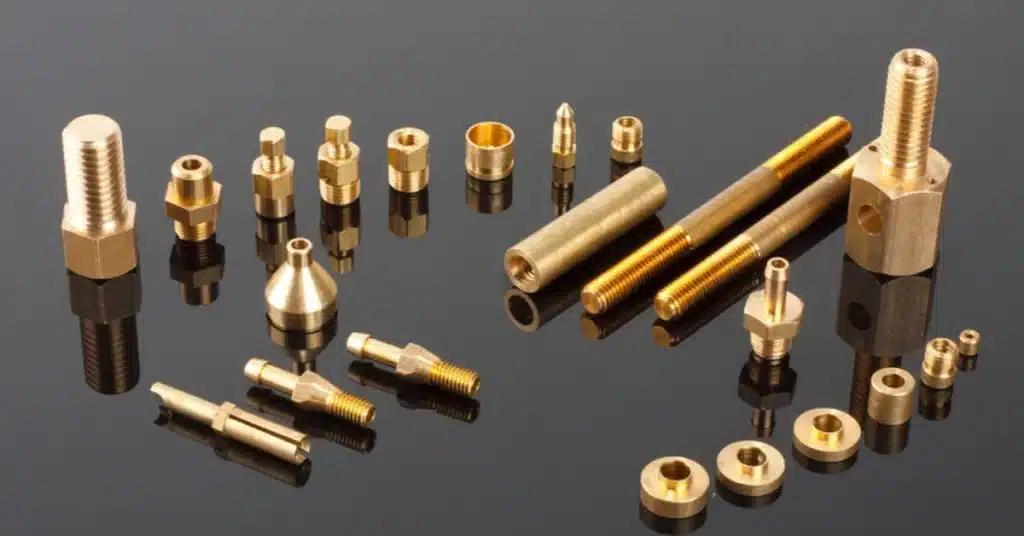
Choosing the right brass CNC turning parts saves time, money, and headaches. Many issues come from skipping key checks during selection. These mistakes lead to failed parts, extra costs, or safety risks.
You can prevent most problems with simple steps. Focus on alloy fit, environment, design, supplier, and rules. Below, we explain the top mistakes in detail, why they happen, real impacts, and how to fix them.
私たちの CNC旋盤加工サービス helps spot these early—upload your design for a free DFM review.
1. Skipping Proper Alloy Checks
Don’t pick brass just because it’s cheap or common. Wrong alloy fails fast in tough conditions.
Why it happens: Engineers see “brass” and assume all types work the same. They ignore differences in machinability, strength, or resistance.
Real impact: A part in a marine pump using standard C360 (high-lead, free-cutting) corrodes quickly in saltwater. It dezincifies—zinc leaches out, leaving weak, porous copper. This causes leaks or breaks, leading to downtime and replacements costing thousands.
How to avoid it:
- Match alloy to needs: Use C464 (naval brass with tin) for saltwater; C360 for general fittings.
- Check key properties: Machinability (C360 rates highest), corrosion resistance, strength.
- Ask for 材料 certs from suppliers.
Pro Tip: Test samples in your environment if possible. A quick salt-spray test reveals issues early.
2. Ignoring Environmental Factors
Brass handles many conditions well, but not all. Skipping checks for acids, chlorides, or stagnant water causes hidden failure.
Dezincification explained: In harsh spots—like acidic water, chlorides, or soft/stagnant water—zinc dissolves selectively. The part turns reddish, spongy, and weak. Cracks form over time, leading to leaks or bursts.
Why it happens: Designers focus on looks or conductivity, not long-term exposure.
Real impact: Plumbing fittings in chlorinated water dezincify after 1–2 years. Hospitals or homes face contamination risks. In industrial use, it causes system shutdowns.
Prevention steps:
- Choose dezincification-resistant (DZR) brass: Add tin (admiralty brass), arsenic, phosphorus, or use low-zinc alloys (<15% zinc). Modern ECO BRASS or silicon brass eliminates this risk.
- Test operating conditions: pH, temperature, flow rate. Avoid stagnant zones.
- Use coatings or platings (e.g., nickel) for extra protection in mild cases.
Expert Advice: For drinking water or marine parts, always pick DZR-certified alloys. Regulations like NSF/ANSI 61 often require it.
3. Over-Specifying Tolerances
Tight tolerances everywhere drive up costs without adding value.
Why it happens: Engineers play it safe or copy old specs. They apply ±0.001″ across the part when ±0.005″ works fine.
Real impact: Costs jump 50–100% or more. Tighter specs need slower feeds, more passes, special tools, and extra inspection. Scrap rises too. A simple connector might cost $5 instead of $2–$3.
How to avoid it:
- Use “stepped” tolerances: Tight only on functional areas (e.g., mating diameters); looser elsewhere (±0.05 mm).
- Follow standard achievable: ±0.005″ for most CNC旋盤加工; ±0.001″ only if needed.
- Run DFM checks: Suppliers flag over-specs and suggest savings (often 20–30%).
Quick example: A non-critical OD can use ±0.127 mm. Save money without risking fit.
4. Neglecting Supplier Expertise
Going for the cheapest quote often means poor quality or delays.
Why it happens: Buyers focus on price alone. They skip checking experience with brass or CNC旋盤加工.
Real impact: Inexperienced shops struggle with brass softness—issues like burrs, poor chip control, or inconsistent finishes. Lead times stretch; defects hit 15–20%. Rework eats budget.
How to choose better:
- Look for brass specialists: Ask about alloys stocked, reject rates (<1% ideal), and certifications (ISO 9001).
- Request samples and references.
- Check lead times and support: Good ones offer DFM feedback.
- Avoid ultra-low quotes—often cut corners on tools or QC.
Case study: An electronics firm switched to a proven supplier. Defects dropped 20%, and parts arrived faster.
Other Common Pitfalls
- Forgetting finishes early: Adding plating later shrinks threads or changes dimensions. Plan finishes (polish, nickel) upfront—account for buildup (5–25 µm).
- Ignoring lead regulations: Leaded brass (e.g., C360 with ~3% lead) aids machining but faces restrictions. RoHS allows up to 4% lead in copper alloys until at least June 2027 (with reviews). For メディカル, food, or drinking water, use lead-free (e.g., silicon brass). Check RoHS/REACH for your market—non-compliance blocks sales.
- Poor design for machining: Sharp corners, thin walls (<0.5–0.8 mm), or deep features cause vibration, tool breaks, or burrs. Add fillets (min R0.2–0.5 mm), keep walls thicker, and favor simple shapes.
Quick Reference Checklist
Use this before ordering brass CNC turning parts:
- Does the alloy match the environment (corrosion, temperature)?
- Are tolerances functional only (not over-tight)?
- Is the supplier experienced with brass (samples, certs, DFM help)?
- Have lead rules been checked (RoHS-compliant if needed)?
- Are finishes planned early?
- Does design follow DFM (fillets, no sharp angles, standard features)?
- Have you requested multiple quotes and compared expertise?
Follow this, and you’ll get reliable, cost-effective parts.
Ready to avoid these mistakes on your next project? Contact our CNC旋盤加工サービス team. Send your CAD file for expert advice and a clear quote. Let’s make your brass parts right the first time.
Surface Finishes and Treatments for Brass Parts
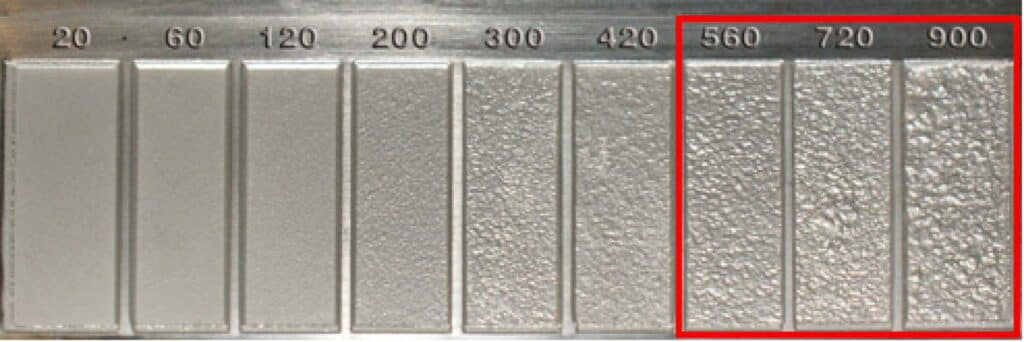
Surface finishes protect brass CNC turning parts from wear, corrosion, and tarnish while enhancing appearance and function. Brass naturally machines to a smooth, attractive finish (often Ra 0.4–1.6 μm right off the lathe), but added treatments extend life in demanding uses like plumbing, electronics, or marine environments.
Common treatments add thin layers or clean the surface without major dimension changes (typically 5–25 μm buildup for plating—pre-compensate in design). They boost durability, conductivity, or looks. Our CNC旋盤加工サービス offers these options with precise control for your custom brass parts.
Common Surface Finish Options for Brass CNC Turned Parts
Here are the most popular choices, with typical uses and effects.
- 研磨 — Uses abrasives or buffing wheels to create a smooth, mirror-like shine (Ra 0.2–0.8 μm achievable). Great for decorative hardware, lighting, or visible fittings. Enhances the natural gold color and reduces friction in moving parts like bushings.
- ニッケルめっき — Electroplating deposits a thin nickel layer for hardness, wear resistance, and a uniform silver look. Common in automotive sensors, electrical connectors, and valves. Improves corrosion resistance and durability.
- Chrome Plating — Adds a hard, reflective chrome layer over nickel base for extreme wear protection and high polish. Used in plumbing fixtures, marine hardware, or decorative trim. Provides excellent scratch and tarnish resistance.
- 不動態化 — Chemical treatment removes contaminants and free zinc/iron, boosting natural corrosion resistance without changing appearance much. Ideal for parts in wet or chemical environments. Often combined with lacquer for extra protection.
- Lacquer Coating — Clear polymer or lacquer spray preserves the bright brass finish and prevents oxidation/tarnishing. Popular for architectural accents, musical instruments, or jewelry-like parts. Minimal dimensional impact.
Other options include tin plating (for conductivity in electronics), gold/silver plating (premium conductivity), or bead blasting (matte texture to hide marks).
Pros and Cons of Adding Surface Finishes
Finishes add value but come with trade-offs.
長所
- Longer part life through better wear and corrosion resistance.
- Improved function (e.g., lower friction, better conductivity, or antimicrobial traits).
- Enhanced aesthetics—shiny gold, silver, or chrome looks professional.
- Meets industry standards (e.g., RoHS compliance or food-grade needs).
短所
- Adds cost (10–50% more depending on type and batch size).
- Increases lead time (extra steps like plating take days).
- Possible dimension changes—plating buildup requires pre-machining adjustments.
- Risk of defects if not done right (e.g., peeling or uneven coverage).
Pro Tip: Specify finishes early in design. For tight tolerances, choose passivation or lacquer over thick plating to minimize changes.
Quality Control and Standards for Finished Brass Parts
Reliable finishes need strong QC to catch issues like poor adhesion, uneven thickness, or defects.
Inspection Methods
- Visual checks for color uniformity, scratches, or pitting.
- Dimensional gauges, micrometers, or calipers for size after treatment.
- Coordinate Measuring Machine (CMM) for precise 3D verification of critical features.
- Thickness testing (e.g., X-ray or magnetic methods for plating).
- Adhesion tests (tape or bend) and salt-spray corrosion trials for validation.
Aim for 99%+ pass rates in production. Batch testing ensures consistency.
Compliance Requirements
- RoHS — Limits hazardous substances like lead; use lead-free brass and platings for electronics/EU markets.
- REACH — Regulates chemicals in finishes.
- FDA/NSF — Needed for メディカル, food, or drinking water parts (e.g., passivation for antimicrobial safety).
- ISO 9001-certified shops maintain traceability and documentation.
私たちの CNC旋盤加工サービス follows these standards with full certs and reports.
Future Trends in Brass CNC Turning
The field evolves fast toward smarter, greener production.
- Automation and AI Growth — Robots handle loading/unloading for lights-out runs. AI optimizes toolpaths, predicts tool wear, and adjusts speeds/feeds in real time for better finishes and less waste.
- Sustainable Brass Rise — Recycled brass (often 60%+ of supply) grows due to infinite recyclability without quality loss. Expect more eco-alloys and low-energy processes.
- Market Expansion — Global brass market valued at $9.82 billion in 2025, projected to reach $10.37 billion in 2026 and $15.28 billion by 2034 at a 5.0% CAGR (Fortune Business Insights, 2025 data). Demand drives from automotive, electronics, and plumbing.
Greener methods like minimal coolant use and chip recycling become standard.
These finishes and trends help you get the most from brass CNC旋盤加工 parts. Ready to add the right treatment to your design? Contact our CNC旋盤加工サービス for expert recommendations, samples, and a free quote. Upload your CAD file today—we’ll guide you to durable, high-performance results.
要点
- Brass offers great machinability and resistance.
- Choose alloys like C360 for most turning.
- Applications span automotive to メディカル.
- Control costs with smart design and volume.
- Avoid mistakes like wrong tolerances.
- Use finishes for better performance.
- Pick experienced CNC旋盤加工サービス providers.
結論
真鍮 CNC旋盤加工 parts deliver precision, durability, and excellent performance for a wide range of needs. From superior machinability and corrosion resistance to strong electrical conductivity and cost-effective production, this guide has covered the key benefits, processes, design tips, costs, and pitfalls to avoid.
The standout advantages include easy cutting (reducing tool wear and speeding up cycles), natural rust resistance, and lightweight properties that cut shipping expenses. Always match your alloy to the application—such as C360 for general use or dezincification-resistant types for harsh environments—and steer clear of common errors like over-tight tolerances or ignoring regulations. These steps ensure reliable, long-lasting parts without unnecessary expenses.
Think about your next project. Brass could be the key to better performance, smoother assembly, and lower total ownership costs. Whether you’re in automotive, electronics, plumbing, メディカル, or aerospace, brass turned parts often outperform alternatives in efficiency and value.
よくあるご質問
What makes brass better than steel for CNC turning parts?
Brass offers exceptional machinability, allowing faster speeds (often 2,000–4,000+ RPM), smoother finishes, and much less tool wear compared to steel. It produces short, clean chips instead of stringy ones, reducing cleanup and machine downtime. Brass also resists corrosion naturally (no rust like steel), conducts heat and electricity well, and weighs less—saving on shipping and handling. While steel provides higher strength in some cases, brass excels for precision fittings, connectors, and valves where ease of machining and non-magnetic properties matter. Many shops report 20–50% faster cycle times with brass.
How much do brass CNC turning parts cost?
Prices start around $2–$8 per small, simple part in high-volume runs (1,000+ units). For prototypes or low quantities (under 100), expect $10–$30+ depending on complexity. As of February 2026, brass material costs range from about $10–$12 per kg in Europe for new rods (e.g., ~$11–$12/kg processed), with scrap lower at $2–$5/lb. Factors like alloy (C360 is economical), part size, tight tolerances, finishes, and volume drive the final price. Bulk orders and optimized designs often cut costs 40–70%. Get a personalized quote from our CNC旋盤加工サービス—upload your CAD for accurate pricing and savings ideas.
What tolerances can I expect?
Standard CNC turning for brass typically holds ±0.005 inches (±0.127 mm) reliably on most modern machines. For high-precision needs—like electronics connectors or medical components—Swiss-style or advanced setups achieve ±0.001 inches (±0.025 mm) or even ±0.0005 inches (±0.013 mm). Brass machines stably with minimal heat distortion, supporting tight tolerances without extra effort in many cases. Specify tight values only on critical features to avoid cost increases from slower feeds and added inspection. A DFM review helps balance precision and affordability.
Are brass parts eco-friendly?
Yes—brass is highly sustainable. It recycles infinitely without losing mechanical properties, with recycling using just 10–15% of the energy needed for virgin production (saving up to 90% in some cases). This cuts greenhouse gas emissions, reduces mining impact, and conserves copper and zinc resources. Many brass parts contain high recycled content from scrap, supporting a circular economy. Choose lead-free alloys to meet modern green standards (e.g., RoHS/REACH compliance). Overall, brass promotes lower carbon footprints compared to producing new metals like aluminum or steel.
How long does production take?
Prototypes and small batches often ship in 3–7 days, with some expedited services delivering in 1–3 days for urgent needs. Full production runs (hundreds to thousands) typically take 2–4 weeks, depending on complexity, volume, finishing, and inspections. Brass machines quickly, supporting faster turnarounds than harder metals. Factors like material availability, tight tolerances, or post-processing (plating/polishing) can add a few days. Our CNC旋盤加工サービス offers quick prototyping—often 3–5 days—and scales smoothly for larger orders.

 Japanese
  English
  French
  Spanish
  German
  Portuguese